THE ADVENTURE COLLECTIVE® · Independent discovery and booking for outdoor travel

Swap Marrakech’s medina for three days of High Atlas passes, movie-set ksars and the sweeping Erg Chebbi dunes. This shared tour pairs scenic drives, short canyon walks and a sunset camel ride culminating in an overnight Berber bivouac under the stars.
Swap Marrakech’s medina for three days of High Atlas passes, movie-set ksars and the sweeping Erg Chebbi dunes. This shared tour pairs scenic drives, short canyon walks and a sunset camel ride culminating in an overnight Berber bivouac under the stars.
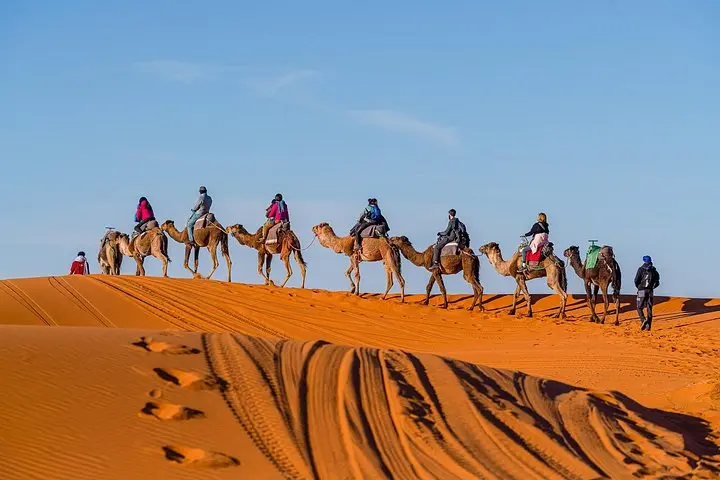
The sun slides down behind a rolling wall of ochre dunes and the desert exhales — a hush that makes the campfire and the low strings of Berber drums sound impossibly close. On this shared 3-day circuit from Marrakech you trade city bustle for long roads through the High Atlas, cliff-carved gorges and the wide, wind-swept Erg Chebbi where camels pick a slow rhythm toward sunset.
Verified experiences and guided adventures in the surrounding area.
Operated by Barbaro Tours Morocco · Merzouga, Errachidia Province
The sun slides down behind a rolling wall of ochre dunes and the desert exhales — a hush that makes the campfire and the low strings of Berber drums sound impossibly close. On this shared 3-day circuit from Marrakech you trade city bustle for long roads through the High Atlas, cliff-carved gorges and the wide, wind-swept Erg Chebbi where camels pick a slow rhythm toward sunset.
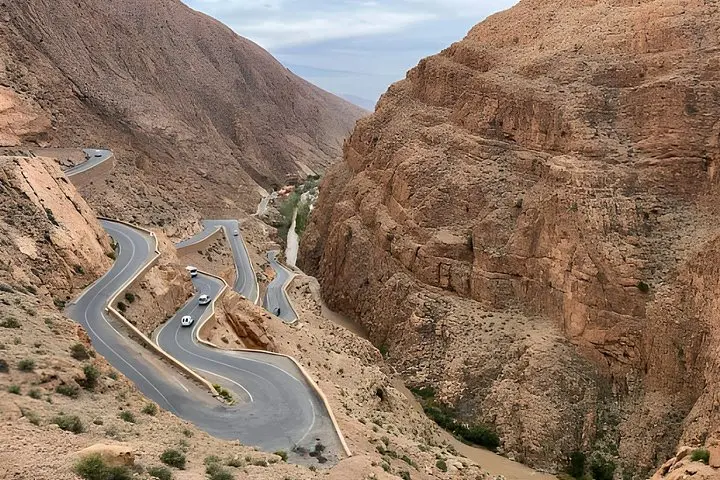
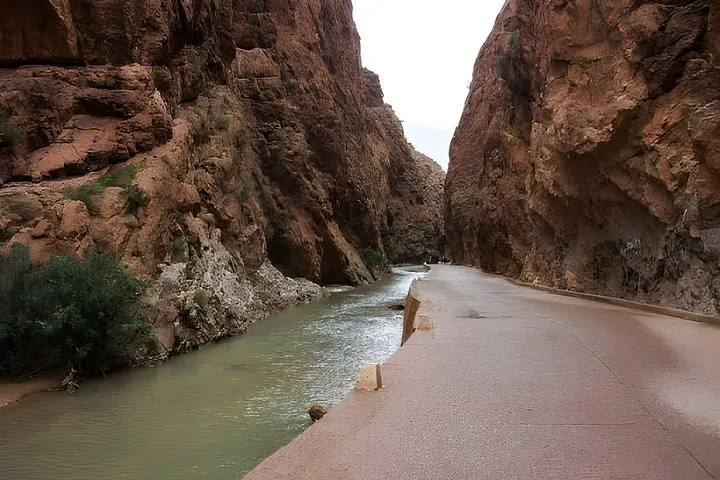
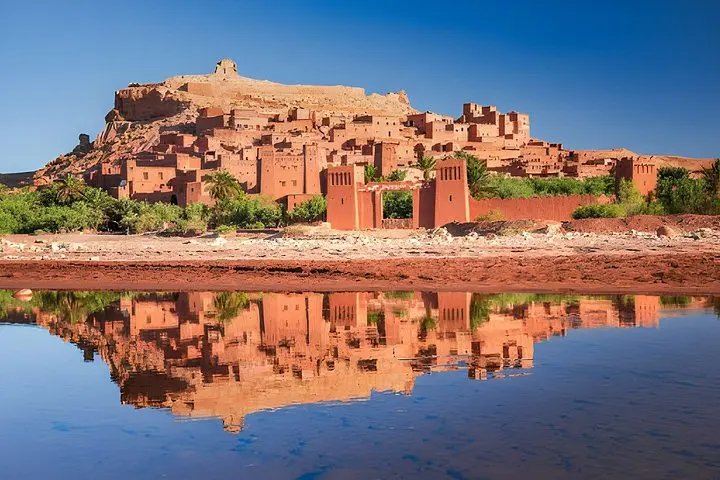
Day one climbs the Tizi n’Tichka pass (2,260 m) through folded volcanic and sedimentary layers, dropping into the ochre plains that hold Ait Ben Haddou, a red-mud ksar listed by UNESCO and featured in film. The route threads Ouarzazate’s cinema history, the Valley of Roses and the battered, sculpted walls of the Dades Gorges. Day two narrows to the Todra Gorge’s sheer limestone fingers before reaching Erfoud and Merzouga — gateway to Erg Chebbi — for a late-afternoon camel trek and night in a Berber bivouac. Dawn brings a different desert: colder, crystalline air and a horizon of rippled sand.
Practical guidance: expect long vehicle transfers with photo and rest stops; pack layers for hot days and cool desert nights, sun protection, and a refillable water bottle. Footwear should be sturdy for short hikes and dune walks. Bring a small daypack for camera, documents and evening snacks; leave heavy luggage with the vehicle. Respect local customs — modest dress in villages and ask before photographing people — and conserve water: the Sahara’s quiet is fragile, and low-impact travel keeps it that way.
No — the camel ride provided is short and managed by guides; people of most ages and fitness levels can do it, though it involves mounting and sitting on a moving animal.
Accommodations are simple Berber-style tents with bedding; some camps offer shared washing facilities and basic showers — expect rustic comfort rather than hotel amenities.
Yes — the tour includes hotel pickup in Marrakech; confirm your pickup point when you book and expect an early (around 07:00) departure.
Basic dietary restrictions can usually be handled if noted at booking, but bring snacks for specific needs; remote dining options are limited on route.
Barbaro Tours Morocco operates guided outdoor trips and adventures with an emphasis on safety, stewardship, and memorable experiences.
The sun slides down behind a rolling wall of ochre dunes and the desert exhales — a hush that makes the campfire and the low strings of Berber drums sound impossibly close. On this shared 3-day circuit from Marrakech you trade city bustle for long roads through the High Atlas, cliff-carved gorges and the wide, wind-swept Erg Chebbi where camels pick a slow rhythm toward sunset.
The sun slides down behind a rolling wall of ochre dunes and the desert exhales — a hush that makes the campfire and the low strings of Berber drums sound impossibly close. On this shared 3-day circuit from Marrakech you trade city bustle for long roads through the High Atlas, cliff-carved gorges and the wide, wind-swept Erg Chebbi where camels pick a slow rhythm toward sunset.
Day one climbs the Tizi n’Tichka pass (2,260 m) through folded volcanic and sedimentary layers, dropping into the ochre plains that hold Ait Ben Haddou, a red-mud ksar listed by UNESCO and featured in film. The route threads Ouarzazate’s cinema history, the Valley of Roses and the battered, sculpted walls of the Dades Gorges. Day two narrows to the Todra Gorge’s sheer limestone fingers before reaching Erfoud and Merzouga — gateway to Erg Chebbi — for a late-afternoon camel trek and night in a Berber bivouac. Dawn brings a different desert: colder, crystalline air and a horizon of rippled sand.
Practical guidance: expect long vehicle transfers with photo and rest stops; pack layers for hot days and cool desert nights, sun protection, and a refillable water bottle. Footwear should be sturdy for short hikes and dune walks. Bring a small daypack for camera, documents and evening snacks; leave heavy luggage with the vehicle. Respect local customs — modest dress in villages and ask before photographing people — and conserve water: the Sahara’s quiet is fragile, and low-impact travel keeps it that way.