THE ADVENTURE COLLECTIVE® · Independent discovery and booking for outdoor travel

Cross the High Atlas and sleep under the Erg Chebbi stars on this shared 3-day route from Marrakech. Expect UNESCO kasbahs, river-cut gorges, camel caravans and a night in a nomad tent.
Cross the High Atlas and sleep under the Erg Chebbi stars on this shared 3-day route from Marrakech. Expect UNESCO kasbahs, river-cut gorges, camel caravans and a night in a nomad tent.
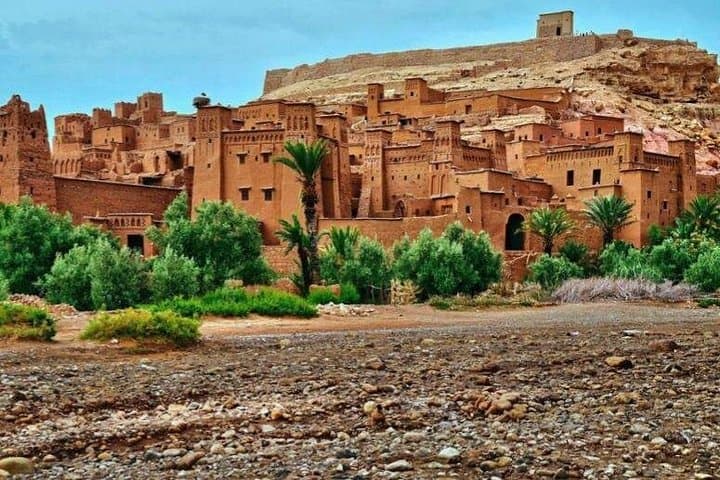
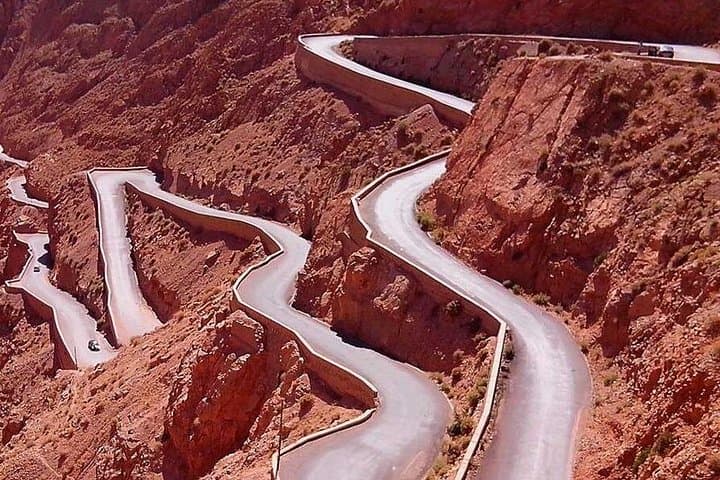
Dawn lifts off the High Atlas as a white minivan snakes up Tizi n’Tichka, the road revealing stacked peaks and sudden villages with flat-roofed houses. On day one the group eases through ochre valleys toward Aït Ben Haddou, a fortified ksar that looks carved from the same clay as the surrounding hills; by evening the tour settles in Boumalne Dades with its canyon-edge hotels and starlit rooftops.
Verified experiences and guided adventures in the surrounding area.
Operated by camel camp experience · Merzouga, Drâa-Tafilalet
Dawn lifts off the High Atlas as a white minivan snakes up Tizi n’Tichka, the road revealing stacked peaks and sudden villages with flat-roofed houses. On day one the group eases through ochre valleys toward Aït Ben Haddou, a fortified ksar that looks carved from the same clay as the surrounding hills; by evening the tour settles in Boumalne Dades with its canyon-edge hotels and starlit rooftops.
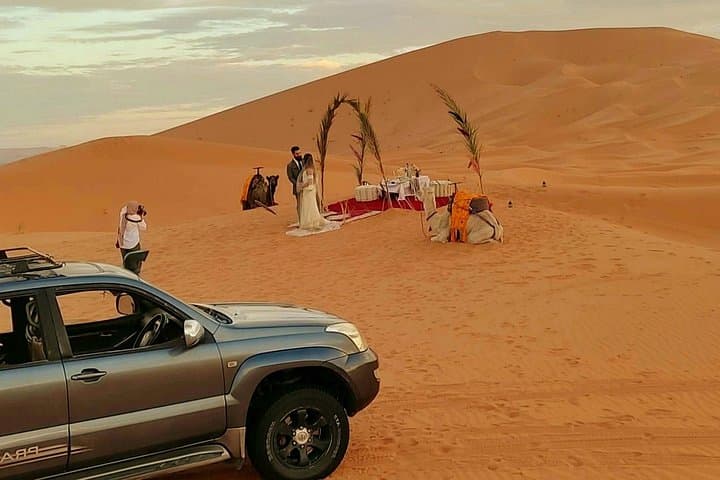
The second day moves east through palm-lined oases to the Todgha Gorges, a corridor of sheer limestone where rivers once cut deep clefts. Geology and film history collide at Aït Ben Haddou — a UNESCO site used in Gladiator and other epics — and the dunes of Erg Chebbi near Merzouga represent shifting aeolian landscapes, where wind sculpts ridges that rewrite the horizon nightly.
Culturally, travelers meet Berber and nomad communities: expect shared tea, drum circles, and simple desert hospitality that grew from centuries of trans-Saharan trade and seasonal migration. Respect local customs and photographed moments.
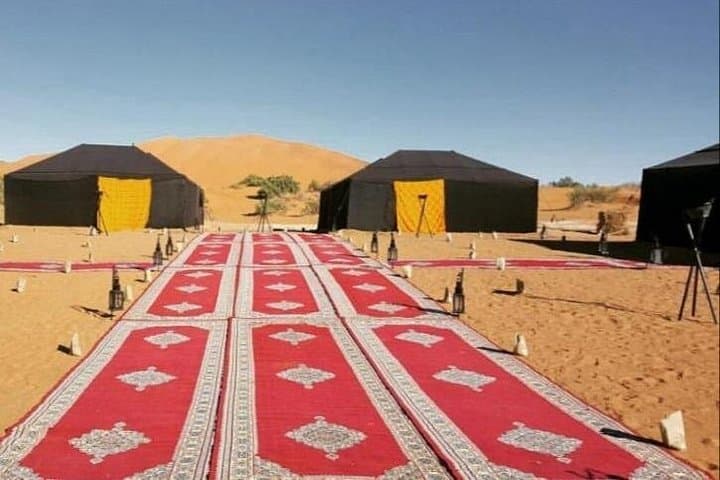
Practically, the tour is a mix of long drives and short walks, capped by a camel caravan and an overnight nomad tent. Pack layered clothing for hot days and cold desert nights, a sun hat and sunscreen, and a small daypack for walks at Todgha. Hydrate often and carry cash for optional meals and tips. If you want sunrise in the dunes, plan for a very early wake-up on day three. The route is suitable for travelers in average shape; motion sickness on mountain passes and long transfers is common, so choose a seat accordingly.
The camel ride is gentle and short (usually 45–90 minutes); riders need basic balance and mobility but no special skills.
Most breakfasts and dinners are included per the itinerary, but lunches and some refreshments are usually at your own expense.
Yes — the itinerary includes an overnight in a traditional-style nomad tent; accommodations are simple with shared facilities.
The tour is family-friendly and listed as easy physically, but it’s not recommended for travelers with serious cardiovascular issues due to long drives and remote settings.
camel camp experience operates guided outdoor trips and adventures with an emphasis on safety, stewardship, and memorable experiences.
Dawn lifts off the High Atlas as a white minivan snakes up Tizi n’Tichka, the road revealing stacked peaks and sudden villages with flat-roofed houses. On day one the group eases through ochre valleys toward Aït Ben Haddou, a fortified ksar that looks carved from the same clay as the surrounding hills; by evening the tour settles in Boumalne Dades with its canyon-edge hotels and starlit rooftops.
Dawn lifts off the High Atlas as a white minivan snakes up Tizi n’Tichka, the road revealing stacked peaks and sudden villages with flat-roofed houses. On day one the group eases through ochre valleys toward Aït Ben Haddou, a fortified ksar that looks carved from the same clay as the surrounding hills; by evening the tour settles in Boumalne Dades with its canyon-edge hotels and starlit rooftops.
The second day moves east through palm-lined oases to the Todgha Gorges, a corridor of sheer limestone where rivers once cut deep clefts. Geology and film history collide at Aït Ben Haddou — a UNESCO site used in Gladiator and other epics — and the dunes of Erg Chebbi near Merzouga represent shifting aeolian landscapes, where wind sculpts ridges that rewrite the horizon nightly.
Culturally, travelers meet Berber and nomad communities: expect shared tea, drum circles, and simple desert hospitality that grew from centuries of trans-Saharan trade and seasonal migration. Respect local customs and photographed moments.
Practically, the tour is a mix of long drives and short walks, capped by a camel caravan and an overnight nomad tent. Pack layered clothing for hot days and cold desert nights, a sun hat and sunscreen, and a small daypack for walks at Todgha. Hydrate often and carry cash for optional meals and tips. If you want sunrise in the dunes, plan for a very early wake-up on day three. The route is suitable for travelers in average shape; motion sickness on mountain passes and long transfers is common, so choose a seat accordingly.