THE ADVENTURE COLLECTIVE® · Independent discovery and booking for outdoor travel

A three-day shared route from Marrakech to Fes via Erg Chebbi that pairs High Atlas passes and UNESCO kasbahs with a camel-led bivouac under Sahara stars. Expect long drives, sunrise camel rides, and simple desert camp comforts.
A three-day shared route from Marrakech to Fes via Erg Chebbi that pairs High Atlas passes and UNESCO kasbahs with a camel-led bivouac under Sahara stars. Expect long drives, sunrise camel rides, and simple desert camp comforts.
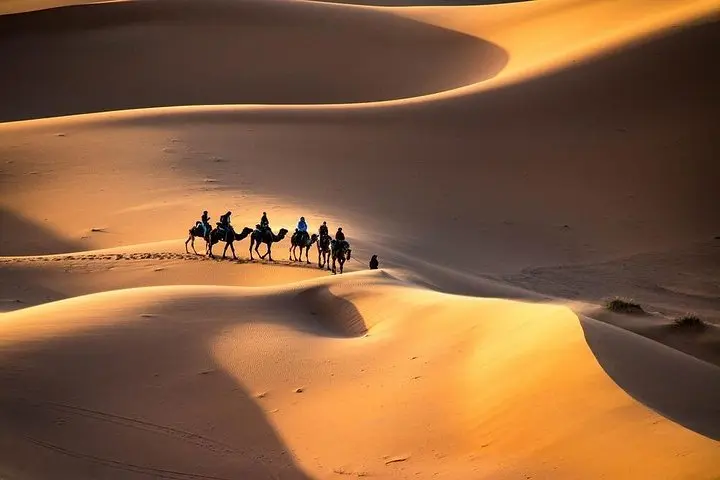
The road peels away from Marrakech at first light, climbing the High Atlas until Tizi n’Tichka opens like a carved throat at 2,260 m. You feel the van ease through tight hairpins, villages of mud-brick houses sliding past, until the landscape softens into ochre plains and then the ribbed silhouette of Erg Chebbi appears—rows of dunes changing color as the sun lowers.
Verified experiences and guided adventures in the surrounding area.
Operated by Time Out travel · Merzouga, Drâa-Tafilalet
The road peels away from Marrakech at first light, climbing the High Atlas until Tizi n’Tichka opens like a carved throat at 2,260 m. You feel the van ease through tight hairpins, villages of mud-brick houses sliding past, until the landscape softens into ochre plains and then the ribbed silhouette of Erg Chebbi appears—rows of dunes changing color as the sun lowers.
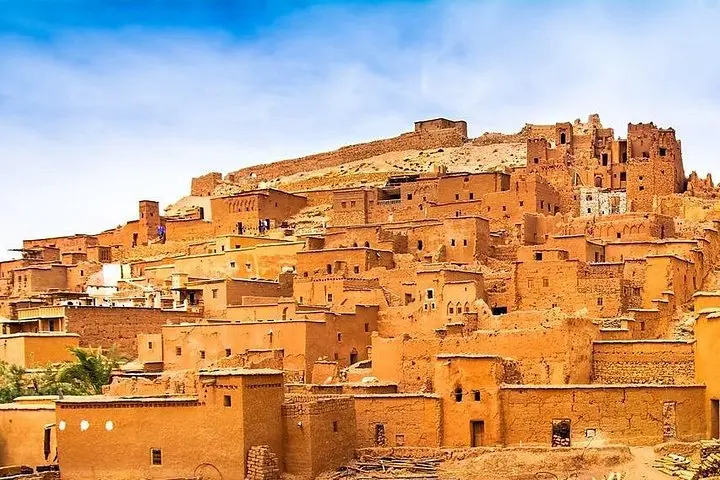
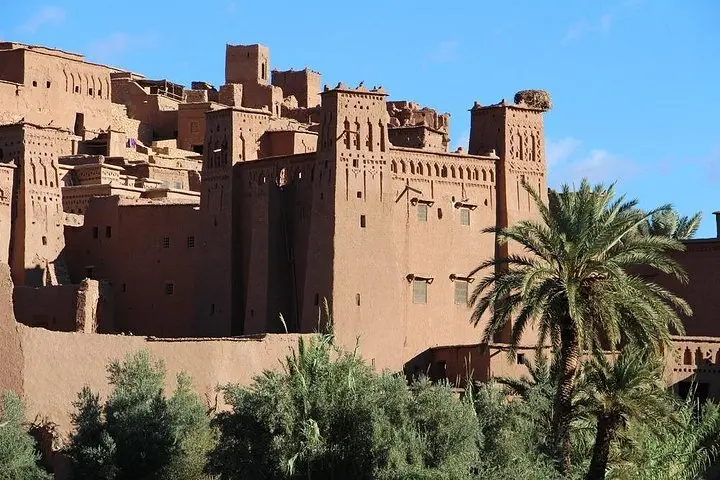
This is a classic trans-Morocco route: Tizi n’Tichka’s geology of folded shale gives way to alluvial plains and, finally, wind-sculpted sand that records each storm. The itinerary threads cultural landmarks—Ait Ben Haddou’s ksar, a UNESCO-listed fortified village used by caravan traders and later movie crews—alongside Berber settlements and palm-lined oases in the Ziz Valley.
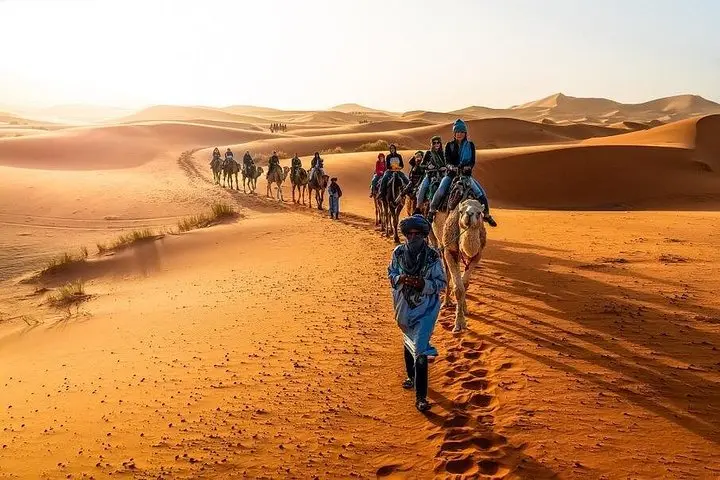
On day two a two-hour camel trek carries you into Merzouga’s dunes for a bivouac evening under stars while local hosts play drums; sunrise camel rides return you to a lodge with time for breakfast and a shower. Expect long driving stretches (several 4–8 hour drives across days), short walks through Todgha Gorge, and multiple photo stops.
Practical guidance: book during shoulder seasons to avoid extreme summer heat; carry 2–3 liters of water, sun protection, and layered clothing for cold desert nights. Comfortable closed-toe shoes help on rocky approaches; bring a headlamp for camp. Travelers should be ready for early starts, shared-group logistics, and simple dune-camp accommodations—a compact, high-reward itinerary that links Morocco’s mountains, kasbahs, and Sahara into three active days.
The tour includes a 2-hour camel trek into the Erg Chebbi dunes at sunset and an optional short sunrise ride the following morning.
Accommodations are basic Berber bivouacs with sleeping mats or beds, shared facilities, a communal dinner by the fire and drums—comfortable but rustic.
Yes—there’s a photo and walking stop at Ait Ben Haddou with time for an optional guided visit and lunch nearby.
The itinerary includes hotel pickup in Marrakech, two dinners and two breakfasts, accommodation in Merzouga bivouac and an air-conditioned vehicle for transfers.
Time Out travel operates guided outdoor trips and adventures with an emphasis on safety, stewardship, and memorable experiences.
The road peels away from Marrakech at first light, climbing the High Atlas until Tizi n’Tichka opens like a carved throat at 2,260 m. You feel the van ease through tight hairpins, villages of mud-brick houses sliding past, until the landscape softens into ochre plains and then the ribbed silhouette of Erg Chebbi appears—rows of dunes changing color as the sun lowers.
The road peels away from Marrakech at first light, climbing the High Atlas until Tizi n’Tichka opens like a carved throat at 2,260 m. You feel the van ease through tight hairpins, villages of mud-brick houses sliding past, until the landscape softens into ochre plains and then the ribbed silhouette of Erg Chebbi appears—rows of dunes changing color as the sun lowers.
This is a classic trans-Morocco route: Tizi n’Tichka’s geology of folded shale gives way to alluvial plains and, finally, wind-sculpted sand that records each storm. The itinerary threads cultural landmarks—Ait Ben Haddou’s ksar, a UNESCO-listed fortified village used by caravan traders and later movie crews—alongside Berber settlements and palm-lined oases in the Ziz Valley.
On day two a two-hour camel trek carries you into Merzouga’s dunes for a bivouac evening under stars while local hosts play drums; sunrise camel rides return you to a lodge with time for breakfast and a shower. Expect long driving stretches (several 4–8 hour drives across days), short walks through Todgha Gorge, and multiple photo stops.
Practical guidance: book during shoulder seasons to avoid extreme summer heat; carry 2–3 liters of water, sun protection, and layered clothing for cold desert nights. Comfortable closed-toe shoes help on rocky approaches; bring a headlamp for camp. Travelers should be ready for early starts, shared-group logistics, and simple dune-camp accommodations—a compact, high-reward itinerary that links Morocco’s mountains, kasbahs, and Sahara into three active days.