THE ADVENTURE COLLECTIVE® · Independent discovery and booking for outdoor travel

Drive the Tizi-n-Tichka pass, tour the UNESCO kasbah of Aït Benhaddou, walk Todra Gorge and ride camels into Erg Chebbi on this 3-day shared desert tour from Marrakech. Ideal for travelers who want a compact, supported Sahara experience with two nights of accommodation, including a desert camp.
Drive the Tizi-n-Tichka pass, tour the UNESCO kasbah of Aït Benhaddou, walk Todra Gorge and ride camels into Erg Chebbi on this 3-day shared desert tour from Marrakech. Ideal for travelers who want a compact, supported Sahara experience with two nights of accommodation, including a desert camp.
A diesel-scented minivan peels away from Marrakech before dawn and climbs into the High Atlas—hairpin after hairpin—until the air thins at the Tizi-n-Tichka pass (about 2,260 m). Snow-creased peaks give way to sunbaked kasbahs and eventually the orange sweep of Erg Chebbi; by late afternoon the dunes rise like a warm, shifting city and camels shoulder their loads toward a Berber camp.
Verified experiences and guided adventures in the surrounding area.
Operated by Musée Tiskiwin Marrakech · Merzouga, Drâa-Tafilalet
A diesel-scented minivan peels away from Marrakech before dawn and climbs into the High Atlas—hairpin after hairpin—until the air thins at the Tizi-n-Tichka pass (about 2,260 m). Snow-creased peaks give way to sunbaked kasbahs and eventually the orange sweep of Erg Chebbi; by late afternoon the dunes rise like a warm, shifting city and camels shoulder their loads toward a Berber camp.
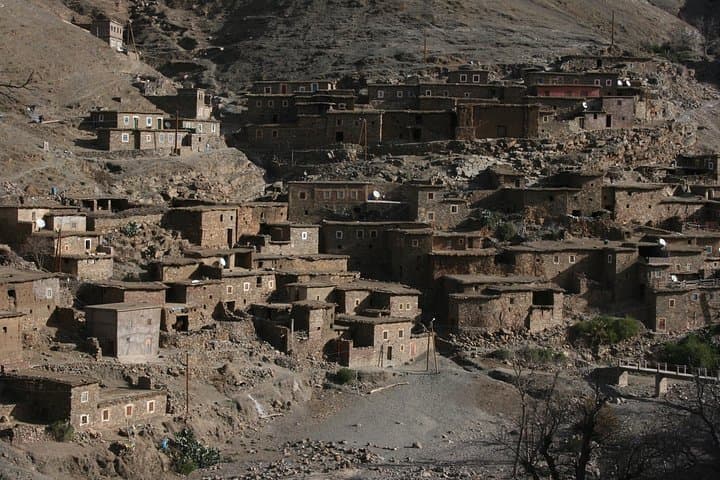
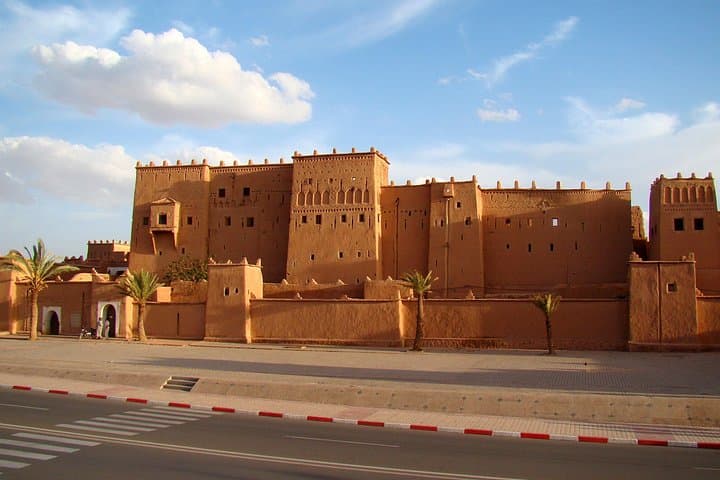
This route threads history and geology: the fortified mud-brick Aït Benhaddou stands as a UNESCO example of pre-Saharan architecture and a frequent film location, while the High Atlas is the result of African-Eurasian plate collision. The Todra Gorge offers a stark counterpoint—narrow limestone walls carved by persistent water—and Rissani’s markets preserve trade routes that shaped the Tafilalet. Local Berber culture is visible in villages, kasbah ruins and the music around the campfire.
Practically: the tour is a 3-day, 2-night shared itinerary with hotel pickup in Marrakech, air-conditioned transport, one hotel night en route and one desert camp night, plus a late-afternoon camel trek into the dunes. Expect long driving stretches (plan for several hours each day), sharp diurnal temperature swings, and basic desert-camp facilities. Wear layered clothing for hot days and cool nights, sturdy walking shoes for rocky gorges, and bring a reusable water bottle, sunscreen and a headscarf for sand. Sunrise in the dunes rewards early risers; evening brings clear skies and visible Milky Way bands. For first-time desert travelers this offers an accessible, well-supported introduction to the Sahara.
Pickup from Marrakech hotels or riads is included; you’ll receive a pickup window and designated meeting point when you confirm your booking.
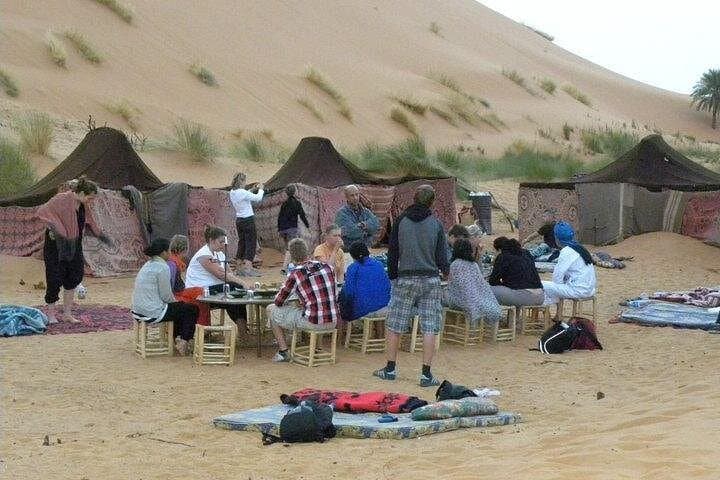
Camps are traditional-style with basic sleeping tents, shared facilities and dinner under the stars; private-tent upgrades may be available on request.
Typical camel treks into Erg Chebbi last 1–2 hours depending on the camp location and group pace; terrain is soft sand and requires basic balance.
Moroccan dirham (MAD) is used locally; tipping drivers, guides and camp staff is customary—small amounts per person per service are appropriate.
Musée Tiskiwin Marrakech operates guided outdoor trips and adventures with an emphasis on safety, stewardship, and memorable experiences.

A diesel-scented minivan peels away from Marrakech before dawn and climbs into the High Atlas—hairpin after hairpin—until the air thins at the Tizi-n-Tichka pass (about 2,260 m). Snow-creased peaks give way to sunbaked kasbahs and eventually the orange sweep of Erg Chebbi; by late afternoon the dunes rise like a warm, shifting city and camels shoulder their loads toward a Berber camp.
A diesel-scented minivan peels away from Marrakech before dawn and climbs into the High Atlas—hairpin after hairpin—until the air thins at the Tizi-n-Tichka pass (about 2,260 m). Snow-creased peaks give way to sunbaked kasbahs and eventually the orange sweep of Erg Chebbi; by late afternoon the dunes rise like a warm, shifting city and camels shoulder their loads toward a Berber camp.
This route threads history and geology: the fortified mud-brick Aït Benhaddou stands as a UNESCO example of pre-Saharan architecture and a frequent film location, while the High Atlas is the result of African-Eurasian plate collision. The Todra Gorge offers a stark counterpoint—narrow limestone walls carved by persistent water—and Rissani’s markets preserve trade routes that shaped the Tafilalet. Local Berber culture is visible in villages, kasbah ruins and the music around the campfire.
Practically: the tour is a 3-day, 2-night shared itinerary with hotel pickup in Marrakech, air-conditioned transport, one hotel night en route and one desert camp night, plus a late-afternoon camel trek into the dunes. Expect long driving stretches (plan for several hours each day), sharp diurnal temperature swings, and basic desert-camp facilities. Wear layered clothing for hot days and cool nights, sturdy walking shoes for rocky gorges, and bring a reusable water bottle, sunscreen and a headscarf for sand. Sunrise in the dunes rewards early risers; evening brings clear skies and visible Milky Way bands. For first-time desert travelers this offers an accessible, well-supported introduction to the Sahara.