THE ADVENTURE COLLECTIVE® · Independent discovery and booking for outdoor travel

Three days of sunrise temple views, jungle-claimed ruins and a sacred waterfall: this private Siem Reap tour combines Angkor’s architectural mastery with Phnom Kulen’s wild waterways and Tonle Sap’s floating villages. Read on for what to expect and how to prepare.
Three days of sunrise temple views, jungle-claimed ruins and a sacred waterfall: this private Siem Reap tour combines Angkor’s architectural mastery with Phnom Kulen’s wild waterways and Tonle Sap’s floating villages. Read on for what to expect and how to prepare.
A chill before dawn hangs over the reflecting pool as the first sun pries open the silhouette of Angkor Wat—tourists fall silent, cameras steady, and the temple returns the gaze like an ancient guardian. Over three days this private loop moves from carved galleries and stone faces to a forested mountain where water insists on falling and a lake that breathes life into villages.
Verified experiences and guided adventures in the surrounding area.
Operated by Hok Cambodia Journeys · Siem Reap, Siem Reap Province
A chill before dawn hangs over the reflecting pool as the first sun pries open the silhouette of Angkor Wat—tourists fall silent, cameras steady, and the temple returns the gaze like an ancient guardian. Over three days this private loop moves from carved galleries and stone faces to a forested mountain where water insists on falling and a lake that breathes life into villages.
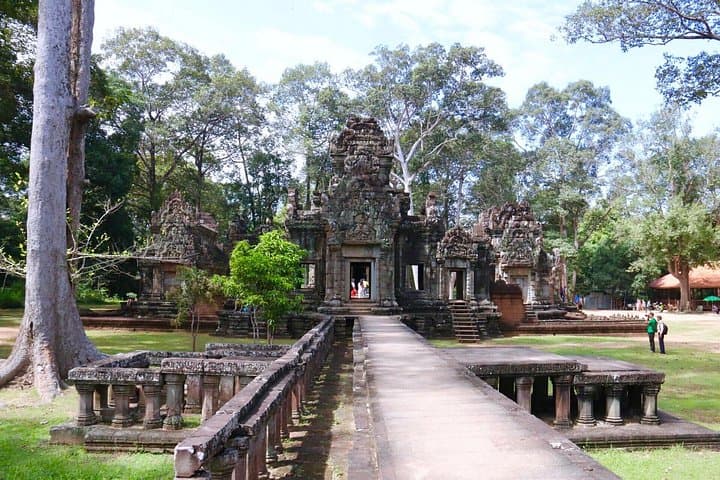
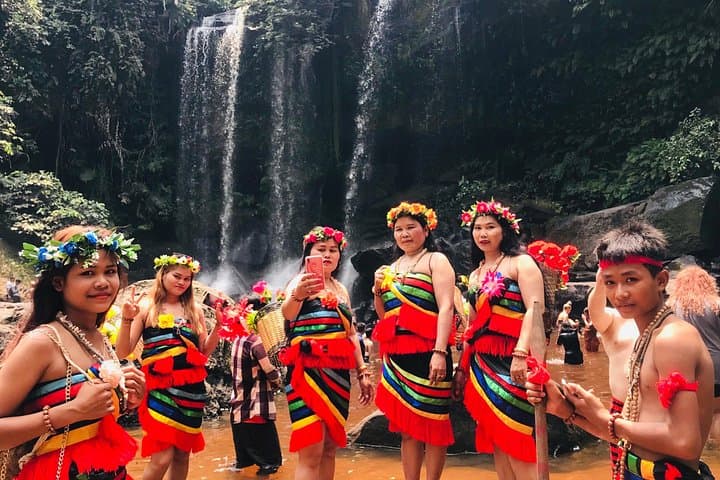
The route threads through the heart of the Khmer Empire: Angkor Wat’s temple-mountain geometry, Bayon’s smiling faces, Ta Prohm’s roots clutching sandstone, and the delicate pink reliefs of Banteay Srei. Phnom Kulen supplies a different geology—sandstone ridges, cascades and the river bed carved with thousand lingas—places where kings declared divinity and the landscape still remembers. Tonle Sap shifts the story to ecology: a floodplain that sustains fishing communities and a UNESCO biosphere facing modern pressures.
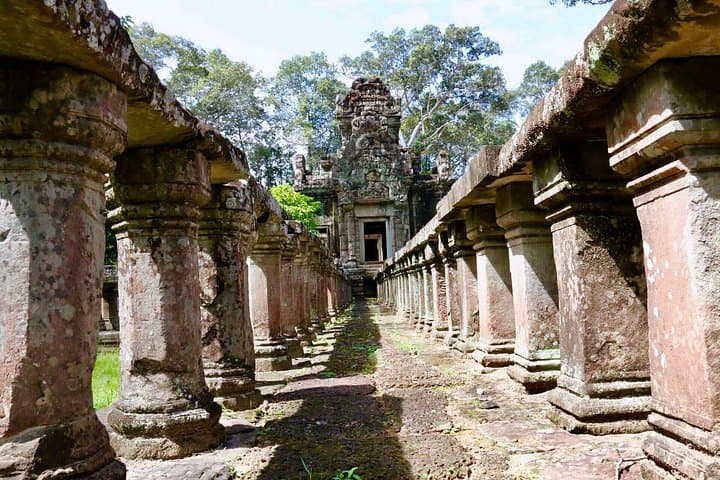
Expect long but gentle days: flat temple complexes, stairs and uneven blockwork, jungle tracks at Beng Mealea and short hikes at Phnom Kulen to waterfalls and viewpoint shrines. Practicalities matter—Angkor Park requires a timed pass, sunrise visits demand a pre-dawn start, and local guides interpret inscriptions and etiquette.
Bring sun protection, steady footwear, mosquito repellent and a refillable bottle. Move respectfully—temples are active religious sites—and time your Angkor visits to avoid the heat of midday. With thoughtful pacing this three-day circuit blends archaeology, fast-moving water, and living culture into a compact Cambodia primer.
Yes—entrance to the Angkor Archaeological Park requires a timed ticket which the operator usually helps arrange; carry it each day for checkpoints.
Many temple areas are walkable but include steps and uneven surfaces; the tour is marketed as suitable for all fitness levels but pace and mobility needs should be communicated at booking.
Quick-dry clothing, a towel, swimwear if you plan to enter pools, and insect repellent; trails can be slippery near falls so footwear that grips is recommended.
Choose operators that work with established floating villages, avoid feeding wildlife, and follow guide instructions to minimize disturbance to homes and fishing activities.
Hok Cambodia Journeys operates guided outdoor trips and adventures with an emphasis on safety, stewardship, and memorable experiences.
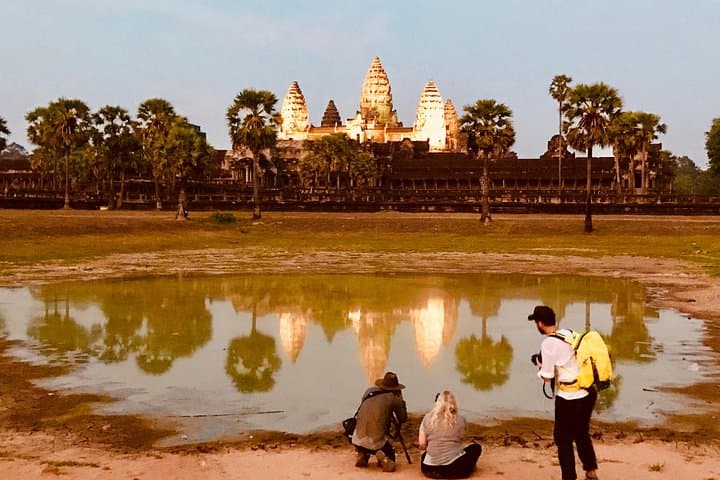
A chill before dawn hangs over the reflecting pool as the first sun pries open the silhouette of Angkor Wat—tourists fall silent, cameras steady, and the temple returns the gaze like an ancient guardian. Over three days this private loop moves from carved galleries and stone faces to a forested mountain where water insists on falling and a lake that breathes life into villages.
A chill before dawn hangs over the reflecting pool as the first sun pries open the silhouette of Angkor Wat—tourists fall silent, cameras steady, and the temple returns the gaze like an ancient guardian. Over three days this private loop moves from carved galleries and stone faces to a forested mountain where water insists on falling and a lake that breathes life into villages.
The route threads through the heart of the Khmer Empire: Angkor Wat’s temple-mountain geometry, Bayon’s smiling faces, Ta Prohm’s roots clutching sandstone, and the delicate pink reliefs of Banteay Srei. Phnom Kulen supplies a different geology—sandstone ridges, cascades and the river bed carved with thousand lingas—places where kings declared divinity and the landscape still remembers. Tonle Sap shifts the story to ecology: a floodplain that sustains fishing communities and a UNESCO biosphere facing modern pressures.
Expect long but gentle days: flat temple complexes, stairs and uneven blockwork, jungle tracks at Beng Mealea and short hikes at Phnom Kulen to waterfalls and viewpoint shrines. Practicalities matter—Angkor Park requires a timed pass, sunrise visits demand a pre-dawn start, and local guides interpret inscriptions and etiquette.
Bring sun protection, steady footwear, mosquito repellent and a refillable bottle. Move respectfully—temples are active religious sites—and time your Angkor visits to avoid the heat of midday. With thoughtful pacing this three-day circuit blends archaeology, fast-moving water, and living culture into a compact Cambodia primer.