THE ADVENTURE COLLECTIVE® · Independent discovery and booking for outdoor travel

Three days of private touring from Siem Reap that pairs Angkor’s major temples with a living floating village and the waterfalls of Kulen Mountain. Expect early starts, guided storytelling, and private transport to move you efficiently between highlights.
Three days of private touring from Siem Reap that pairs Angkor’s major temples with a living floating village and the waterfalls of Kulen Mountain. Expect early starts, guided storytelling, and private transport to move you efficiently between highlights.
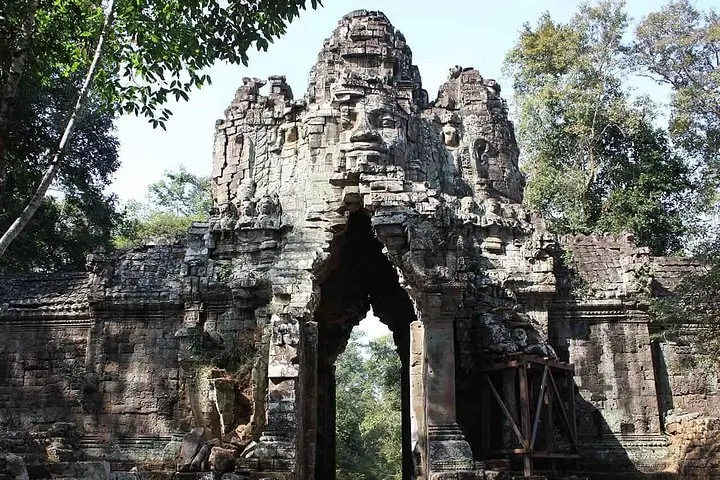
Sunrise breaks over the outer moat and the silhouette of Angkor Wat sharpens against a pale sky. Your private, air‑conditioned vehicle eases through sleepy Siem Reap lanes as a local guide maps the day: stone faces at Bayon, tree‑root corridors at Ta Prohm, the slow pulse of Tonlé Sap, and the waterfalls of Kulen Mountain.
Verified experiences and guided adventures in the surrounding area.
Operated by Siem Reap Shared Tours · Siem Reap, Siem Reap Province
Sunrise breaks over the outer moat and the silhouette of Angkor Wat sharpens against a pale sky. Your private, air‑conditioned vehicle eases through sleepy Siem Reap lanes as a local guide maps the day: stone faces at Bayon, tree‑root corridors at Ta Prohm, the slow pulse of Tonlé Sap, and the waterfalls of Kulen Mountain.
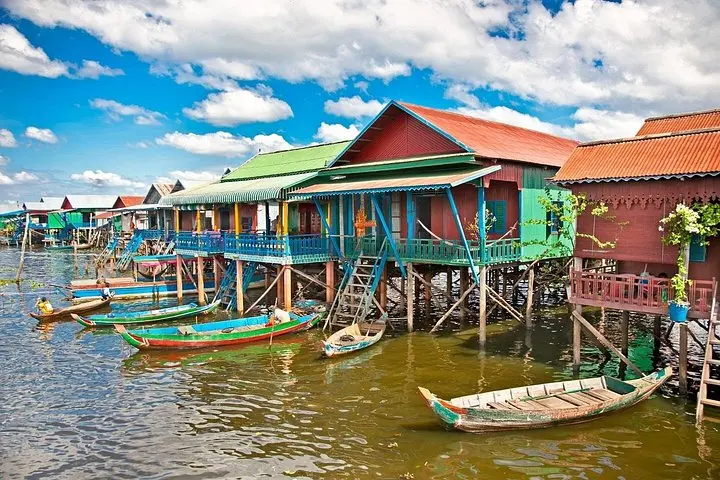
These temples sit on sandstone laid down in the region’s ancient river systems and were carved by the Khmer Empire between the 9th and 13th centuries. Angkor Thom’s carved faces and Angkor Wat’s axial symmetry reflect political and religious shifts, while Ta Prohm shows how rainforest and masonry compete for space. On Tonlé Sap, stilts and boats define a culture adapted to seasonal flood cycles; at Kulen, cascades and the River of a Thousand Lingas carry both geology and belief.
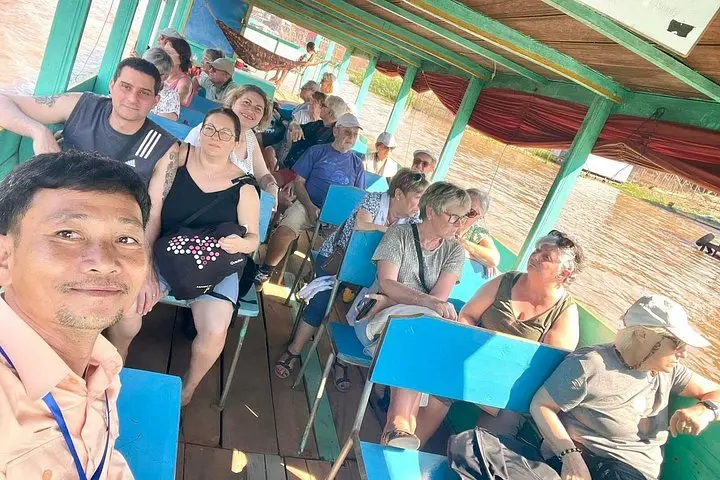
Expect long days on foot interspersed with short drives, moments of crowded sunrise and quieter mid‑day corners where carvings repay slow attention. The tour emphasizes comfort and flexibility—private transport, an English guide, cold water and towels—but entrance fees to parks and sites are not included.
Practical edge: start very early for temples to avoid heat and crowds, carry a lightweight rain jacket during the monsoon, wear closed-toe shoes for uneven stone and muddy trails at Kulen, and bring modest clothing for sacred sites. Hydrate often—the city heat pushes the tempo—and leave single‑use plastics behind; Tonlé Sap and the temple conservation programs benefit from low-impact visitors.
No; the tour does not include national park or temple entrance fees—these are typically purchased on arrival with cash (USD commonly accepted).
A private air‑conditioned vehicle and driver are included; confirmation of pickup point is requested at booking to arrange timely collection.
The itinerary is moderate: expect hours of walking on uneven stone, some short hikes at Kulen, and long days with breaks—suitable for most fitness levels who can walk several hours a day.
Yes—this private tour emphasizes flexibility; guides typically accommodate requests for extra time at key spots like sunrise or quieter temple corners.
Siem Reap Shared Tours operates guided outdoor trips and adventures with an emphasis on safety, stewardship, and memorable experiences.

Sunrise breaks over the outer moat and the silhouette of Angkor Wat sharpens against a pale sky. Your private, air‑conditioned vehicle eases through sleepy Siem Reap lanes as a local guide maps the day: stone faces at Bayon, tree‑root corridors at Ta Prohm, the slow pulse of Tonlé Sap, and the waterfalls of Kulen Mountain.
Sunrise breaks over the outer moat and the silhouette of Angkor Wat sharpens against a pale sky. Your private, air‑conditioned vehicle eases through sleepy Siem Reap lanes as a local guide maps the day: stone faces at Bayon, tree‑root corridors at Ta Prohm, the slow pulse of Tonlé Sap, and the waterfalls of Kulen Mountain.
These temples sit on sandstone laid down in the region’s ancient river systems and were carved by the Khmer Empire between the 9th and 13th centuries. Angkor Thom’s carved faces and Angkor Wat’s axial symmetry reflect political and religious shifts, while Ta Prohm shows how rainforest and masonry compete for space. On Tonlé Sap, stilts and boats define a culture adapted to seasonal flood cycles; at Kulen, cascades and the River of a Thousand Lingas carry both geology and belief.
Expect long days on foot interspersed with short drives, moments of crowded sunrise and quieter mid‑day corners where carvings repay slow attention. The tour emphasizes comfort and flexibility—private transport, an English guide, cold water and towels—but entrance fees to parks and sites are not included.
Practical edge: start very early for temples to avoid heat and crowds, carry a lightweight rain jacket during the monsoon, wear closed-toe shoes for uneven stone and muddy trails at Kulen, and bring modest clothing for sacred sites. Hydrate often—the city heat pushes the tempo—and leave single‑use plastics behind; Tonlé Sap and the temple conservation programs benefit from low-impact visitors.