THE ADVENTURE COLLECTIVE® · Independent discovery and booking for outdoor travel

A compact three‑day journey from Cairo into Siwa Oasis that pairs ancient oracle temples and salt lakes with dune drives and a desert overnight. Ideal for travelers seeking history, warm springs and a night under the stars.
A compact three‑day journey from Cairo into Siwa Oasis that pairs ancient oracle temples and salt lakes with dune drives and a desert overnight. Ideal for travelers seeking history, warm springs and a night under the stars.
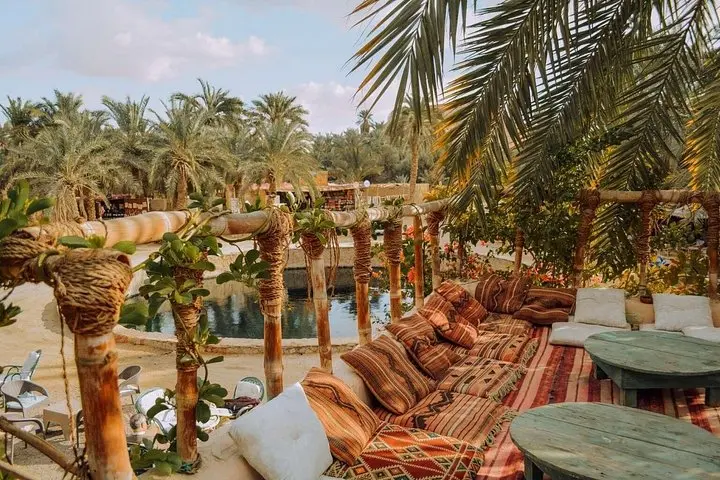
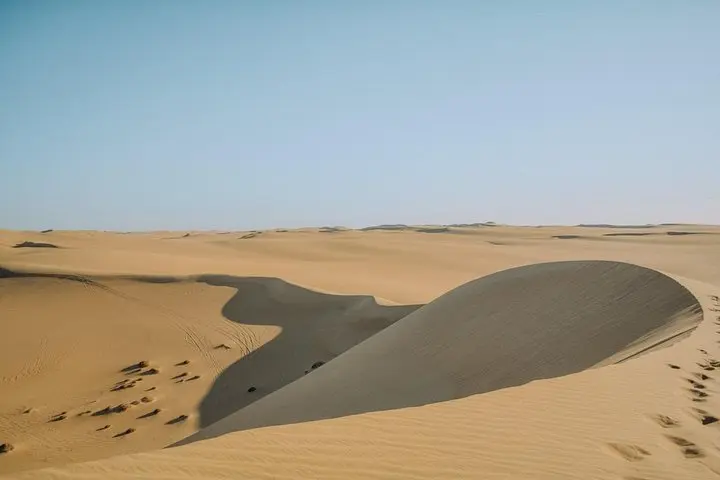
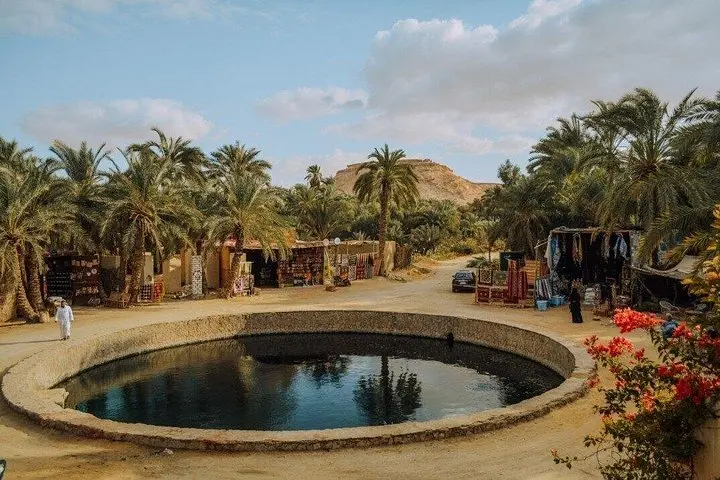
You step out of the air‑conditioned van and the light changes: a flat, pale horizon, wind-scoured dunes and palms punctuating an inland sea of sand. Siwa’s air feels drier and older than Cairo’s, and the first hour here is a lesson in scale — compact villages of mud-brick, white salt flats that glint like metal, and a silence that makes each footstep sound deliberate.
Verified experiences and guided adventures in the surrounding area.
Operated by Marsa Alam Tours · Siwa Oasis, Matrouh Governorate
You step out of the air‑conditioned van and the light changes: a flat, pale horizon, wind-scoured dunes and palms punctuating an inland sea of sand. Siwa’s air feels drier and older than Cairo’s, and the first hour here is a lesson in scale — compact villages of mud-brick, white salt flats that glint like metal, and a silence that makes each footstep sound deliberate.
The itinerary threads history and landscape. You visit the Temple of the Oracle — where Alexander is said to have sought confirmation of his lineage — then move through ruins of the Amun complex and the ruined Umm Ubaydah temple, whose scattered stones recall centuries of local life. Geologically, Siwa sits at the edge of the Great Sand Sea; wind and salt have shaped the Shali fortress and the surrounding halophyte flats. Culturally, Siwa is home to a distinct Siwan Berber community with its own dialect and crafts; you’ll see this in local food, architecture and salt-harvesting techniques.
Practical rhythm: mornings for archaeology and pools, midday for shaded rest or siesta, afternoons for salty lakes where buoyancy rivals the Dead Sea, and evenings for 4x4 dune drives and a night in a desert camp under low light pollution. Bring water and sun protection, keep salt water out of your eyes, and carry a small bottle to rinse off after floating. Expect easy walking on uneven ground, short vehicle transfers of several hours between sites, and simple but comfortable camping or half‑board lodgings. This is a short, sensory trip that balances gentle exploration with desert adventure.
Most tours provide private A/C transfers by road; the drive is long (roughly 8–10 hours) so this package includes transport and stops like El Alamein on the way.
Yes — the high salinity makes floating easy, but avoid getting salt in eyes and rinse thoroughly after; children should be supervised.
This tour offers a desert camp overnight with BBQ and simple facilities; half‑board hotel options in Siwa are available if you prefer a bed.
The tour notes wheelchair accessibility for transport and parts of the itinerary, but some ruins and dune areas have uneven ground—check specifics with the operator during booking.
Marsa Alam Tours operates guided outdoor trips and adventures with an emphasis on safety, stewardship, and memorable experiences.
You step out of the air‑conditioned van and the light changes: a flat, pale horizon, wind-scoured dunes and palms punctuating an inland sea of sand. Siwa’s air feels drier and older than Cairo’s, and the first hour here is a lesson in scale — compact villages of mud-brick, white salt flats that glint like metal, and a silence that makes each footstep sound deliberate.
You step out of the air‑conditioned van and the light changes: a flat, pale horizon, wind-scoured dunes and palms punctuating an inland sea of sand. Siwa’s air feels drier and older than Cairo’s, and the first hour here is a lesson in scale — compact villages of mud-brick, white salt flats that glint like metal, and a silence that makes each footstep sound deliberate.
The itinerary threads history and landscape. You visit the Temple of the Oracle — where Alexander is said to have sought confirmation of his lineage — then move through ruins of the Amun complex and the ruined Umm Ubaydah temple, whose scattered stones recall centuries of local life. Geologically, Siwa sits at the edge of the Great Sand Sea; wind and salt have shaped the Shali fortress and the surrounding halophyte flats. Culturally, Siwa is home to a distinct Siwan Berber community with its own dialect and crafts; you’ll see this in local food, architecture and salt-harvesting techniques.
Practical rhythm: mornings for archaeology and pools, midday for shaded rest or siesta, afternoons for salty lakes where buoyancy rivals the Dead Sea, and evenings for 4x4 dune drives and a night in a desert camp under low light pollution. Bring water and sun protection, keep salt water out of your eyes, and carry a small bottle to rinse off after floating. Expect easy walking on uneven ground, short vehicle transfers of several hours between sites, and simple but comfortable camping or half‑board lodgings. This is a short, sensory trip that balances gentle exploration with desert adventure.