THE ADVENTURE COLLECTIVE® · Independent discovery and booking for outdoor travel

A three‑day camping safari from Windhoek that places you at the base of Namibia’s most famous dunes — Dune 45, Big Daddy and the white pan of Deadvlei — with early mornings, long desert drives, and simple camps.
A three‑day camping safari from Windhoek that places you at the base of Namibia’s most famous dunes — Dune 45, Big Daddy and the white pan of Deadvlei — with early mornings, long desert drives, and simple camps.
You arrive at dawn with a sky the color of old copper, the Land Cruiser crunching toward a horizon defined by serrated sand. The first light draws hard shadows across faces of Dune 45; each step sinks and the slope seems to breathe, pushing you forward. Over three days the desert alternates between blunt, wind-carved ridges and startlingly flat pans — Deadvlei’s bleached trees reaching like hands toward an empty blue.
Verified experiences and guided adventures in the surrounding area.
Operated by Safari World Tours · Sesriem, Hardap
You arrive at dawn with a sky the color of old copper, the Land Cruiser crunching toward a horizon defined by serrated sand. The first light draws hard shadows across faces of Dune 45; each step sinks and the slope seems to breathe, pushing you forward. Over three days the desert alternates between blunt, wind-carved ridges and startlingly flat pans — Deadvlei’s bleached trees reaching like hands toward an empty blue.
The dunes are recent on a geologic timescale, wind‑built from Namib’s coastal sands that migrated inland over millennia. Sossusvlei sits inside Namib‑Naukluft National Park, an area shaped by ancient river systems and relentless aeolian forces; Sesriem Canyon, nearby, is a shallow gorge carved by seasonal floods. Human history here is sparse but rich: pastoral communities and early explorers left tracks and stories of survival under the sun.
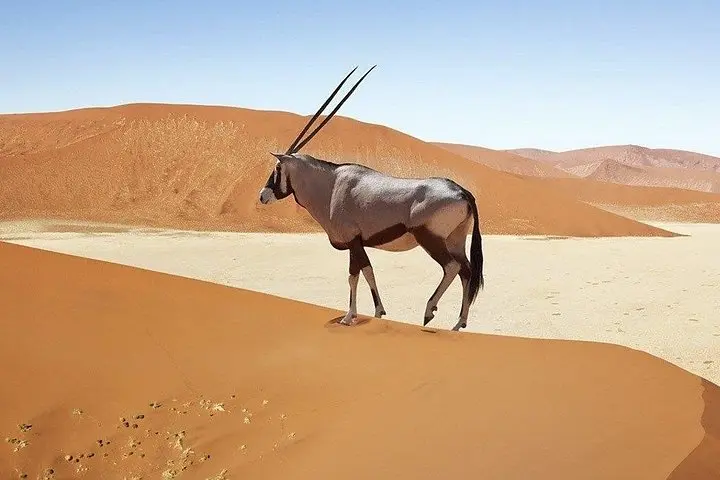
Culturally, expect simple hospitality: camp-cooked meals, stories around a stove, and long, essential quiet. Wildlife is subtle — oryx standing at the rim, larks flitting over salt pans; the landscape dominates the cast.
Practical guide: plan early starts (sunrise is the cool, photogenic window), carry at least 3–4 liters of water per day, and use high‑SPF sun protection. Footwear that grips in loose sand and layered clothing for hot days and cold nights are essential. Camps are comfortable, with tents and sleeping gear provided on this trip, but toilet facilities are basic and showers limited.
This camping safari is for travelers who welcome long drives, big skies, and walking where the land tests your pace — not a luxury lodge stay, but an unfiltered encounter with one of Earth’s oldest deserts.
The tour suits most fitness levels but involves walking on loose sand and climbing dunes; plan for short steep ascents and time in the vehicle.
Tents, mattresses, pillows, sleeping bags, utensils and most meals are provided; expect basic campsite facilities and communal meals prepared by the guide.
Visa and health requirements depend on your nationality—check current Namibia entry rules and recommended vaccines before travel.
Airport transfers are available on request; confirm pickup details and flight information when booking.
Safari World Tours operates guided outdoor trips and adventures with an emphasis on safety, stewardship, and memorable experiences.
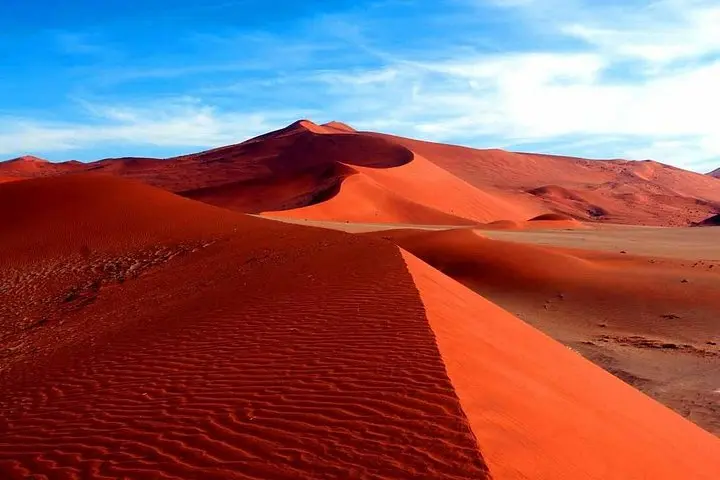
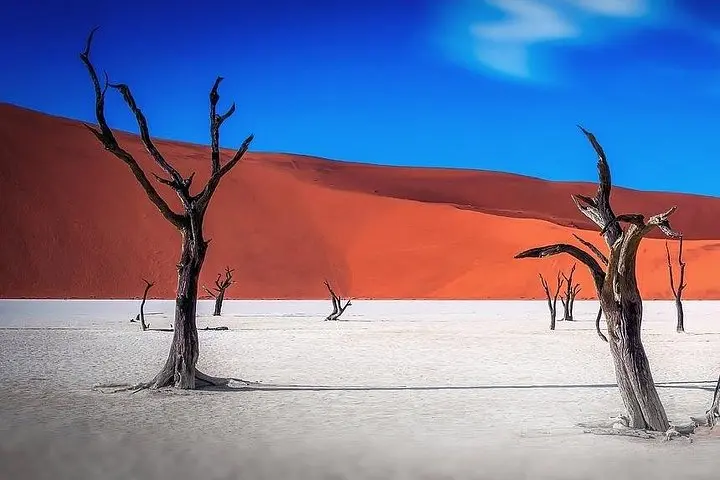
You arrive at dawn with a sky the color of old copper, the Land Cruiser crunching toward a horizon defined by serrated sand. The first light draws hard shadows across faces of Dune 45; each step sinks and the slope seems to breathe, pushing you forward. Over three days the desert alternates between blunt, wind-carved ridges and startlingly flat pans — Deadvlei’s bleached trees reaching like hands toward an empty blue.
You arrive at dawn with a sky the color of old copper, the Land Cruiser crunching toward a horizon defined by serrated sand. The first light draws hard shadows across faces of Dune 45; each step sinks and the slope seems to breathe, pushing you forward. Over three days the desert alternates between blunt, wind-carved ridges and startlingly flat pans — Deadvlei’s bleached trees reaching like hands toward an empty blue.
The dunes are recent on a geologic timescale, wind‑built from Namib’s coastal sands that migrated inland over millennia. Sossusvlei sits inside Namib‑Naukluft National Park, an area shaped by ancient river systems and relentless aeolian forces; Sesriem Canyon, nearby, is a shallow gorge carved by seasonal floods. Human history here is sparse but rich: pastoral communities and early explorers left tracks and stories of survival under the sun.
Culturally, expect simple hospitality: camp-cooked meals, stories around a stove, and long, essential quiet. Wildlife is subtle — oryx standing at the rim, larks flitting over salt pans; the landscape dominates the cast.
Practical guide: plan early starts (sunrise is the cool, photogenic window), carry at least 3–4 liters of water per day, and use high‑SPF sun protection. Footwear that grips in loose sand and layered clothing for hot days and cold nights are essential. Camps are comfortable, with tents and sleeping gear provided on this trip, but toilet facilities are basic and showers limited.
This camping safari is for travelers who welcome long drives, big skies, and walking where the land tests your pace — not a luxury lodge stay, but an unfiltered encounter with one of Earth’s oldest deserts.