THE ADVENTURE COLLECTIVE® · Independent discovery and booking for outdoor travel

A hands-on three-day safari that pairs Tarangire’s elephant-rich savanna with the dramatic 600 m drop of Ngorongoro Crater. Expect open-roof game drives, early starts for prime sightings, and a mix of lodge and campsite nights.
A hands-on three-day safari that pairs Tarangire’s elephant-rich savanna with the dramatic 600 m drop of Ngorongoro Crater. Expect open-roof game drives, early starts for prime sightings, and a mix of lodge and campsite nights.
Sunrise slides along the open roof as the Land Cruiser hums toward Tarangire, dust lifting off the red track. Elephants fidget in stands of club-sized baobabs, giraffes stride like sentries across the dry floodplain, and the Tarangire River pulls wildlife into a daily rhythm you can watch from the vehicle.
Verified experiences and guided adventures in the surrounding area.
Operated by Beulah Tours and Safaris · Arusha, Arusha Region
Sunrise slides along the open roof as the Land Cruiser hums toward Tarangire, dust lifting off the red track. Elephants fidget in stands of club-sized baobabs, giraffes stride like sentries across the dry floodplain, and the Tarangire River pulls wildlife into a daily rhythm you can watch from the vehicle.
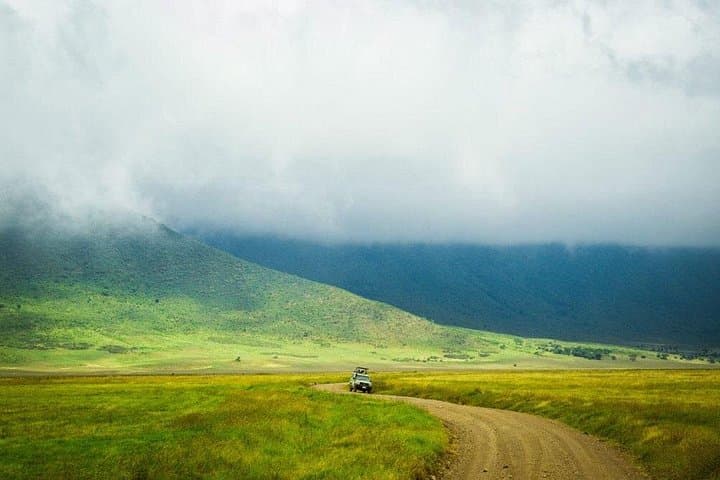
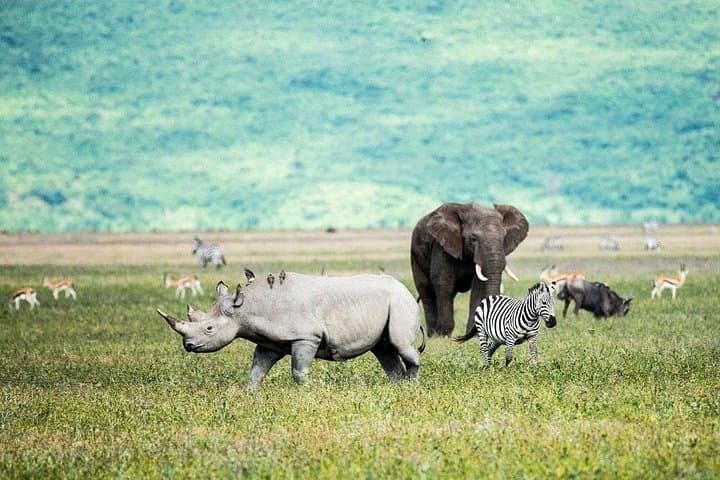
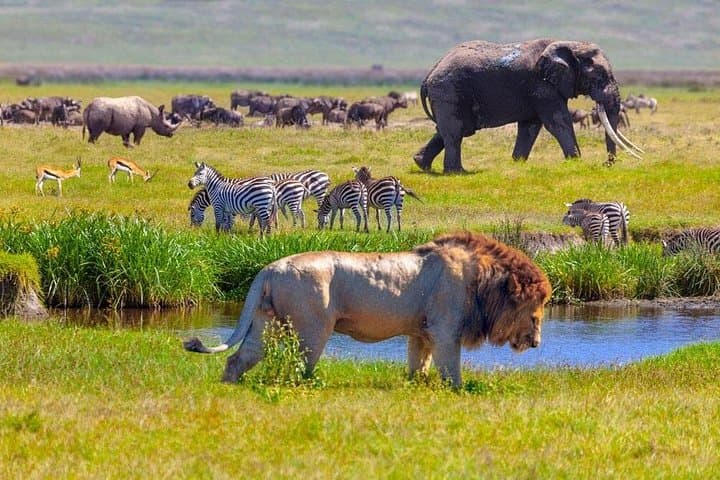
This compact three-day loop pairs Tarangire’s wide savannas with the vertiginous drama of Ngorongoro Crater. Tarangire is a savannah of seasonal swamps and baobabs—expect game drives across flat, grassy plains and riverine pockets. Ngorongoro is a collapsed volcano: a 600 m deep caldera whose rim sits roughly 2,200–2,400 m above sea level and shelters dense populations of grazers, predators and resident black rhino. The region’s human history is layered too, from Maasai pastoralists traversing highlands to nearby archaeological sites that chart early hominin activity.
Practical notes: drives between Arusha and Tarangire take about two hours on graded roads; crater descents follow steep, switchback tracks into the basin. Vehicles remain the primary means to cover distances—expect long stretches in the field and early starts for best light and animal activity. Pack binoculars, sun protection, and a warm layer for cool highland mornings; hydration and motion-aware footwear make daily transitions comfortable.
Conservation-minded travelers should respect park rules, avoid off-road driving, and support guides who prioritize wildlife welfare. With open-roof game viewing, a sensible pace, and local guides, this three-day safari delivers intense wildlife viewing without deep backcountry logistics.
Park fees for non-residents are included in this tour’s listed inclusions—confirm specifics with your provider when booking.
Typical transfer time is about two hours on graded roads, though conditions and stops can extend transit.
The operator lists the tour as suitable for all fitness levels and wheelchair accessible in specified areas, but confirm vehicle boarding needs and lodge accessibility in advance.
Dry months (June–October) concentrate animals around permanent water and generally offer clearer roads and better viewing; short rains (Nov–Dec, Mar–May) bring lush scenery and newborns but can affect access.
Beulah Tours and Safaris operates guided outdoor trips and adventures with an emphasis on safety, stewardship, and memorable experiences.
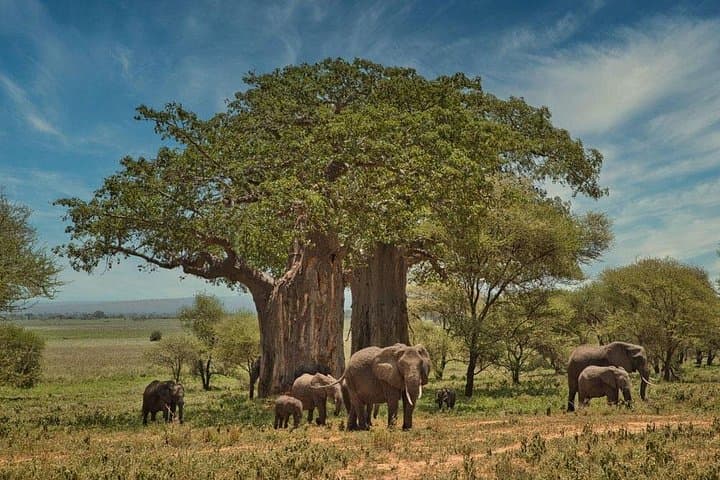
Sunrise slides along the open roof as the Land Cruiser hums toward Tarangire, dust lifting off the red track. Elephants fidget in stands of club-sized baobabs, giraffes stride like sentries across the dry floodplain, and the Tarangire River pulls wildlife into a daily rhythm you can watch from the vehicle.
Sunrise slides along the open roof as the Land Cruiser hums toward Tarangire, dust lifting off the red track. Elephants fidget in stands of club-sized baobabs, giraffes stride like sentries across the dry floodplain, and the Tarangire River pulls wildlife into a daily rhythm you can watch from the vehicle.
This compact three-day loop pairs Tarangire’s wide savannas with the vertiginous drama of Ngorongoro Crater. Tarangire is a savannah of seasonal swamps and baobabs—expect game drives across flat, grassy plains and riverine pockets. Ngorongoro is a collapsed volcano: a 600 m deep caldera whose rim sits roughly 2,200–2,400 m above sea level and shelters dense populations of grazers, predators and resident black rhino. The region’s human history is layered too, from Maasai pastoralists traversing highlands to nearby archaeological sites that chart early hominin activity.
Practical notes: drives between Arusha and Tarangire take about two hours on graded roads; crater descents follow steep, switchback tracks into the basin. Vehicles remain the primary means to cover distances—expect long stretches in the field and early starts for best light and animal activity. Pack binoculars, sun protection, and a warm layer for cool highland mornings; hydration and motion-aware footwear make daily transitions comfortable.
Conservation-minded travelers should respect park rules, avoid off-road driving, and support guides who prioritize wildlife welfare. With open-roof game viewing, a sensible pace, and local guides, this three-day safari delivers intense wildlife viewing without deep backcountry logistics.