THE ADVENTURE COLLECTIVE® · Independent discovery and booking for outdoor travel

A compact three-day trek from Marrakech to the summit of Jebel Toubkal, the highest peak in North Africa. Follow mule tracks through juniper forests, Berber villages and high ridgelines with a refuge overnight and an early-morning summit push.
A compact three-day trek from Marrakech to the summit of Jebel Toubkal, the highest peak in North Africa. Follow mule tracks through juniper forests, Berber villages and high ridgelines with a refuge overnight and an early-morning summit push.
The trail opens with the dust and heat of Marrakech fading behind you as a ribbon of road climbs toward Atlas villages; cedar and juniper lean over switchbacks while goats pick the scrub. By late afternoon the path turns to rock and mule-track, the air thinning, and the mountain’s scale becomes a constant presence.
Verified experiences and guided adventures in the surrounding area.
Operated by Marrakech Tours Excursions · Marrakech, Marrakesh-Safi
The trail opens with the dust and heat of Marrakech fading behind you as a ribbon of road climbs toward Atlas villages; cedar and juniper lean over switchbacks while goats pick the scrub. By late afternoon the path turns to rock and mule-track, the air thinning, and the mountain’s scale becomes a constant presence.
This three-day itinerary follows classic High Atlas lines: a transfer from Marrakech to Imlil, hikes through Azzaden Valley and Tizi Mzik, an overnight near the Toubkal refuge, and an early summit push to Jebel Toubkal (4,167 m) on day three. Geologically, the massif is an uplifted block of Atlas chain, composed of schist and granite scars that catch afternoon light; culturally the route threads Berber hamlets where terraced fields and stone houses record centuries of mountain livelihood.
Expect open slopes, scree fields and a final steep ridge that tests lungs and legs—the ascent from Imlil (~1,740 m) to the summit gains roughly 2,400 m across the trek, typically split into manageable stages. Weather can flip fast: clear, sun-baked mornings give way to wind and afternoon clouds.
Practical edge: start the summit before dawn, carry 2–3 liters of water, layer for high-elevation cold, and use sturdy boots with ankle support. A guide or mule support eases logistics and sharpens cultural context at village stops. If you crave panoramic ridgelines, close contact with Berber communities, and a technically straightforward but physically demanding mountain objective, this route delivers—efficiently planned over three days from Marrakech.
A guide is recommended for navigation, local logistics, cultural access to Berber villages, and safety in changing mountain weather.
The summit day is long and steep with several hours of ascent at altitude; expect 6–10 hours round-trip from the refuge depending on pace.
Winter is possible but requires winter mountaineering experience, crampons and an ice axe; many operators run guided winter ascents only.
Typical packages include breakfast, lunch and dinner and an overnight at a mountain refuge or guesthouse near the refuge; verify specifics with the operator.
Marrakech Tours Excursions operates guided outdoor trips and adventures with an emphasis on safety, stewardship, and memorable experiences.
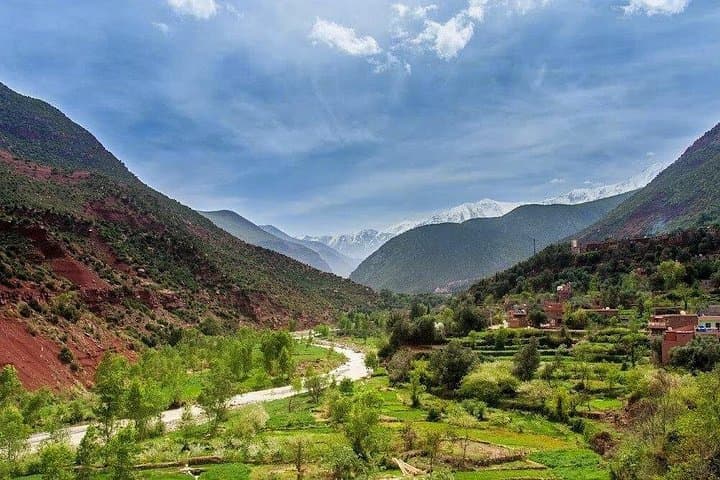

The trail opens with the dust and heat of Marrakech fading behind you as a ribbon of road climbs toward Atlas villages; cedar and juniper lean over switchbacks while goats pick the scrub. By late afternoon the path turns to rock and mule-track, the air thinning, and the mountain’s scale becomes a constant presence.
The trail opens with the dust and heat of Marrakech fading behind you as a ribbon of road climbs toward Atlas villages; cedar and juniper lean over switchbacks while goats pick the scrub. By late afternoon the path turns to rock and mule-track, the air thinning, and the mountain’s scale becomes a constant presence.
This three-day itinerary follows classic High Atlas lines: a transfer from Marrakech to Imlil, hikes through Azzaden Valley and Tizi Mzik, an overnight near the Toubkal refuge, and an early summit push to Jebel Toubkal (4,167 m) on day three. Geologically, the massif is an uplifted block of Atlas chain, composed of schist and granite scars that catch afternoon light; culturally the route threads Berber hamlets where terraced fields and stone houses record centuries of mountain livelihood.
Expect open slopes, scree fields and a final steep ridge that tests lungs and legs—the ascent from Imlil (~1,740 m) to the summit gains roughly 2,400 m across the trek, typically split into manageable stages. Weather can flip fast: clear, sun-baked mornings give way to wind and afternoon clouds.
Practical edge: start the summit before dawn, carry 2–3 liters of water, layer for high-elevation cold, and use sturdy boots with ankle support. A guide or mule support eases logistics and sharpens cultural context at village stops. If you crave panoramic ridgelines, close contact with Berber communities, and a technically straightforward but physically demanding mountain objective, this route delivers—efficiently planned over three days from Marrakech.