THE ADVENTURE COLLECTIVE® · Independent discovery and booking for outdoor travel

Move from rainforest cliffs to lunar sand to an acid-blue crater on this three-day circuit through East Java. Expect wet trails at Tumpak Sewu, a Jeep crossing of Bromo’s Sea of Sand, and a night hike to Ijen’s blue fire.
Move from rainforest cliffs to lunar sand to an acid-blue crater on this three-day circuit through East Java. Expect wet trails at Tumpak Sewu, a Jeep crossing of Bromo’s Sea of Sand, and a night hike to Ijen’s blue fire.
You step out of the Jeep before dawn and the air bites with a thin cold that feels new on Java—Pananjakan waits above a bowl of steam and shadow. Below, the Sea of Sand stretches black and mute; higher still, the rim of Bromo peels into a crater that exhales sulfur and history. Over three days you move from rainforest falls to volcanic moonscape to an acid-blue crater that glows in the night.
Verified experiences and guided adventures in the surrounding area.
Operated by Smartine Indonesia Travel · Malang, East Java
You step out of the Jeep before dawn and the air bites with a thin cold that feels new on Java—Pananjakan waits above a bowl of steam and shadow. Below, the Sea of Sand stretches black and mute; higher still, the rim of Bromo peels into a crater that exhales sulfur and history. Over three days you move from rainforest falls to volcanic moonscape to an acid-blue crater that glows in the night.
Tumpak Sewu in Lumajang is a curtain waterfall carved into a horseshoe headwall; the descent to the base is wet, rocky and often ankle-deep in trickling streams. Bromo sits inside the Tengger caldera—an ancient collapse shaped by eruptions and wind—and Pananjakan’s viewpoint (≈2,770 m) gives a panoramic lesson in Java’s volcanic geology and Tengger culture. Ijen’s crater lake is one of the world’s most acidic and the blue flame phenomenon is driven by sulfuric gas igniting in cooler night air; miners still hand-carry heavy loads up the crater path.
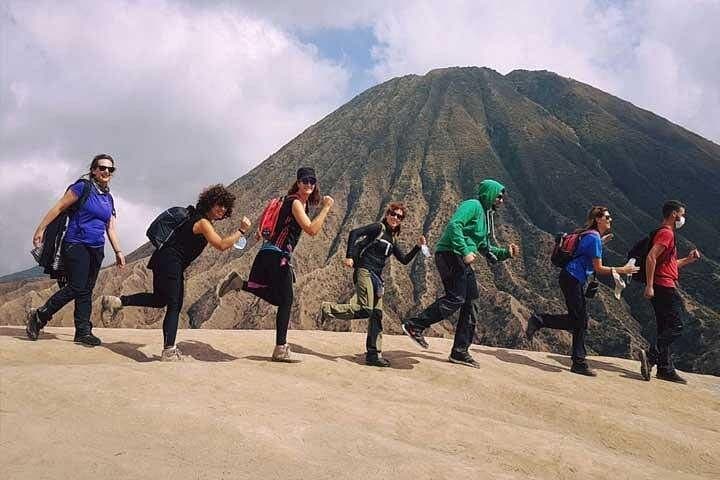
Expect 3–6 km of mixed hiking: short steep stairways at Tumpak Sewu, a 45-minute climb to Bromo’s rim, and a 3 km night ascent to Ijen’s rim from Paltuding with a 1.5 km descent into the crater. Wear grippy, water-resistant footwear for falls, pack warm layers for pre-dawn viewpoints, and bring a headlamp for the Ijen approach. Guides and a gas mask are typically provided; monitor weather—heavy rain turns paths slick and visibility poor. Plan for early starts, modest altitude, and unforgettable light.
No—blue fire requires clear, dark conditions; rain, wind or poor visibility can prevent seeing it. Operators usually monitor conditions and may advise changes.
Expect a 3 km ascent from Paltuding with uneven volcanic trail; altitude is modest (~2,443 m) but the night timing and steep sections require steady pace and basic fitness.
This tour normally includes entrance fees and provides gas masks for Ijen; confirm with your operator if you prefer to bring your own respirator.
Yes—the itinerary notes an option to end in Ketapang ferry port to cross to Bali; inform the operator at booking to arrange drop-off timing.
Smartine Indonesia Travel operates guided outdoor trips and adventures with an emphasis on safety, stewardship, and memorable experiences.
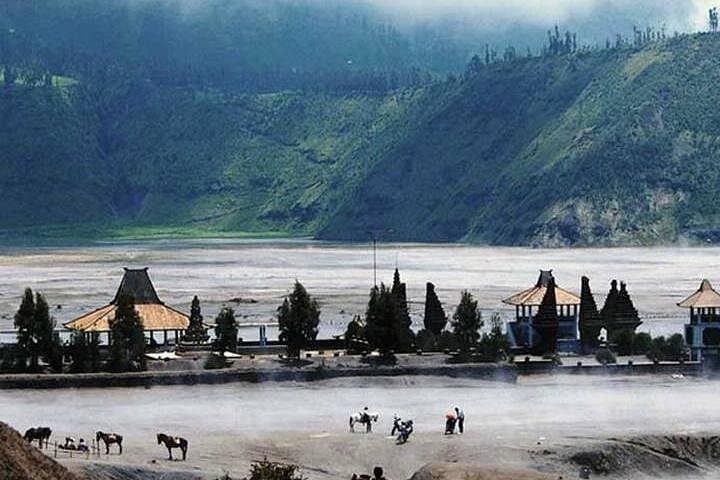
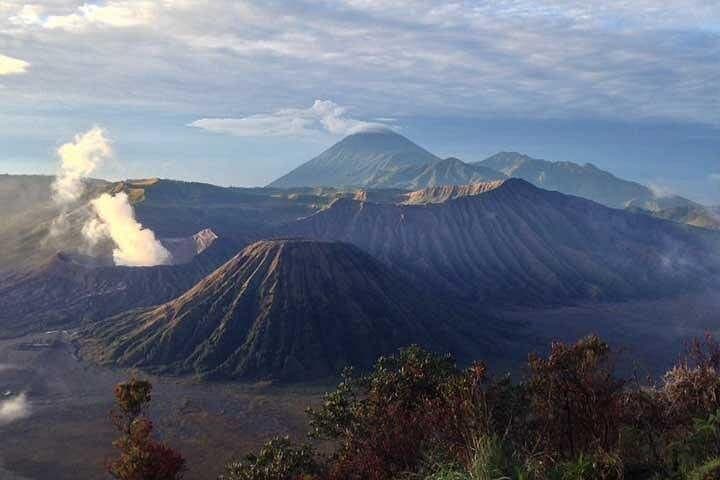
You step out of the Jeep before dawn and the air bites with a thin cold that feels new on Java—Pananjakan waits above a bowl of steam and shadow. Below, the Sea of Sand stretches black and mute; higher still, the rim of Bromo peels into a crater that exhales sulfur and history. Over three days you move from rainforest falls to volcanic moonscape to an acid-blue crater that glows in the night.
You step out of the Jeep before dawn and the air bites with a thin cold that feels new on Java—Pananjakan waits above a bowl of steam and shadow. Below, the Sea of Sand stretches black and mute; higher still, the rim of Bromo peels into a crater that exhales sulfur and history. Over three days you move from rainforest falls to volcanic moonscape to an acid-blue crater that glows in the night.
Tumpak Sewu in Lumajang is a curtain waterfall carved into a horseshoe headwall; the descent to the base is wet, rocky and often ankle-deep in trickling streams. Bromo sits inside the Tengger caldera—an ancient collapse shaped by eruptions and wind—and Pananjakan’s viewpoint (≈2,770 m) gives a panoramic lesson in Java’s volcanic geology and Tengger culture. Ijen’s crater lake is one of the world’s most acidic and the blue flame phenomenon is driven by sulfuric gas igniting in cooler night air; miners still hand-carry heavy loads up the crater path.
Expect 3–6 km of mixed hiking: short steep stairways at Tumpak Sewu, a 45-minute climb to Bromo’s rim, and a 3 km night ascent to Ijen’s rim from Paltuding with a 1.5 km descent into the crater. Wear grippy, water-resistant footwear for falls, pack warm layers for pre-dawn viewpoints, and bring a headlamp for the Ijen approach. Guides and a gas mask are typically provided; monitor weather—heavy rain turns paths slick and visibility poor. Plan for early starts, modest altitude, and unforgettable light.