THE ADVENTURE COLLECTIVE® · Independent discovery and booking for outdoor travel

Ride camels across the golden dunes of the Grand Erg on a three-day guided trek from Douz, sleeping two nights in desert camps and watching sunrise and sunset from high sand ridges. Practical for first-time desert travelers with modest fitness and a taste for simple, authentic camp life.
Ride camels across the golden dunes of the Grand Erg on a three-day guided trek from Douz, sleeping two nights in desert camps and watching sunrise and sunset from high sand ridges. Practical for first-time desert travelers with modest fitness and a taste for simple, authentic camp life.
The first morning light in the Sahara feels sharp and enormous: a pale sun edges up over rippling dunes as you settle onto a camel’s rhythmic gait. You leave Douz behind—its palm groves shrinking to a rim of green—while the dunes open into broad fields of wind-sculpted sand. The camels’ footsteps whisper; the sky dares you to look up.
Verified experiences and guided adventures in the surrounding area.
Operated by SAHARANSKY · Douz, Kebili Governorate
The first morning light in the Sahara feels sharp and enormous: a pale sun edges up over rippling dunes as you settle onto a camel’s rhythmic gait. You leave Douz behind—its palm groves shrinking to a rim of green—while the dunes open into broad fields of wind-sculpted sand. The camels’ footsteps whisper; the sky dares you to look up.
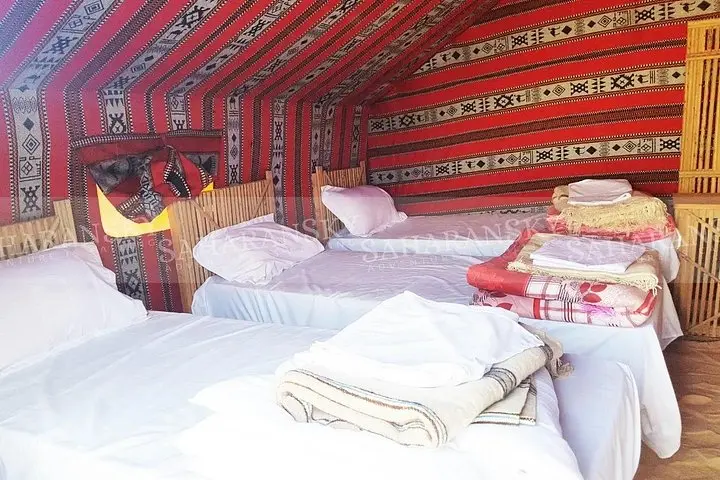
This three-day trek follows traditional Bedouin routes across the Grand Erg. The region’s geology is recent in geological terms—sand and silt blown into sheets and crescent dunes that shift with each season—while the human history is older: Douz has long been a trading and nomadic crossroads, and you’ll sleep in camps where Berber music and stories keep that heritage alive.
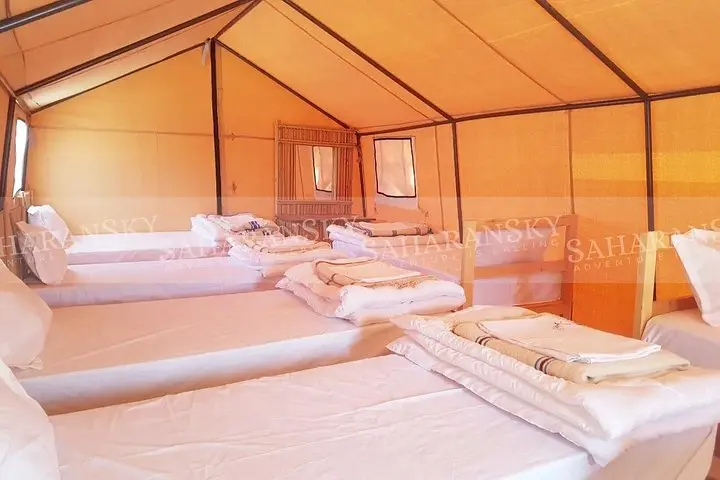
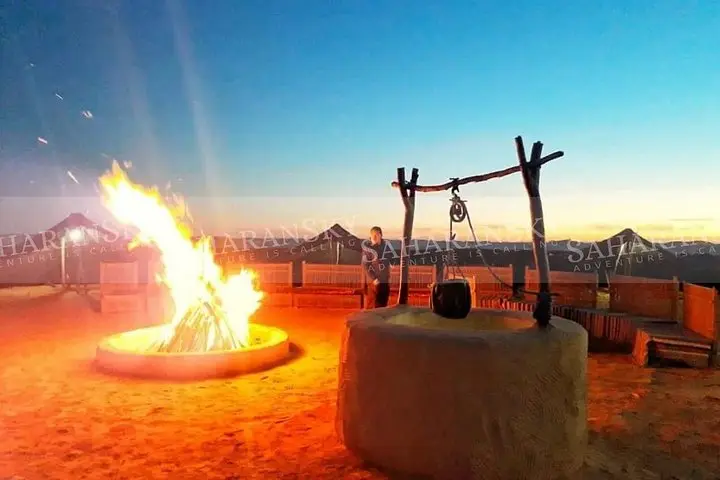
Expect long stretches of soft sand, low scrub, rare acacia and dramatic sunrises and sunsets. Nights are remarkably clear; in the absence of light pollution, constellations take on a new familiarity. The itinerary typically includes two nights at a desert camp with shared facilities, meals prepared over an open fire, and a local cameleer guiding the group.
Practical points: rides are gentle but can be tiring after hours in the saddle—plan for 3–6 hours mounted across a day, with breaks for shade and lunch. Hydration is critical—carry 2–3 liters per day and use the turbans provided to protect your head and face. Wear sturdy, closed shoes for walking on hot sand, layered clothes for large temperature swings, and a small daypack for essentials. Morning pickups from Douz (around 09:00) and return by late morning on day three make this an accessible introduction to desert travel for most fit travelers.
Rides are generally steady and suitable for most fitness levels; expect several hours in the saddle across a day with frequent breaks—those with serious back or mobility issues should consult their doctor before booking.
Two nights in a desert camp with basic sleeping arrangements, shared facilities, and meals prepared by the team; camps emphasize local style rather than luxury.
Children may join but must be supervised; infants often sit on laps during camel transport and specialized infant seats may be available—check with the operator beforehand.
Meals are included and typically local Berber cuisine; vegetarian options are available if requested at booking—notify the operator of dietary needs ahead of time.
SAHARANSKY operates guided outdoor trips and adventures with an emphasis on safety, stewardship, and memorable experiences.
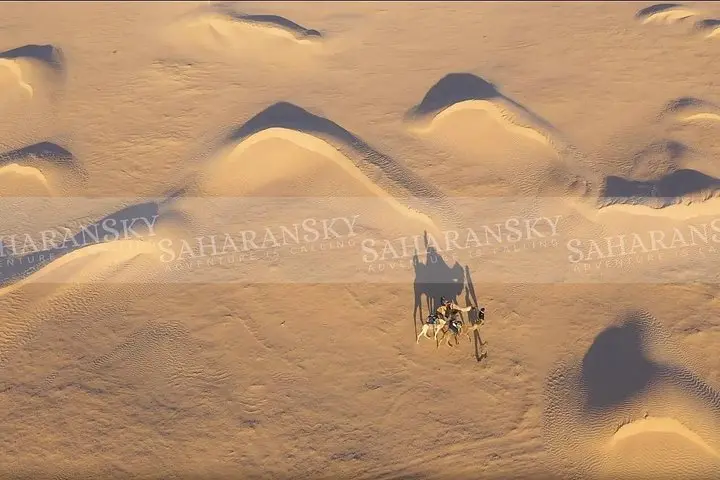
The first morning light in the Sahara feels sharp and enormous: a pale sun edges up over rippling dunes as you settle onto a camel’s rhythmic gait. You leave Douz behind—its palm groves shrinking to a rim of green—while the dunes open into broad fields of wind-sculpted sand. The camels’ footsteps whisper; the sky dares you to look up.
The first morning light in the Sahara feels sharp and enormous: a pale sun edges up over rippling dunes as you settle onto a camel’s rhythmic gait. You leave Douz behind—its palm groves shrinking to a rim of green—while the dunes open into broad fields of wind-sculpted sand. The camels’ footsteps whisper; the sky dares you to look up.
This three-day trek follows traditional Bedouin routes across the Grand Erg. The region’s geology is recent in geological terms—sand and silt blown into sheets and crescent dunes that shift with each season—while the human history is older: Douz has long been a trading and nomadic crossroads, and you’ll sleep in camps where Berber music and stories keep that heritage alive.
Expect long stretches of soft sand, low scrub, rare acacia and dramatic sunrises and sunsets. Nights are remarkably clear; in the absence of light pollution, constellations take on a new familiarity. The itinerary typically includes two nights at a desert camp with shared facilities, meals prepared over an open fire, and a local cameleer guiding the group.
Practical points: rides are gentle but can be tiring after hours in the saddle—plan for 3–6 hours mounted across a day, with breaks for shade and lunch. Hydration is critical—carry 2–3 liters per day and use the turbans provided to protect your head and face. Wear sturdy, closed shoes for walking on hot sand, layered clothes for large temperature swings, and a small daypack for essentials. Morning pickups from Douz (around 09:00) and return by late morning on day three make this an accessible introduction to desert travel for most fit travelers.