THE ADVENTURE COLLECTIVE® · Independent discovery and booking for outdoor travel

A compact 3-day camping safari from Ayers Rock carries you from Uluru’s base to the domes of Kata Tjuta and the rim of Kings Canyon. Expect guided cultural walks, sunrise and sunset viewings, and nights sleeping under a sky thick with stars.
A compact 3-day camping safari from Ayers Rock carries you from Uluru’s base to the domes of Kata Tjuta and the rim of Kings Canyon. Expect guided cultural walks, sunrise and sunset viewings, and nights sleeping under a sky thick with stars.
The bus slows to a hush as the desert opens—Uluru rising from the red like a weathered ship in the sand. Morning light pulls the rock through an amber spectrum; small crevices and water-sculpted streaks sharpen into relief. Your guide gestures to silence: here the landscape speaks in colour and story, not volume.
Verified experiences and guided adventures in the surrounding area.
Operated by Adventure Tours Australia · Yulara, Northern Territory
The bus slows to a hush as the desert opens—Uluru rising from the red like a weathered ship in the sand. Morning light pulls the rock through an amber spectrum; small crevices and water-sculpted streaks sharpen into relief. Your guide gestures to silence: here the landscape speaks in colour and story, not volume.
Over three days this camping safari threads you between three of the Red Centre’s great attractions: the perimeter of Uluru, the domed amphitheatre of Kata Tjuta and the vertiginous rim of Kings Canyon. Geologically, you’re standing on deep-time drama—sandstone and conglomerate folded, baked and eroded over hundreds of millions of years. Cultural context is inseparable: Anangu owners hold Tjukurpa (creation stories) in these places, and the itinerary balances guided interpretation with the quiet of the outback. Note: climbing Uluru is permanently closed; the experience here is contemplative, not conquering.
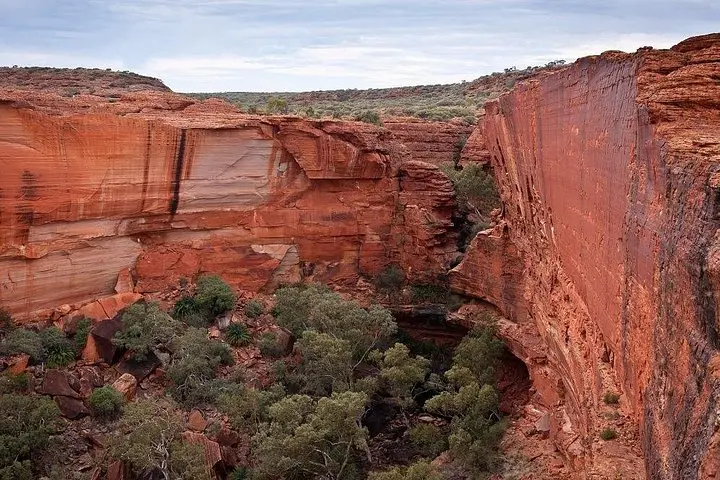
Daylight here is tactile. At Kata Tjuta you weave through domes, gullies and wind-polished domes where the air tastes of dust and eucalyptus. At Uluru the 10.6 km base walk reveals waterholes, rock art panels and Mutitjulu’s shadowed pool; at Kings Canyon the 6 km rim loop rewards effort with cliff-edged views into the Garden of Eden—a sheltered pocket of greenery and rockpools where cycads and mulga gather like refugees.
Practicalities are straightforward and necessary. The trip departs Yulara (Ayers Rock Airport) in the afternoon so arrive early—there’s a free airport shuttle to Desert Gardens Hotel. Accommodation is permanent twin-share tents with beds, linen and fans; two breakfasts, lunches and dinners are included. Expect walking on packed red sand, gravel and sections of sandstone where traction can be loose. The Kings Canyon Rim Walk usually takes 3–4 hours and begins with a steep climb; the Uluru base loop is longer but flatter.
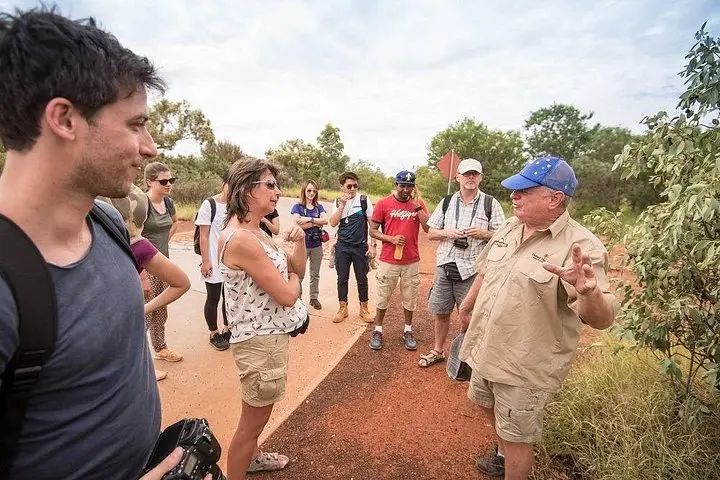
Bring sun protection, at least 2–3 litres of water per person per day, and sturdy boots with good tread. Temperatures swing; early starts avoid midday heat. Guides lead cultural talks and interpretive walks—listen; they’ll point out plants, animal tracks and the small signs of life that survive here.
This safari is equal parts natural spectacle and cultural orientation. It moves deliberately, offering sunsets and sunrises that recalibrate your sense of scale, evenings under a stellar sky and mornings where rock and story intersect. For travelers who want immersive framing without the fuss—camp comfort, knowledgeable guides and a compact itinerary—this three-day loop through Australia’s Red Centre is a practical, powerful way to feel the country’s heart.
No; climbing Uluru is permanently closed. Tours focus on base walks, cultural interpretation and approved viewpoints.
Closed-toe hiking boots with good grip and ankle support are recommended—there is a steep initial ascent and some exposed rim sections.
Yes—permanent twin-share tents with beds, linen and fans are provided, along with included breakfasts, lunches and dinners as listed.
Summer days can exceed 35°C (95°F); walks are scheduled for cooler hours—early morning and late afternoon—to avoid peak heat.
Look for red kangaroos at dawn/dusk and monitor lizards like the perentie near rocky outcrops; birdlife includes wedge-tailed eagles and zebra finches.
Most travelers fly into Ayers Rock (Yulara) Airport; a free shuttle runs to Desert Gardens Hotel, or meet at the airport per your booking instructions.
Adventure Tours Australia operates guided outdoor trips and adventures with an emphasis on safety, stewardship, and memorable experiences.
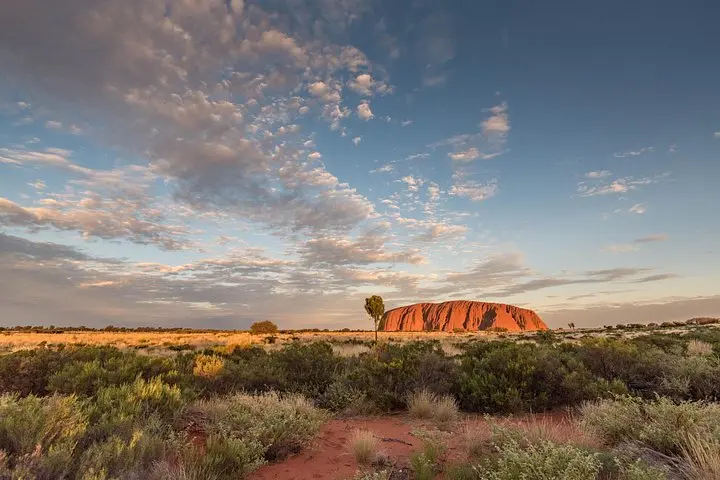
The bus slows to a hush as the desert opens—Uluru rising from the red like a weathered ship in the sand. Morning light pulls the rock through an amber spectrum; small crevices and water-sculpted streaks sharpen into relief. Your guide gestures to silence: here the landscape speaks in colour and story, not volume.
The bus slows to a hush as the desert opens—Uluru rising from the red like a weathered ship in the sand. Morning light pulls the rock through an amber spectrum; small crevices and water-sculpted streaks sharpen into relief. Your guide gestures to silence: here the landscape speaks in colour and story, not volume.
Over three days this camping safari threads you between three of the Red Centre’s great attractions: the perimeter of Uluru, the domed amphitheatre of Kata Tjuta and the vertiginous rim of Kings Canyon. Geologically, you’re standing on deep-time drama—sandstone and conglomerate folded, baked and eroded over hundreds of millions of years. Cultural context is inseparable: Anangu owners hold Tjukurpa (creation stories) in these places, and the itinerary balances guided interpretation with the quiet of the outback. Note: climbing Uluru is permanently closed; the experience here is contemplative, not conquering.
Daylight here is tactile. At Kata Tjuta you weave through domes, gullies and wind-polished domes where the air tastes of dust and eucalyptus. At Uluru the 10.6 km base walk reveals waterholes, rock art panels and Mutitjulu’s shadowed pool; at Kings Canyon the 6 km rim loop rewards effort with cliff-edged views into the Garden of Eden—a sheltered pocket of greenery and rockpools where cycads and mulga gather like refugees.
Practicalities are straightforward and necessary. The trip departs Yulara (Ayers Rock Airport) in the afternoon so arrive early—there’s a free airport shuttle to Desert Gardens Hotel. Accommodation is permanent twin-share tents with beds, linen and fans; two breakfasts, lunches and dinners are included. Expect walking on packed red sand, gravel and sections of sandstone where traction can be loose. The Kings Canyon Rim Walk usually takes 3–4 hours and begins with a steep climb; the Uluru base loop is longer but flatter.
Bring sun protection, at least 2–3 litres of water per person per day, and sturdy boots with good tread. Temperatures swing; early starts avoid midday heat. Guides lead cultural talks and interpretive walks—listen; they’ll point out plants, animal tracks and the small signs of life that survive here.
This safari is equal parts natural spectacle and cultural orientation. It moves deliberately, offering sunsets and sunrises that recalibrate your sense of scale, evenings under a stellar sky and mornings where rock and story intersect. For travelers who want immersive framing without the fuss—camp comfort, knowledgeable guides and a compact itinerary—this three-day loop through Australia’s Red Centre is a practical, powerful way to feel the country’s heart.