THE ADVENTURE COLLECTIVE® · Independent discovery and booking for outdoor travel

A three-day semi-private circuit from Uyuni across the Salar de Uyuni and into the Eduardo Avaroa Reserve. Expect mirror-like salt plains, cactus islands, colored high-Andean lagoons and geothermal fields—packed into an accessible overland route.
A three-day semi-private circuit from Uyuni across the Salar de Uyuni and into the Eduardo Avaroa Reserve. Expect mirror-like salt plains, cactus islands, colored high-Andean lagoons and geothermal fields—packed into an accessible overland route.
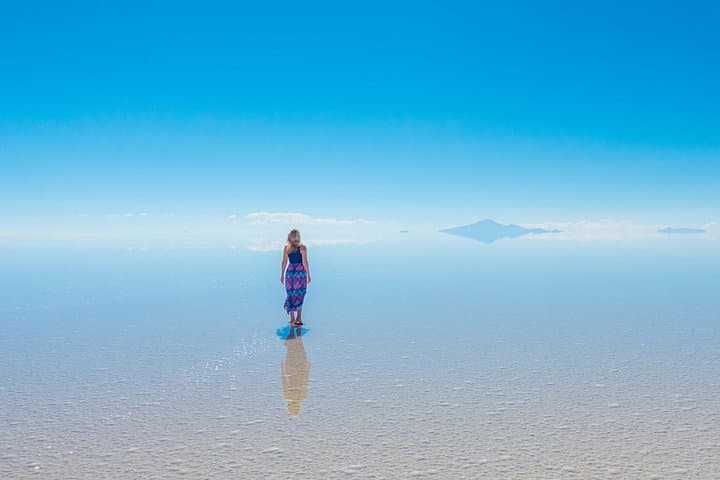
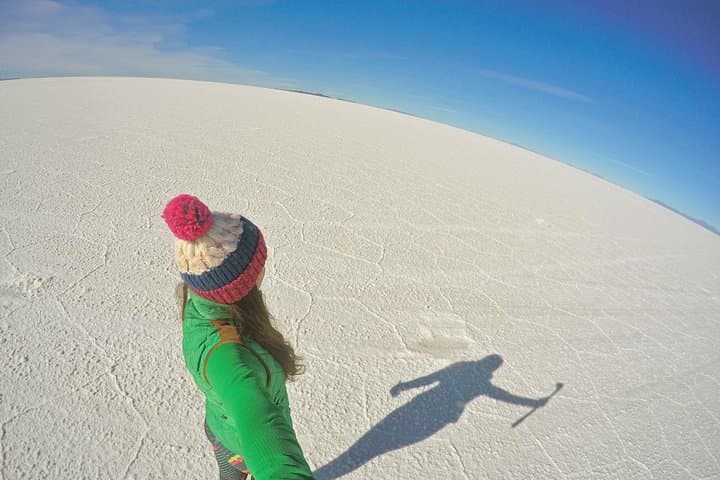
You step from the dusty road onto a white plain so vast it flattens distance and sound; the salt crust cracks underfoot like faint ice and the high-altitude air is thin and sharp. On day one the mirror of the Salar de Uyuni stretches to the horizon, optical tricks appearing during the rains and a cactus-covered island rising like an inland atoll at Incahuasi, where panoramic ridgelines reveal the salt flat's scale.
Verified experiences and guided adventures in the surrounding area.
Operated by Late Bolivia · Uyuni, Potosí Department
You step from the dusty road onto a white plain so vast it flattens distance and sound; the salt crust cracks underfoot like faint ice and the high-altitude air is thin and sharp. On day one the mirror of the Salar de Uyuni stretches to the horizon, optical tricks appearing during the rains and a cactus-covered island rising like an inland atoll at Incahuasi, where panoramic ridgelines reveal the salt flat's scale.
Geology here is recent on a deep timescale: the salt plain is the remnant of prehistoric Lake Minchin, compacted into a hard crust over a salar brimming with lithium-rich brine beneath. Human history threads through mining towns, small artisan salt workshops in Colchani, and the Train Cemetery that marks the region's extraction era; pre-Columbian burial finds and Andean traditions appear in local museums along the route.
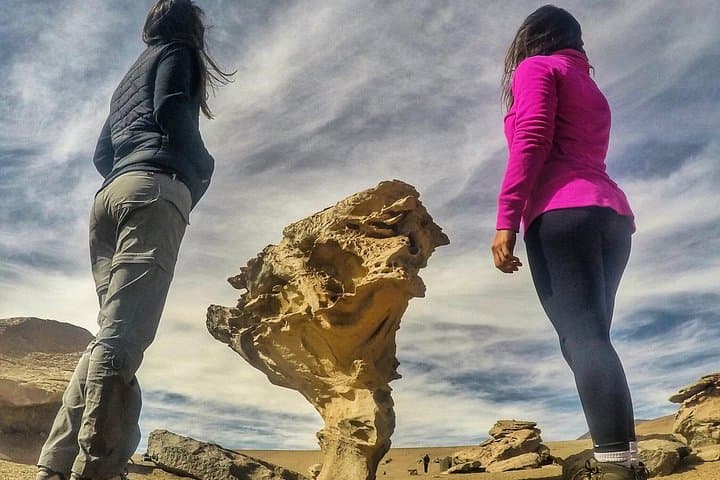
Days two and three move into the Eduardo Avaroa Reserve where volcanic silhouettes—Thunupa and Ollagüe—watch over colored lagoons. Laguna Hedionda and Laguna Colorada host three flamingo species; the Sol de Mañana geysers and the stone tree of Siloli show a harsher, wind-carved landscape.
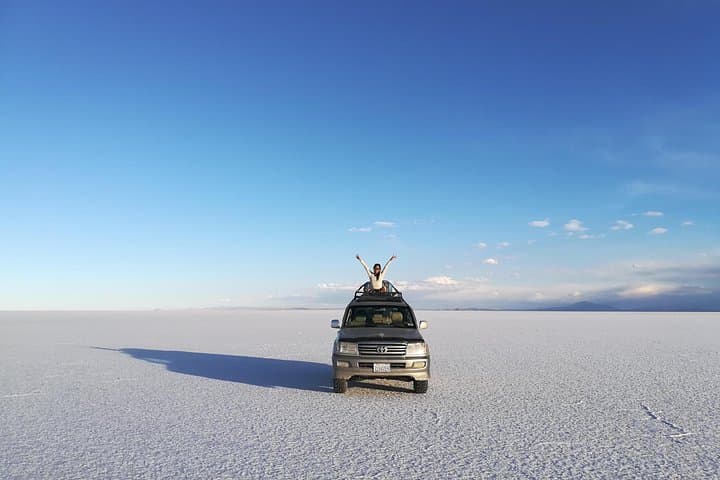
Practical guide: this is a high-altitude, mobile trip with long drives across gravel and salt. Expect cold nights, strong sun, and limited facilities in remote stops. Bring layered clothing, sun protection, and small cash for village purchases. Allow at least a day in Uyuni to acclimatize and carry basic meds for altitude. The itinerary packs sensory extremes—white horizons, mineral reds, steaming fumaroles—into three compact days of overland adventure.
Uyuni town and the salt flats sit around 3,650 m; lagoons and sites inside Eduardo Avaroa range from about 3,700 m up to 4,500+ m.
Yes—Laguna Hedionda and Laguna Colorada are known flamingo sites; sightings depend on season and water levels but three species are regularly observed.
Water-resistant hiking boots with solid tread are ideal for salt crust, rocky outcrops at Incahuasi, and occasional muddy patches in wet months.
Facilities are basic at remote stops; hotels provide private rooms and some meals, but expect limited services in the Eduardo Avaroa Reserve and bring hand sanitizer and supplies.
Late Bolivia operates guided outdoor trips and adventures with an emphasis on safety, stewardship, and memorable experiences.
You step from the dusty road onto a white plain so vast it flattens distance and sound; the salt crust cracks underfoot like faint ice and the high-altitude air is thin and sharp. On day one the mirror of the Salar de Uyuni stretches to the horizon, optical tricks appearing during the rains and a cactus-covered island rising like an inland atoll at Incahuasi, where panoramic ridgelines reveal the salt flat's scale.
You step from the dusty road onto a white plain so vast it flattens distance and sound; the salt crust cracks underfoot like faint ice and the high-altitude air is thin and sharp. On day one the mirror of the Salar de Uyuni stretches to the horizon, optical tricks appearing during the rains and a cactus-covered island rising like an inland atoll at Incahuasi, where panoramic ridgelines reveal the salt flat's scale.
Geology here is recent on a deep timescale: the salt plain is the remnant of prehistoric Lake Minchin, compacted into a hard crust over a salar brimming with lithium-rich brine beneath. Human history threads through mining towns, small artisan salt workshops in Colchani, and the Train Cemetery that marks the region's extraction era; pre-Columbian burial finds and Andean traditions appear in local museums along the route.
Days two and three move into the Eduardo Avaroa Reserve where volcanic silhouettes—Thunupa and Ollagüe—watch over colored lagoons. Laguna Hedionda and Laguna Colorada host three flamingo species; the Sol de Mañana geysers and the stone tree of Siloli show a harsher, wind-carved landscape.
Practical guide: this is a high-altitude, mobile trip with long drives across gravel and salt. Expect cold nights, strong sun, and limited facilities in remote stops. Bring layered clothing, sun protection, and small cash for village purchases. Allow at least a day in Uyuni to acclimatize and carry basic meds for altitude. The itinerary packs sensory extremes—white horizons, mineral reds, steaming fumaroles—into three compact days of overland adventure.