THE ADVENTURE COLLECTIVE® · Independent discovery and booking for outdoor travel

Drive across the otherworldly Salar de Uyuni on a three-day circuit that pairs the mirror-like salt flats with the crimson Laguna Colorada and Siloli Desert. Expect high-altitude drives, cactus-dotted islands, volcanic geysers and close encounters with Andean wildlife.
Drive across the otherworldly Salar de Uyuni on a three-day circuit that pairs the mirror-like salt flats with the crimson Laguna Colorada and Siloli Desert. Expect high-altitude drives, cactus-dotted islands, volcanic geysers and close encounters with Andean wildlife.
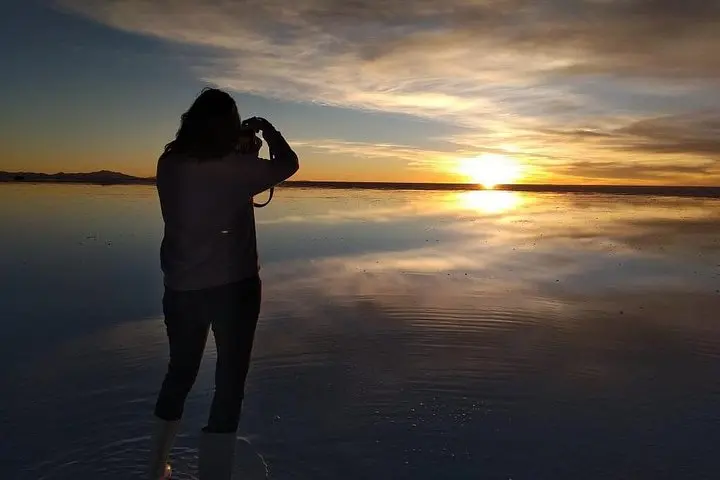
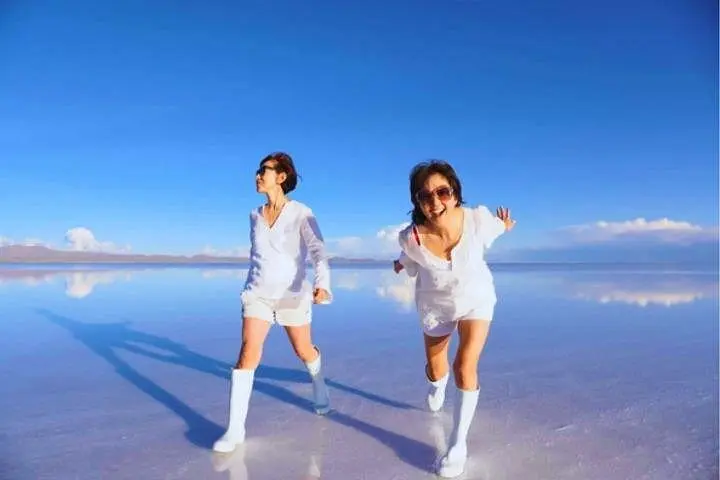
A late-afternoon light pours across a floor of white so pure it makes the horizon vanish; the salt flats take the sky and hold it like glass, daring you to step into the void. On this three-day loop from Uyuni you move between flat brightness and volcanic color — cactus-covered islands, wind-sculpted rocks, red lakes dotted with flamingos and steam hissing from geothermal fields.
Verified experiences and guided adventures in the surrounding area.
Operated by Bolivia Highlights · Uyuni, Potosí
A late-afternoon light pours across a floor of white so pure it makes the horizon vanish; the salt flats take the sky and hold it like glass, daring you to step into the void. On this three-day loop from Uyuni you move between flat brightness and volcanic color — cactus-covered islands, wind-sculpted rocks, red lakes dotted with flamingos and steam hissing from geothermal fields.
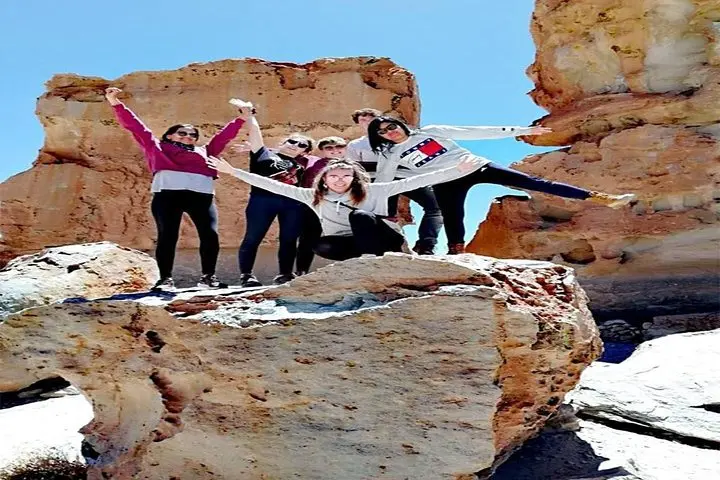
Geologically the Salar de Uyuni is the remnant of prehistoric Lake Minchin, a 10,000 km² salt crust sitting at roughly 3,656 m. Incahuasi Island is a fossil reef of volcanic rock crowned with giant cacti; Siloli Desert’s Windy Stone and Valle de Rocas were carved by wind and time. Culturally, Colchani’s workshops turn the salt harvest into crafts and the Train Cemetery outside Uyuni town recalls the mineral boom of the 19th century.
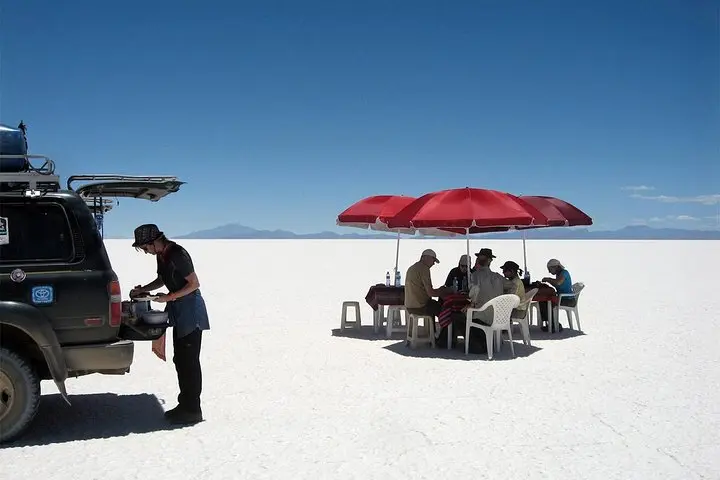
Practicalities matter: expect long stretches in a 4x4 over salt crust, gravel and puna plains, with elevations rising to 4,300–4,800 m near geysers. Acclimatize in Uyuni or La Paz, carry layered clothing for dramatic temperature swings, and pack sun protection — the flats reflect UV intensely. Bring spare batteries and a power bank (cold kills charge), local currency for markets, and a small flashlight for stargazing after dusk.
Days are a mix of short walks (Incahuasi’s loop), photo stops, and vehicle transit; nights range from basic hostels to simple lodges with hot springs near Polques. For photographers and hikers alike, the reward is the strange clarity of high-altitude landscapes — and the constant, immediate reminder that this place moves you as much as you move through it.
The tour ranges from about 3,656 m on the flats up to 4,300–4,800 m near geysers; mild altitude symptoms are common — hydrate, rest, and inform guides of severe issues.
Facilities are basic and sporadic: expect simple toilets at hostels and some stops; bring toilet paper and hand sanitizer.
Yes — there is a shared transfer/border crossing option early on the final day; check passport validity and border times when booking.
Yes, photography is encouraged; respect fragile salt crusts and local people when composing shots, and tip guides for staged perspective photos if helpful.
Bolivia Highlights operates guided outdoor trips and adventures with an emphasis on safety, stewardship, and memorable experiences.
A late-afternoon light pours across a floor of white so pure it makes the horizon vanish; the salt flats take the sky and hold it like glass, daring you to step into the void. On this three-day loop from Uyuni you move between flat brightness and volcanic color — cactus-covered islands, wind-sculpted rocks, red lakes dotted with flamingos and steam hissing from geothermal fields.
A late-afternoon light pours across a floor of white so pure it makes the horizon vanish; the salt flats take the sky and hold it like glass, daring you to step into the void. On this three-day loop from Uyuni you move between flat brightness and volcanic color — cactus-covered islands, wind-sculpted rocks, red lakes dotted with flamingos and steam hissing from geothermal fields.
Geologically the Salar de Uyuni is the remnant of prehistoric Lake Minchin, a 10,000 km² salt crust sitting at roughly 3,656 m. Incahuasi Island is a fossil reef of volcanic rock crowned with giant cacti; Siloli Desert’s Windy Stone and Valle de Rocas were carved by wind and time. Culturally, Colchani’s workshops turn the salt harvest into crafts and the Train Cemetery outside Uyuni town recalls the mineral boom of the 19th century.
Practicalities matter: expect long stretches in a 4x4 over salt crust, gravel and puna plains, with elevations rising to 4,300–4,800 m near geysers. Acclimatize in Uyuni or La Paz, carry layered clothing for dramatic temperature swings, and pack sun protection — the flats reflect UV intensely. Bring spare batteries and a power bank (cold kills charge), local currency for markets, and a small flashlight for stargazing after dusk.
Days are a mix of short walks (Incahuasi’s loop), photo stops, and vehicle transit; nights range from basic hostels to simple lodges with hot springs near Polques. For photographers and hikers alike, the reward is the strange clarity of high-altitude landscapes — and the constant, immediate reminder that this place moves you as much as you move through it.