THE ADVENTURE COLLECTIVE® · Independent discovery and booking for outdoor travel

Leave Cairo behind for three days of whale fossils, wind-sculpted dunes and quiet desert nights. This private Fayoum tour mixes UNESCO-listed paleontology with pharaonic ruins and hands-on desert adventure.
Leave Cairo behind for three days of whale fossils, wind-sculpted dunes and quiet desert nights. This private Fayoum tour mixes UNESCO-listed paleontology with pharaonic ruins and hands-on desert adventure.
The sun lifts slowly over a flat sea of sand and salt as your private vehicle slips away from Cairo’s edge and into the broad bowl of the Fayoum. Wind-polished ridges lead to a scattering of ruins and fossil-strewn flats; by afternoon the Valley of the Whales opens up, its fossilized skeletons lying like the slow bones of an ancient ocean under a stark sky.
Verified experiences and guided adventures in the surrounding area.
Operated by Bastet Travel · Faiyum, Faiyum Governorate
The sun lifts slowly over a flat sea of sand and salt as your private vehicle slips away from Cairo’s edge and into the broad bowl of the Fayoum. Wind-polished ridges lead to a scattering of ruins and fossil-strewn flats; by afternoon the Valley of the Whales opens up, its fossilized skeletons lying like the slow bones of an ancient ocean under a stark sky.
This three-day route threads natural history and human ambition. Wadi El Hitan (a UNESCO site) preserves Eocene whales — Basilosaurus and its kin — in the sedimentary layers of a once-submerged seafloor. Around Lake Qarun, the Fayoum’s living landscape has been shaped by irrigation since pharaonic times; nearby pyramids at Hawara and Meidum recount the region’s long experiment in monumentality. Geology here is readable: limestone plateaus, wind-sculpted dunes, and petrified wood in the Gabal Qatrani area tell of dramatic environmental change across millions of years.
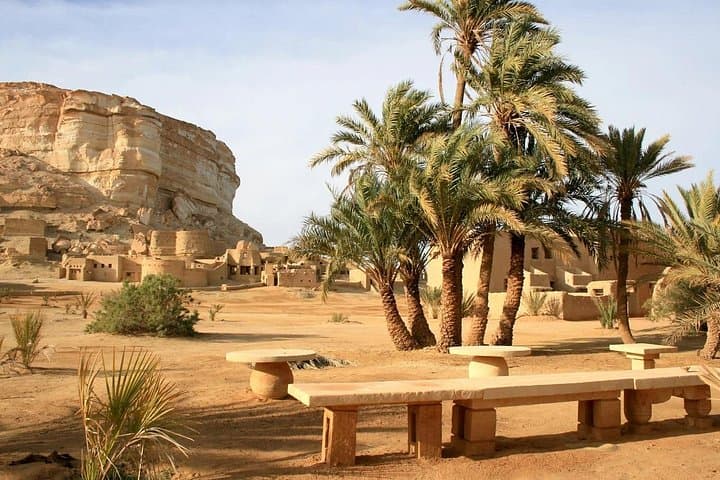
Expect close-up encounters with fossils, dune-driven Jeep thrills, and evenings at a simple desert camp or a lodge in Tunis Village. Guides usually include local history and the fragile conservation status of fossil sites; photography and careful foot placement are emphasized.
Practicalities: the trip runs over three days with private transfers from Cairo, basic camping one night and a lodge stay the next. Wear sturdy shoes for rocky and sandy terrain, bring sun protection and at least 2–3 liters of water per day, and be prepared for bumpy 4x4 travel. Early starts avoid midday heat and offer the best light for fossils and desert vistas.
The tour is rated easy–moderate: most time is spent in a vehicle with short walks on sand, gravel, and at archaeological sites.
Yes — entrance fees to mentioned sites and one night camping plus one night in a Tunis Village lodge are included in the itinerary.
Expect simple desert camping at Wadi El Hitan with sleeping mats or basic bedding; the lodge night offers more comfort.
Children can join, but infants must sit on laps for transfers; ask the operator about age-appropriate accommodations and activities.
Bastet Travel operates guided outdoor trips and adventures with an emphasis on safety, stewardship, and memorable experiences.
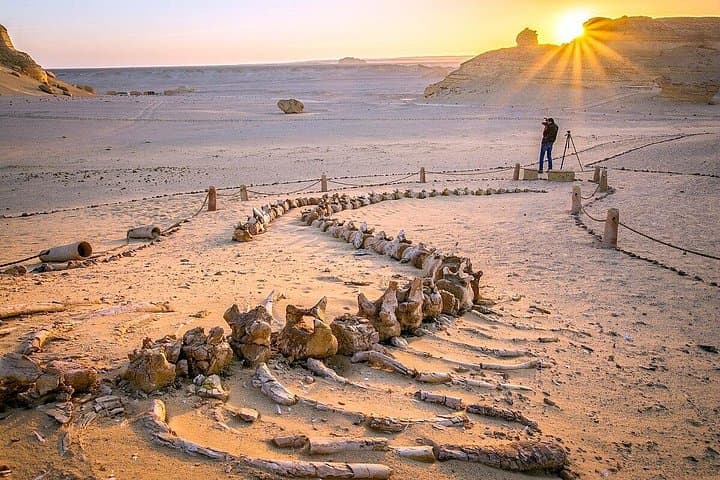


The sun lifts slowly over a flat sea of sand and salt as your private vehicle slips away from Cairo’s edge and into the broad bowl of the Fayoum. Wind-polished ridges lead to a scattering of ruins and fossil-strewn flats; by afternoon the Valley of the Whales opens up, its fossilized skeletons lying like the slow bones of an ancient ocean under a stark sky.
The sun lifts slowly over a flat sea of sand and salt as your private vehicle slips away from Cairo’s edge and into the broad bowl of the Fayoum. Wind-polished ridges lead to a scattering of ruins and fossil-strewn flats; by afternoon the Valley of the Whales opens up, its fossilized skeletons lying like the slow bones of an ancient ocean under a stark sky.
This three-day route threads natural history and human ambition. Wadi El Hitan (a UNESCO site) preserves Eocene whales — Basilosaurus and its kin — in the sedimentary layers of a once-submerged seafloor. Around Lake Qarun, the Fayoum’s living landscape has been shaped by irrigation since pharaonic times; nearby pyramids at Hawara and Meidum recount the region’s long experiment in monumentality. Geology here is readable: limestone plateaus, wind-sculpted dunes, and petrified wood in the Gabal Qatrani area tell of dramatic environmental change across millions of years.
Expect close-up encounters with fossils, dune-driven Jeep thrills, and evenings at a simple desert camp or a lodge in Tunis Village. Guides usually include local history and the fragile conservation status of fossil sites; photography and careful foot placement are emphasized.
Practicalities: the trip runs over three days with private transfers from Cairo, basic camping one night and a lodge stay the next. Wear sturdy shoes for rocky and sandy terrain, bring sun protection and at least 2–3 liters of water per day, and be prepared for bumpy 4x4 travel. Early starts avoid midday heat and offer the best light for fossils and desert vistas.