THE ADVENTURE COLLECTIVE® · Independent discovery and booking for outdoor travel

Three days through Yichun’s primeval forests: granite outcrops, red-pine stands and shaded stream walks. This private tour from Harbin combines easy trails, local woodcarving culture, and long scenic drives for a restorative forest escape.
Three days through Yichun’s primeval forests: granite outcrops, red-pine stands and shaded stream walks. This private tour from Harbin combines easy trails, local woodcarving culture, and long scenic drives for a restorative forest escape.
Morning light filters through tall red pines as the private vehicle climbs out of Harbin and into the slow rhythm of northeast China’s Great Khingan foothills. By the time you arrive in Yichun the air has a weight to it—cool, resin-scented, insistent—inviting you to move slower and breathe deeper.
Verified experiences and guided adventures in the surrounding area.
Operated by Private Tour Guide · Yichun, Heilongjiang
Morning light filters through tall red pines as the private vehicle climbs out of Harbin and into the slow rhythm of northeast China’s Great Khingan foothills. By the time you arrive in Yichun the air has a weight to it—cool, resin-scented, insistent—inviting you to move slower and breathe deeper.
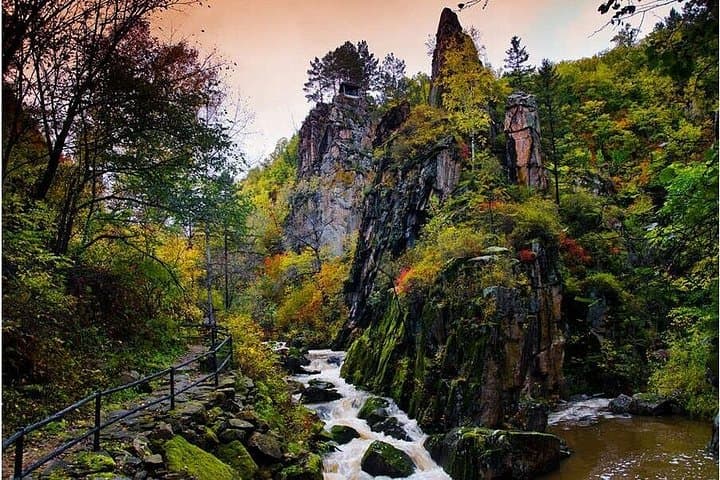
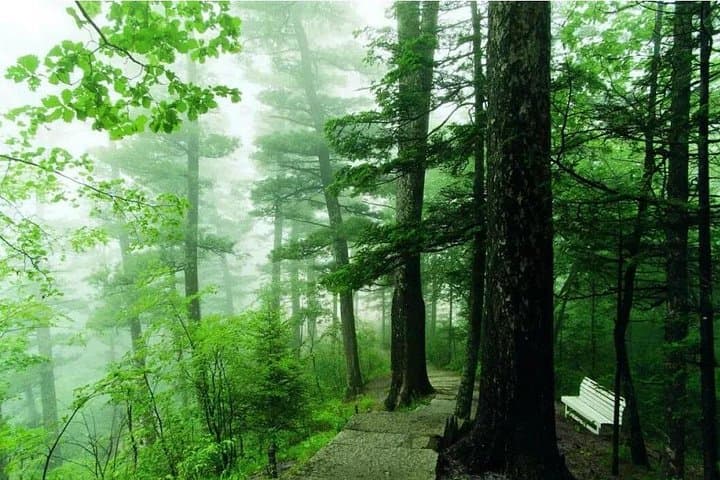
These three days trace a chain of forested landscapes: Shangganling Stream’s shaded walkways, Tangwanghe’s granite outcrops where trees cling to stone, and Wuying’s ancient red pines, among Asia’s largest stands of original pine. The region’s timber history shaped local towns; logging roads are now trails and parkways, and woodcraft remains a local craft showcased at Lindu Woodcarving Park and Xiaoing'anling Botanical Park.
Geology here is blunt and honest—granite ribs and bedrock domes carved by ice and time, giving abrupt views where stands thin and the land shows its bones. Culture leans practical: small villages, woodcarving traditions, and park interpretive signs that explain the value of old-growth stands.
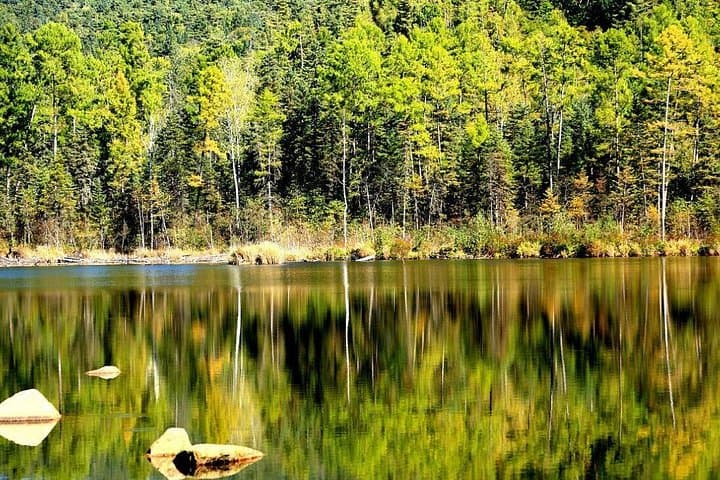
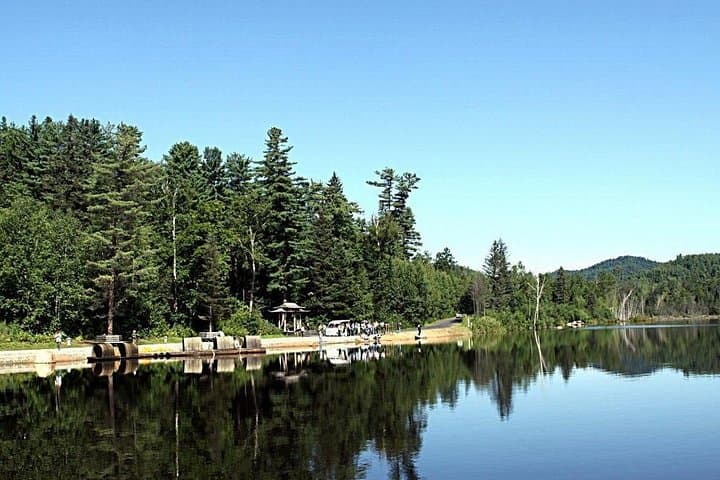
Practical guide: expect long drives between sites (Harbin to Yichun ~4.5 hours), modest walking on maintained park trails, and simple local hotels. Bring sturdy footwear and layers for sudden temperature swings; trails can be muddy after rain. Plan photography around morning and late-afternoon light to catch translucent needles and river reflections. Respect park rules, stay on paths to protect sensitive root systems, and budget time for short interpretive walks rather than long, technical hikes. This is a restorative, forest-forward trip—not a mountaineering expedition, but a clear invitation to slow down and let the forest push you forward.
The itinerary includes admission to listed parks but lunches are at your own cost; breakfasts at hotels are included for two mornings.
Expect roughly 4.5 hours each way from Harbin to Yichun plus local transfers between parks—most days involve long driving segments and short interpretive walks.
No—trails are mostly maintained and the tour is suitable for all fitness levels; prepare for uneven footing but not sustained steep ascents.
Guides on these private tours commonly speak Mandarin; request an English-speaking guide when booking if needed.
Private Tour Guide operates guided outdoor trips and adventures with an emphasis on safety, stewardship, and memorable experiences.
Morning light filters through tall red pines as the private vehicle climbs out of Harbin and into the slow rhythm of northeast China’s Great Khingan foothills. By the time you arrive in Yichun the air has a weight to it—cool, resin-scented, insistent—inviting you to move slower and breathe deeper.
Morning light filters through tall red pines as the private vehicle climbs out of Harbin and into the slow rhythm of northeast China’s Great Khingan foothills. By the time you arrive in Yichun the air has a weight to it—cool, resin-scented, insistent—inviting you to move slower and breathe deeper.
These three days trace a chain of forested landscapes: Shangganling Stream’s shaded walkways, Tangwanghe’s granite outcrops where trees cling to stone, and Wuying’s ancient red pines, among Asia’s largest stands of original pine. The region’s timber history shaped local towns; logging roads are now trails and parkways, and woodcraft remains a local craft showcased at Lindu Woodcarving Park and Xiaoing'anling Botanical Park.
Geology here is blunt and honest—granite ribs and bedrock domes carved by ice and time, giving abrupt views where stands thin and the land shows its bones. Culture leans practical: small villages, woodcarving traditions, and park interpretive signs that explain the value of old-growth stands.
Practical guide: expect long drives between sites (Harbin to Yichun ~4.5 hours), modest walking on maintained park trails, and simple local hotels. Bring sturdy footwear and layers for sudden temperature swings; trails can be muddy after rain. Plan photography around morning and late-afternoon light to catch translucent needles and river reflections. Respect park rules, stay on paths to protect sensitive root systems, and budget time for short interpretive walks rather than long, technical hikes. This is a restorative, forest-forward trip—not a mountaineering expedition, but a clear invitation to slow down and let the forest push you forward.