THE ADVENTURE COLLECTIVE® · Independent discovery and booking for outdoor travel

Drive from Zagora into the rolling sands of Erg Chigaga on a three‑day desert camp that pairs camel treks and starry nights with visits to Tamgroute and Draa Valley. Expect off‑road travel, traditional Berber camps, and dramatic sunrises over the dunes.
Drive from Zagora into the rolling sands of Erg Chigaga on a three‑day desert camp that pairs camel treks and starry nights with visits to Tamgroute and Draa Valley. Expect off‑road travel, traditional Berber camps, and dramatic sunrises over the dunes.
The road leaves Zagora at mid‑afternoon and the world opens into wind-sculpted sand; by sunset the Erg Chigaga dunes throw long shadows across a sea of ripples, and the campfire throws back a slow canopy of stars. On arrival you’ll trade the hum of the highway for a silence that moves — dunes that shift and dare you to climb them before night cools the sand.
Verified experiences and guided adventures in the surrounding area.
Operated by Zagora Desert Travel · Zagora, Drâa-Tafilalet
The road leaves Zagora at mid‑afternoon and the world opens into wind-sculpted sand; by sunset the Erg Chigaga dunes throw long shadows across a sea of ripples, and the campfire throws back a slow canopy of stars. On arrival you’ll trade the hum of the highway for a silence that moves — dunes that shift and dare you to climb them before night cools the sand.
Geology here is straightforward: Erg Chigaga is an erg — a broad field of wind‑deposited sand shaped over millennia. The route threads the Draa Valley, whose palm groves and old ksour mark centuries of irrigation and caravan trade. Cultural highlights include Tamgroute’s Koranic library, a rare manuscript collection kept by local scholars, and opportunities to meet Berber families who still tend small oases and flocks.
Practically, expect three days of off‑road driving, two nights in a Berber desert camp, a guided camel trek to the tallest dunes, and a sunrise that’s worth the early alarm. Walking on sand is energy‑sapping; short climbs reward with wide views but require steady footing. Meals are included; evening temperatures drop sharply so warm layers are essential after sunset.
Plan for sun, sand, and minimal facilities: bring plenty of water, a good pair of closed shoes, sun protection, and cash for village purchases. Travel light but bring a headlamp, windproof outer layer, and a spirit for simple nights under the Sahara sky.
Camel rides are low‑impact and guided; dune walking can be tiring but involves short climbs—basic mobility and moderate endurance are sufficient.
Overnight is in traditional desert tents with bedding provided; expect simple shared facilities and camp meals included.
Children are permitted but must be accompanied by an adult; infant seats and family arrangements should be requested at booking.
Expect limited or no reliable cell service in the middle of the erg; camps typically offer basic lighting and phone charging by request, but plan offline.
Zagora Desert Travel operates guided outdoor trips and adventures with an emphasis on safety, stewardship, and memorable experiences.
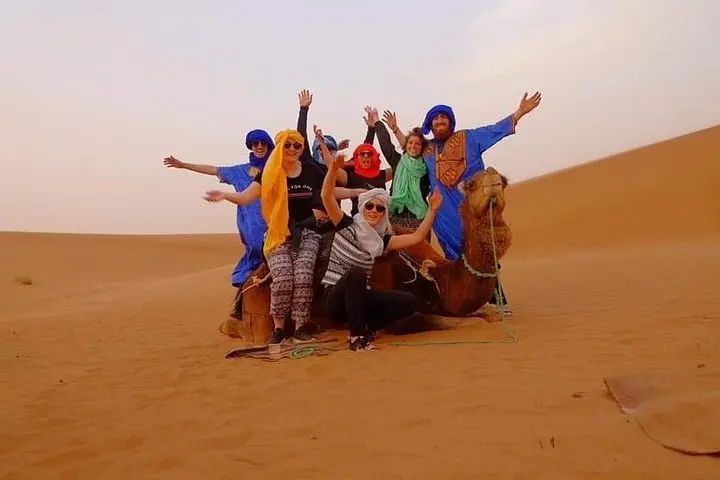
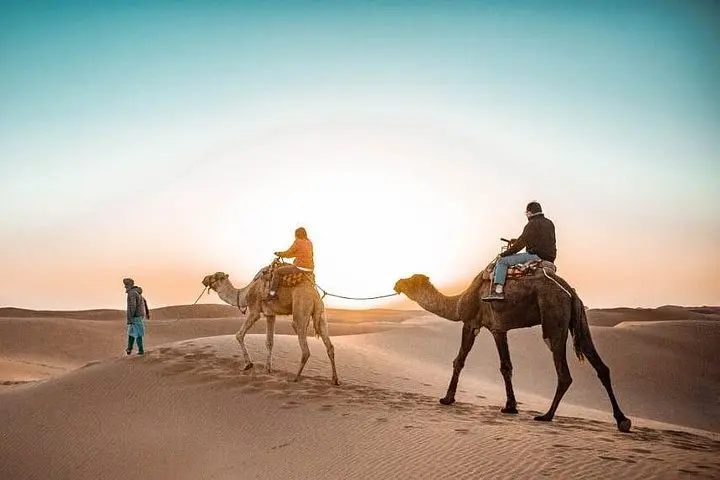
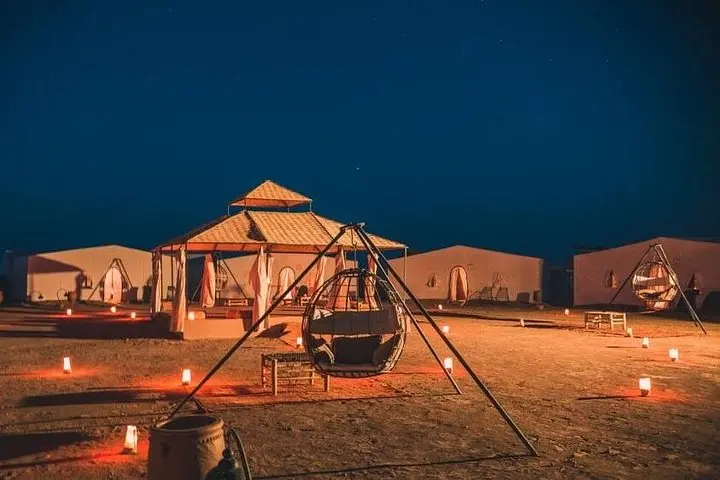
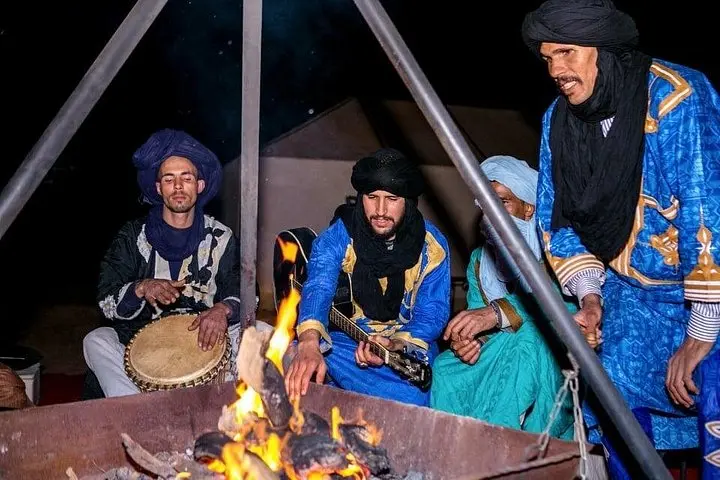
The road leaves Zagora at mid‑afternoon and the world opens into wind-sculpted sand; by sunset the Erg Chigaga dunes throw long shadows across a sea of ripples, and the campfire throws back a slow canopy of stars. On arrival you’ll trade the hum of the highway for a silence that moves — dunes that shift and dare you to climb them before night cools the sand.
The road leaves Zagora at mid‑afternoon and the world opens into wind-sculpted sand; by sunset the Erg Chigaga dunes throw long shadows across a sea of ripples, and the campfire throws back a slow canopy of stars. On arrival you’ll trade the hum of the highway for a silence that moves — dunes that shift and dare you to climb them before night cools the sand.
Geology here is straightforward: Erg Chigaga is an erg — a broad field of wind‑deposited sand shaped over millennia. The route threads the Draa Valley, whose palm groves and old ksour mark centuries of irrigation and caravan trade. Cultural highlights include Tamgroute’s Koranic library, a rare manuscript collection kept by local scholars, and opportunities to meet Berber families who still tend small oases and flocks.
Practically, expect three days of off‑road driving, two nights in a Berber desert camp, a guided camel trek to the tallest dunes, and a sunrise that’s worth the early alarm. Walking on sand is energy‑sapping; short climbs reward with wide views but require steady footing. Meals are included; evening temperatures drop sharply so warm layers are essential after sunset.
Plan for sun, sand, and minimal facilities: bring plenty of water, a good pair of closed shoes, sun protection, and cash for village purchases. Travel light but bring a headlamp, windproof outer layer, and a spirit for simple nights under the Sahara sky.