THE ADVENTURE COLLECTIVE® · Independent discovery and booking for outdoor travel

A compact four-day loop through the Red Centre that delivers sunrise at Uluru, dome-hopping at Kata Tjuta and the dramatic rim of Kings Canyon. Expect long walks, desert light and powered camps with shared facilities.
A compact four-day loop through the Red Centre that delivers sunrise at Uluru, dome-hopping at Kata Tjuta and the dramatic rim of Kings Canyon. Expect long walks, desert light and powered camps with shared facilities.
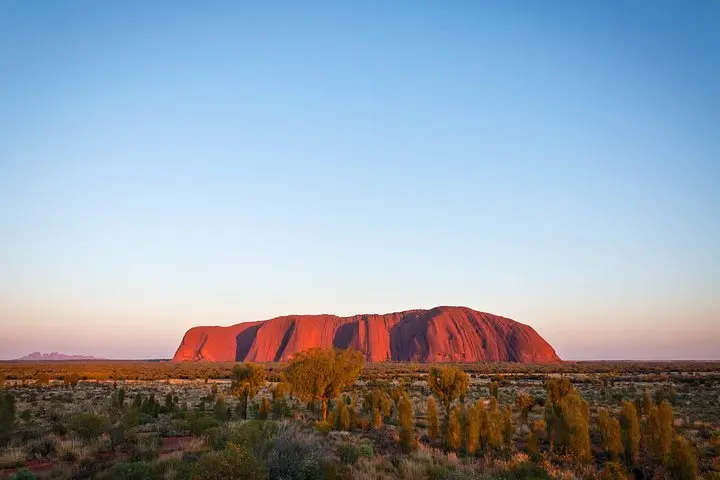
The first light over the Red Centre arrives like a slow reveal: a cold, pale edge that becomes incandescent as the sun lifts and Uluru trades shadow for color. You stand on compacted red earth, wind taking the dust like an exhale, while a guide points out weathered grooves and the ochre streaks where water has run. Over three nights of powered camping, the trip threads together the region’s big names—Kata Tjuta’s folded domes, the long silhouette of Uluru, and the vertiginous walls of Kings Canyon—so the landscape reads more like a series of chapters than a single scene.
Verified experiences and guided adventures in the surrounding area.
Operated by Adventure Tours Australia · Yulara, Northern Territory
The first light over the Red Centre arrives like a slow reveal: a cold, pale edge that becomes incandescent as the sun lifts and Uluru trades shadow for color. You stand on compacted red earth, wind taking the dust like an exhale, while a guide points out weathered grooves and the ochre streaks where water has run. Over three nights of powered camping, the trip threads together the region’s big names—Kata Tjuta’s folded domes, the long silhouette of Uluru, and the vertiginous walls of Kings Canyon—so the landscape reads more like a series of chapters than a single scene.
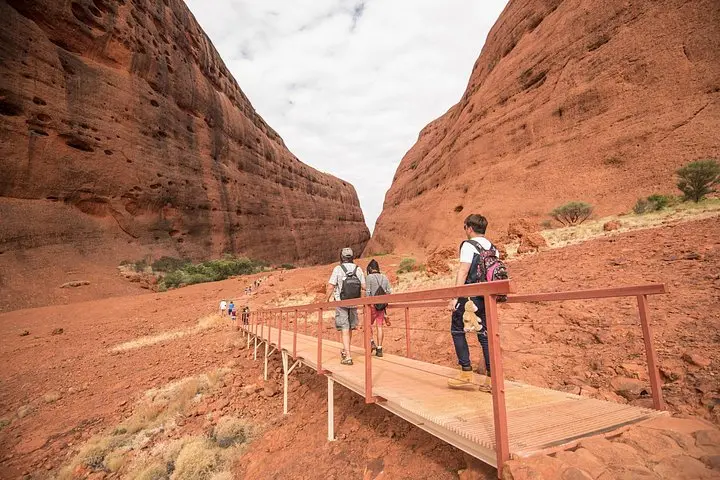
Geology here is blunt and ancient. Uluru is arkose sandstone, tilted and polished by time; Kata Tjuta is a different story—a suite of conglomerate domes formed from older, cemented sediments. Kings Canyon cuts like a knife into the West MacDonnell ranges, revealing porous sandstone benches, sheltered rock pools and a micro-forest in its Garden of Eden.
The cultural context is immediate: this is Anangu country. Guides introduce creation stories and point to rock art, and the itinerary honors those ties with visits to cultural sites and time at the Uluru-Kata Tjuta Cultural Centre where locally made art supports community livelihoods. Note that Anangu request visitors not climb Uluru; the climb has been permanently closed and the trip focuses on respectful approaches and the base walk instead.
Practicalities are straightforward but essential. The full base walk of Uluru is about 10.6 km and flat; Kata Tjuta’s main Valley of the Winds track can be a 7–8 km circuit with exposed sections; Kings Canyon’s rim walk is roughly 6 km and begins with a steep 300 m climb over rough steps. Expect long days on foot and strong sun—carry 3 liters of water, wear high-SPF sunscreen and a wide-brim hat, and plan walks for early morning or late afternoon.
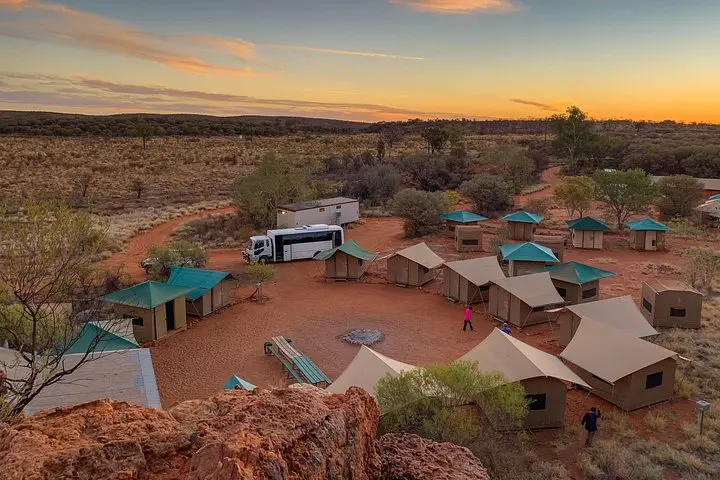
Camping on this itinerary is powered with shared facilities, giving a soft landing after each day’s hikes. Meals are included as noted, but consider packing high-energy snacks for long sections between stops. Pickup logistics start in Yulara with strict arrival windows; flights that land after mid-afternoon will miss the departure.
For photographers and first-time desert travelers, timing is everything: sunrise and sunset turn sandstone into a study of warm tones and deep shadows, while twilight reveals a broader Milky Way than you see in the city. Bring sturdy footwear for the canyon, a layered kit for cool desert nights, and respect for the cultural landscape you are passing through.
Yes, a park entry fee is required and is typically included with guided tours; if booking independently you must purchase the pass on arrival or online.
No, climbing Uluru is permanently closed out of respect for Anangu cultural protocols; the itinerary focuses on the full base walk and cultural interpretation.
A moderate level—expect several hours of hiking most days, including a steep 300 m ascent on the Kings Canyon rim walk.
Powered camp with shared facilities; you’ll have a bed in the campsite setup rather than bringing your own tent for a softer camping experience.
Most breakfasts, lunches and dinners are included as stated in the itinerary; Day 1 lunch is not included so eat before pickup if possible.
The tour requires timely arrival in Yulara—flights arriving after the specified cutoff (around 1:40 pm) may not be accommodated, so choose flights with buffer time.
Adventure Tours Australia operates guided outdoor trips and adventures with an emphasis on safety, stewardship, and memorable experiences.
The first light over the Red Centre arrives like a slow reveal: a cold, pale edge that becomes incandescent as the sun lifts and Uluru trades shadow for color. You stand on compacted red earth, wind taking the dust like an exhale, while a guide points out weathered grooves and the ochre streaks where water has run. Over three nights of powered camping, the trip threads together the region’s big names—Kata Tjuta’s folded domes, the long silhouette of Uluru, and the vertiginous walls of Kings Canyon—so the landscape reads more like a series of chapters than a single scene.
The first light over the Red Centre arrives like a slow reveal: a cold, pale edge that becomes incandescent as the sun lifts and Uluru trades shadow for color. You stand on compacted red earth, wind taking the dust like an exhale, while a guide points out weathered grooves and the ochre streaks where water has run. Over three nights of powered camping, the trip threads together the region’s big names—Kata Tjuta’s folded domes, the long silhouette of Uluru, and the vertiginous walls of Kings Canyon—so the landscape reads more like a series of chapters than a single scene.
Geology here is blunt and ancient. Uluru is arkose sandstone, tilted and polished by time; Kata Tjuta is a different story—a suite of conglomerate domes formed from older, cemented sediments. Kings Canyon cuts like a knife into the West MacDonnell ranges, revealing porous sandstone benches, sheltered rock pools and a micro-forest in its Garden of Eden.
The cultural context is immediate: this is Anangu country. Guides introduce creation stories and point to rock art, and the itinerary honors those ties with visits to cultural sites and time at the Uluru-Kata Tjuta Cultural Centre where locally made art supports community livelihoods. Note that Anangu request visitors not climb Uluru; the climb has been permanently closed and the trip focuses on respectful approaches and the base walk instead.
Practicalities are straightforward but essential. The full base walk of Uluru is about 10.6 km and flat; Kata Tjuta’s main Valley of the Winds track can be a 7–8 km circuit with exposed sections; Kings Canyon’s rim walk is roughly 6 km and begins with a steep 300 m climb over rough steps. Expect long days on foot and strong sun—carry 3 liters of water, wear high-SPF sunscreen and a wide-brim hat, and plan walks for early morning or late afternoon.
Camping on this itinerary is powered with shared facilities, giving a soft landing after each day’s hikes. Meals are included as noted, but consider packing high-energy snacks for long sections between stops. Pickup logistics start in Yulara with strict arrival windows; flights that land after mid-afternoon will miss the departure.
For photographers and first-time desert travelers, timing is everything: sunrise and sunset turn sandstone into a study of warm tones and deep shadows, while twilight reveals a broader Milky Way than you see in the city. Bring sturdy footwear for the canyon, a layered kit for cool desert nights, and respect for the cultural landscape you are passing through.