THE ADVENTURE COLLECTIVE® · Independent discovery and booking for outdoor travel

A four-day river cruise from Nauta to Pacaya Samiria that blends wildlife watching, community visits and guided jungle walks. Expect dawn boat trips for pink dolphins, night caiman searches, shaman interactions and comfortable cabins aboard the Amatista.
A four-day river cruise from Nauta to Pacaya Samiria that blends wildlife watching, community visits and guided jungle walks. Expect dawn boat trips for pink dolphins, night caiman searches, shaman interactions and comfortable cabins aboard the Amatista.
You step off the dusty road in Nauta as the Amatista rocks gently against the pier—boardwalk planks creak, and the river smells of wet earth and green decay that means life here. Windows on the vessel frame wide, slow rivers and interrupted horizons where oxbow lakes mirror the canopy. Guides map the course: Marañón flows into wider channels, and the ship threads toward the flooded forests of Pacaya Samiria.
Verified experiences and guided adventures in the surrounding area.
Operated by VIPAC Travel · Nauta, Loreto
You step off the dusty road in Nauta as the Amatista rocks gently against the pier—boardwalk planks creak, and the river smells of wet earth and green decay that means life here. Windows on the vessel frame wide, slow rivers and interrupted horizons where oxbow lakes mirror the canopy. Guides map the course: Marañón flows into wider channels, and the ship threads toward the flooded forests of Pacaya Samiria.
The region’s history is visible in Iquitos’ boom-era architecture and in riverside communities that long relied on rubber, river trade and traditional medicine. Geologically the Amazon here is a flat, alluvial plain carved by millennia of sediment, creating braided channels, seasonally flooded varzea, and the rich wetlands that support pink river dolphins and migratory and endemic birds. Cultural exchanges happen aboard and ashore: meet a shaman in San Regis, sample regional cuisine, and learn local fishing techniques.
Practical guidance: days combine short boat rides, dawn wildlife spotting, gentle jungle walks to canopy bridges, and community visits—expect uneven forest trails, wet conditions, and small skiffs for excursions. Bring lightweight, quick-dry layers, reliable insect protection, and binoculars for birding and dolphin sightings. Vaccinations and antimalarial guidance are recommended—consult a travel clinic well before departure.
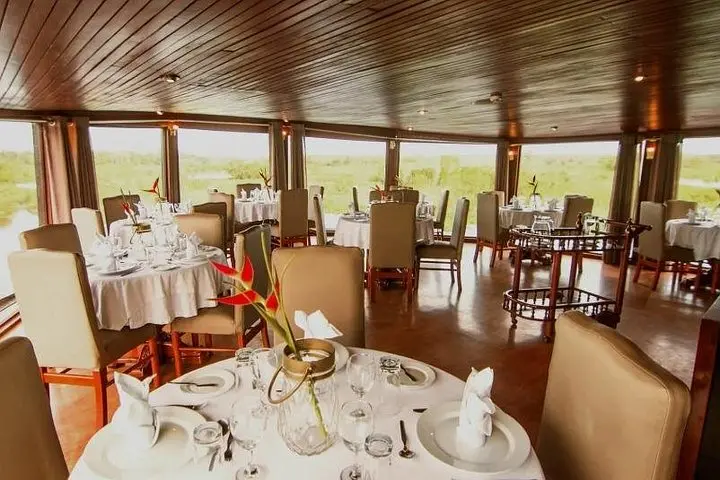
Timing matters: early mornings and evenings are richest for wildlife; daylight hours are good for walks and cultural visits. Onboard comfort—air-conditioned cabins, three meals daily, and experienced naturalist guides—keeps the focus on observation, learning, and low-impact interaction with a living river ecosystem.
Consult a travel clinic; routine vaccines plus yellow fever are commonly recommended for the Peruvian Amazon, and malaria prophylaxis may be advised depending on your itinerary.
Most activities are low-impact but require boarding skiffs, walking short uneven trails and standing during wildlife watches—inform the operator of any mobility limitations.
Meals aboard the Amatista are prepared to international tourist standards and bottled or treated water is provided; follow guide advice when ashore about food choices.
Sightings are frequent but not guaranteed—guides know prime areas and timing (dawn/dusk) to maximize viewing opportunities.
VIPAC Travel operates guided outdoor trips and adventures with an emphasis on safety, stewardship, and memorable experiences.
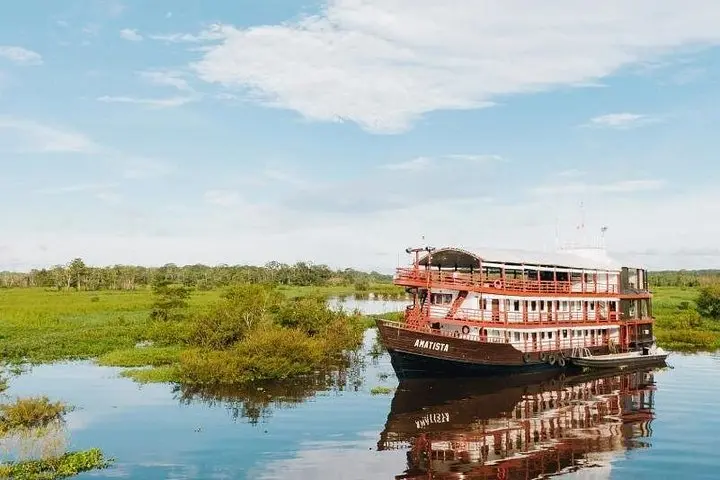
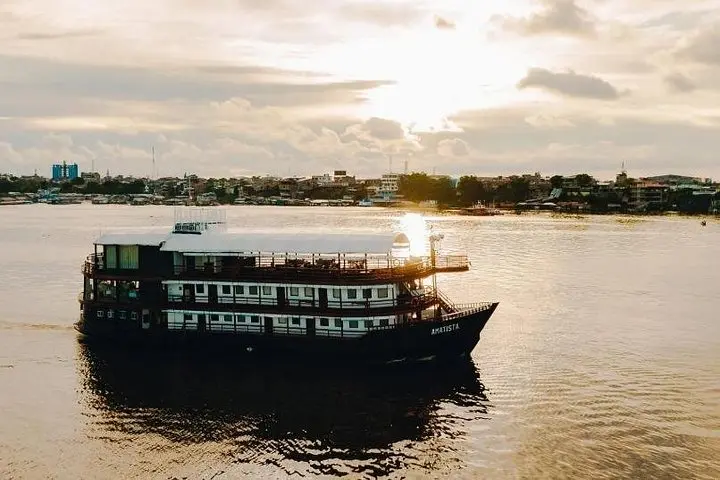
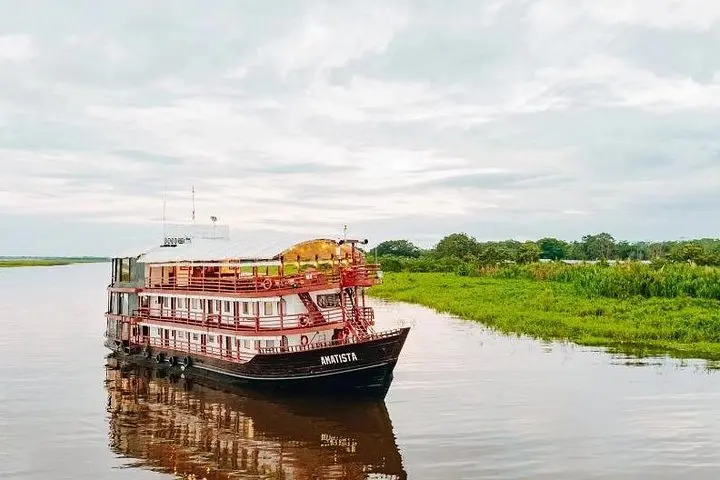
You step off the dusty road in Nauta as the Amatista rocks gently against the pier—boardwalk planks creak, and the river smells of wet earth and green decay that means life here. Windows on the vessel frame wide, slow rivers and interrupted horizons where oxbow lakes mirror the canopy. Guides map the course: Marañón flows into wider channels, and the ship threads toward the flooded forests of Pacaya Samiria.
You step off the dusty road in Nauta as the Amatista rocks gently against the pier—boardwalk planks creak, and the river smells of wet earth and green decay that means life here. Windows on the vessel frame wide, slow rivers and interrupted horizons where oxbow lakes mirror the canopy. Guides map the course: Marañón flows into wider channels, and the ship threads toward the flooded forests of Pacaya Samiria.
The region’s history is visible in Iquitos’ boom-era architecture and in riverside communities that long relied on rubber, river trade and traditional medicine. Geologically the Amazon here is a flat, alluvial plain carved by millennia of sediment, creating braided channels, seasonally flooded varzea, and the rich wetlands that support pink river dolphins and migratory and endemic birds. Cultural exchanges happen aboard and ashore: meet a shaman in San Regis, sample regional cuisine, and learn local fishing techniques.
Practical guidance: days combine short boat rides, dawn wildlife spotting, gentle jungle walks to canopy bridges, and community visits—expect uneven forest trails, wet conditions, and small skiffs for excursions. Bring lightweight, quick-dry layers, reliable insect protection, and binoculars for birding and dolphin sightings. Vaccinations and antimalarial guidance are recommended—consult a travel clinic well before departure.
Timing matters: early mornings and evenings are richest for wildlife; daylight hours are good for walks and cultural visits. Onboard comfort—air-conditioned cabins, three meals daily, and experienced naturalist guides—keeps the focus on observation, learning, and low-impact interaction with a living river ecosystem.