THE ADVENTURE COLLECTIVE® · Independent discovery and booking for outdoor travel

Spend four days exploring Angkor’s greatest temples, jungle-entangled ruins and Tonle Sap floating villages with a private guide. This practical guide explains what to expect, how to prepare, and the cultural must-dos for a respectful visit.
Spend four days exploring Angkor’s greatest temples, jungle-entangled ruins and Tonle Sap floating villages with a private guide. This practical guide explains what to expect, how to prepare, and the cultural must-dos for a respectful visit.
Dawn spreads pale light across the wide moat of Angkor Wat and lotus petals skim the water as your private vehicle pulls into the complex. Stone faces watch the road, roots push through gables, and the air carries the damp heat of the Tonle Sap plain. Over four days this private tour maps the sweep of the Khmer world — from colossal temple-mountains to the intimate work of local artisans.
Verified experiences and guided adventures in the surrounding area.
Operated by Hidden Angkor Tour · Siem Reap, Siem Reap Province
Dawn spreads pale light across the wide moat of Angkor Wat and lotus petals skim the water as your private vehicle pulls into the complex. Stone faces watch the road, roots push through gables, and the air carries the damp heat of the Tonle Sap plain. Over four days this private tour maps the sweep of the Khmer world — from colossal temple-mountains to the intimate work of local artisans.
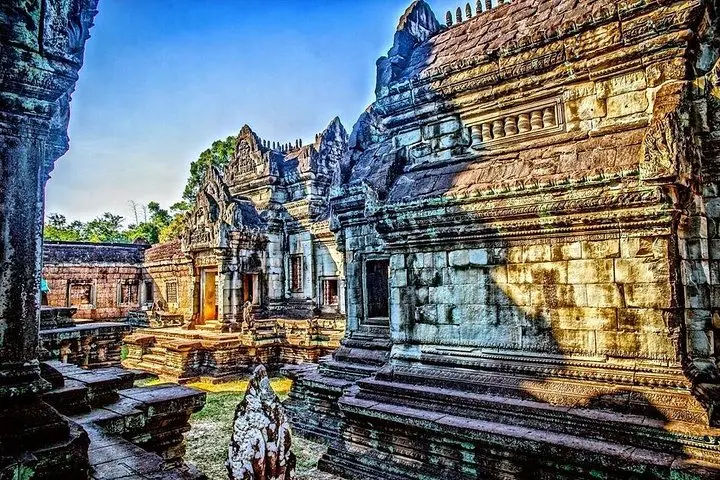
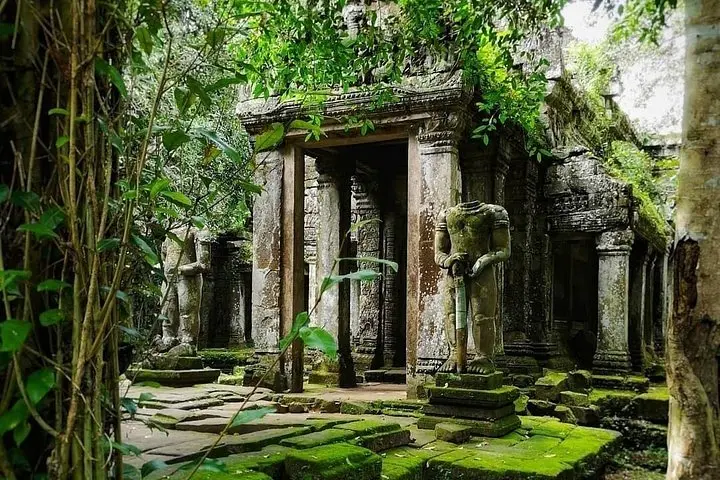
Angkor’s architecture sits on older geology: Cambrian sandstone blocks and laterite foundations carved and stacked by engineers of the Khmer Empire (9th–15th centuries). Bas-reliefs narrate epic and everyday life, while Ta Prohm’s strangler fig and silk farms outside Siem Reap reveal the interplay of nature and culture that defines the region. Tonle Sap’s seasonal pulse supports floating villages and migratory waterbirds, a living reminder that this landscape sustains livelihoods as much as it attracts visitors.
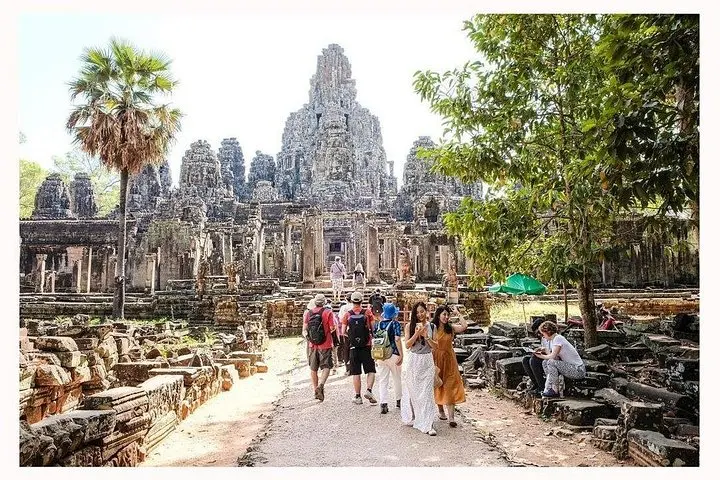
Practical guidance: buy your Angkor Archaeological Park pass at the main gate (USD cash only); carry a lightweight shirt that covers shoulders and shorts or skirts that reach the knee — some sites enforce strict dress codes. Expect mostly flat walking with uneven stone steps and occasional short climbs—daily touring runs about 8–9 hours with breaks. Temperatures climb midday; start early to catch sunrise or reach quieter temples.
Gear up with sturdy walking shoes, sun protection, insect repellent and a waterproof sleeve for electronics. Respect local customs at village stops and visual art at temples, and leave no trace — sandstone is fragile and tourist wear accelerates decay. With a private guide, you’ll move at your own pace and see both grand galleries and the small practices that keep Siem Reap’s culture alive.
No — the Angkor Archaeological Park pass is not included; purchase at the official ticket center in USD before visiting sites.
Cover shoulders and knees; clothing with obscene images may be refused. Lightweight, breathable fabrics work best in the heat.
Lunch is typically not included; the tour pauses for lunch at local restaurants or back at your hotel depending on the day’s route.
Children under 12 often enter free for some passes, but policies vary — verify pass rules and bring ID for children if required.
Hidden Angkor Tour operates guided outdoor trips and adventures with an emphasis on safety, stewardship, and memorable experiences.
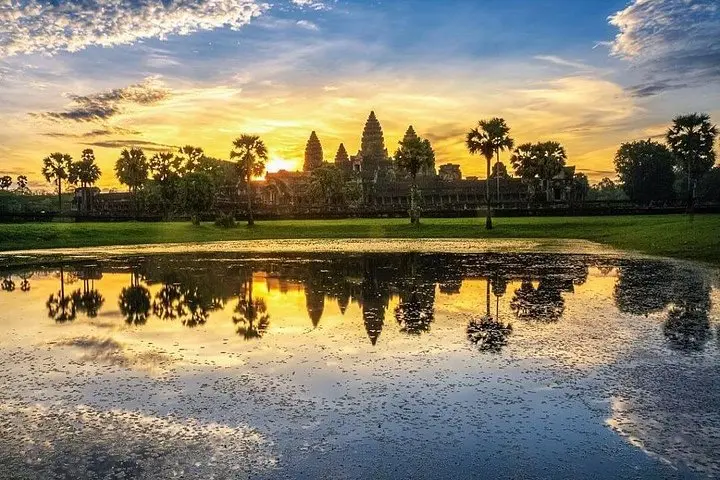
Dawn spreads pale light across the wide moat of Angkor Wat and lotus petals skim the water as your private vehicle pulls into the complex. Stone faces watch the road, roots push through gables, and the air carries the damp heat of the Tonle Sap plain. Over four days this private tour maps the sweep of the Khmer world — from colossal temple-mountains to the intimate work of local artisans.
Dawn spreads pale light across the wide moat of Angkor Wat and lotus petals skim the water as your private vehicle pulls into the complex. Stone faces watch the road, roots push through gables, and the air carries the damp heat of the Tonle Sap plain. Over four days this private tour maps the sweep of the Khmer world — from colossal temple-mountains to the intimate work of local artisans.
Angkor’s architecture sits on older geology: Cambrian sandstone blocks and laterite foundations carved and stacked by engineers of the Khmer Empire (9th–15th centuries). Bas-reliefs narrate epic and everyday life, while Ta Prohm’s strangler fig and silk farms outside Siem Reap reveal the interplay of nature and culture that defines the region. Tonle Sap’s seasonal pulse supports floating villages and migratory waterbirds, a living reminder that this landscape sustains livelihoods as much as it attracts visitors.
Practical guidance: buy your Angkor Archaeological Park pass at the main gate (USD cash only); carry a lightweight shirt that covers shoulders and shorts or skirts that reach the knee — some sites enforce strict dress codes. Expect mostly flat walking with uneven stone steps and occasional short climbs—daily touring runs about 8–9 hours with breaks. Temperatures climb midday; start early to catch sunrise or reach quieter temples.
Gear up with sturdy walking shoes, sun protection, insect repellent and a waterproof sleeve for electronics. Respect local customs at village stops and visual art at temples, and leave no trace — sandstone is fragile and tourist wear accelerates decay. With a private guide, you’ll move at your own pace and see both grand galleries and the small practices that keep Siem Reap’s culture alive.