THE ADVENTURE COLLECTIVE® · Independent discovery and booking for outdoor travel

Four days of guided whale watching north of Tromsø where killer whales and humpbacks hunt herring along the fjord edge. Expect long days at sea, cold weather, and a strong chance to pair marine sightings with evening Northern Lights hunts.
Four days of guided whale watching north of Tromsø where killer whales and humpbacks hunt herring along the fjord edge. Expect long days at sea, cold weather, and a strong chance to pair marine sightings with evening Northern Lights hunts.
Fog lifts off the deck as you push away from Tromsø’s harbor and the cold air sharpens every sound—sea on the hull, distant gulls, and then the telltale blows of whales. Over four days you follow the edge of the continental shelf where herring gather and predators come to feed; daylight and night trade places while the crew reads currents and weather like a map.
Verified experiences and guided adventures in the surrounding area.
Fog lifts off the deck as you push away from Tromsø’s harbor and the cold air sharpens every sound—sea on the hull, distant gulls, and then the telltale blows of whales. Over four days you follow the edge of the continental shelf where herring gather and predators come to feed; daylight and night trade places while the crew reads currents and weather like a map.
This coast has been a working marine landscape for centuries. Tromsø grew as a fishing and hunting hub and a staging point for Arctic expeditions; the fjords themselves are glacial scars carved by ice, creating deep troughs that funnel prey and the whales that pursue it. Local operators combine that history with modern ecology: small-boat tactics to minimize disturbance, and a focus on science-informed sightings.
Expect full days on the water scanning for humpback whales and orcas, followed by evenings away from town lights hunting aurora. Seas can be choppy; the rhythms of the trip are driven by weather and the herring run rather than a fixed schedule.
Practical tips: dress in warm, layered clothing and a waterproof outer shell, carry motion-sickness meds if you’re prone, and bring binoculars and a fast lens if you plan to photograph. Hydrate and plan for early mornings and late nights—the rewards are close encounters with large marine predators and, if conditions align, the Northern Lights carving the sky over an open sea. Safety briefings and eco-guidelines are standard; follow crew instructions to protect wildlife and your group.
Late autumn to winter months typically bring herring and higher whale activity, though operators run tours based on local prey movements—check with the outfitter for seasonal schedules.
Approach distances are governed by responsible-watching guidelines and animal behavior; crews aim for photoable views without disturbing feeding whales, often within a few hundred meters when animals permit.
If you’re prone to motion sickness, take preventive medication before boarding and sit mid-ship where movement is less pronounced; crew can advise on best seating.
Packaged inclusions vary—confirm with the operator. Multi-day trips commonly include boat-based meals and arranged land accommodations, but always verify before booking.
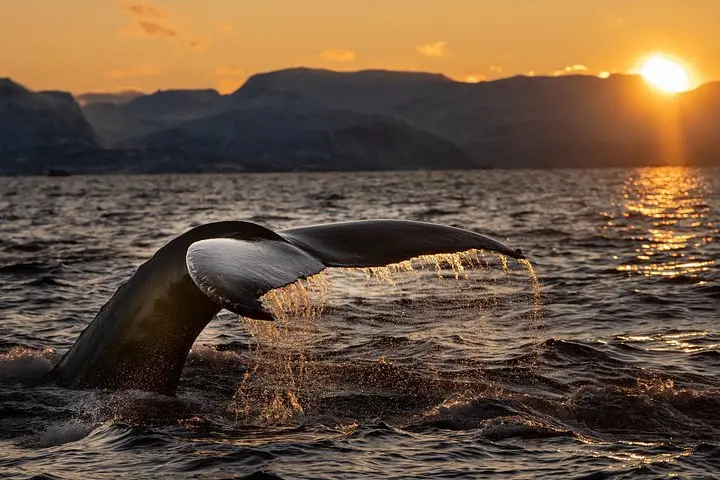
Fog lifts off the deck as you push away from Tromsø’s harbor and the cold air sharpens every sound—sea on the hull, distant gulls, and then the telltale blows of whales. Over four days you follow the edge of the continental shelf where herring gather and predators come to feed; daylight and night trade places while the crew reads currents and weather like a map.
Fog lifts off the deck as you push away from Tromsø’s harbor and the cold air sharpens every sound—sea on the hull, distant gulls, and then the telltale blows of whales. Over four days you follow the edge of the continental shelf where herring gather and predators come to feed; daylight and night trade places while the crew reads currents and weather like a map.
This coast has been a working marine landscape for centuries. Tromsø grew as a fishing and hunting hub and a staging point for Arctic expeditions; the fjords themselves are glacial scars carved by ice, creating deep troughs that funnel prey and the whales that pursue it. Local operators combine that history with modern ecology: small-boat tactics to minimize disturbance, and a focus on science-informed sightings.
Expect full days on the water scanning for humpback whales and orcas, followed by evenings away from town lights hunting aurora. Seas can be choppy; the rhythms of the trip are driven by weather and the herring run rather than a fixed schedule.
Practical tips: dress in warm, layered clothing and a waterproof outer shell, carry motion-sickness meds if you’re prone, and bring binoculars and a fast lens if you plan to photograph. Hydrate and plan for early mornings and late nights—the rewards are close encounters with large marine predators and, if conditions align, the Northern Lights carving the sky over an open sea. Safety briefings and eco-guidelines are standard; follow crew instructions to protect wildlife and your group.