THE ADVENTURE COLLECTIVE® · Independent discovery and booking for outdoor travel

Cross cedar forests and limestone gorges, sleep under the stars at an Erg Chebbi camp, and ride a camel at sunset on this four-day loop from Fez. Practical route notes and cultural highlights to help you prepare.
Cross cedar forests and limestone gorges, sleep under the stars at an Erg Chebbi camp, and ride a camel at sunset on this four-day loop from Fez. Practical route notes and cultural highlights to help you prepare.
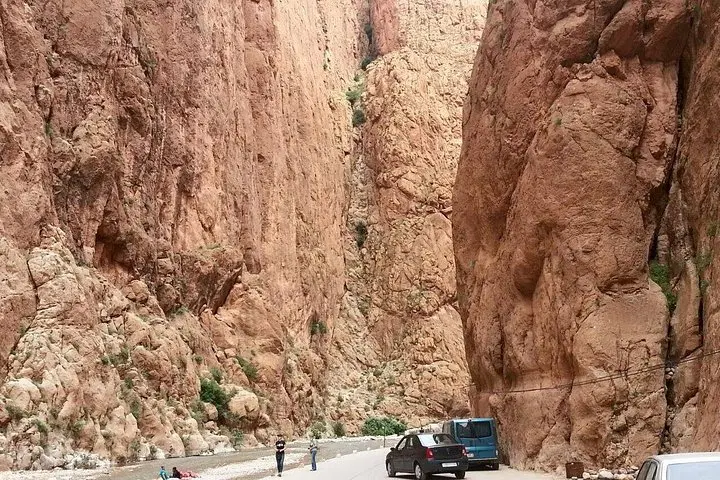
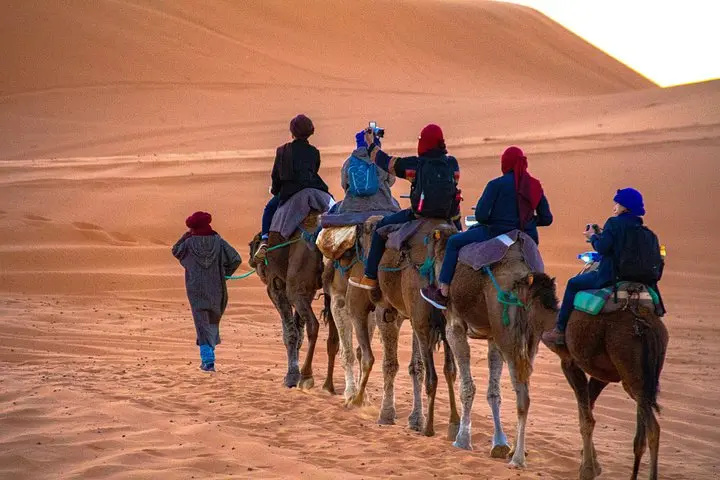
The sun lowers behind a wall of sand as camels pick their way up an Erg Chebbi dune, the ridge cutting a crisp silhouette against a bruised sky. On this 4-day loop from Fez, travellers move from cool cedar forests and French-built Ifrane through narrow Todra Gorges to the open, wind-sculpted desert, trading pine scent for dry heat and a silence that almost speaks.
Verified experiences and guided adventures in the surrounding area.
Operated by Fes Desert Tours · Merzouga, Drâa-Tafilalet
The sun lowers behind a wall of sand as camels pick their way up an Erg Chebbi dune, the ridge cutting a crisp silhouette against a bruised sky. On this 4-day loop from Fez, travellers move from cool cedar forests and French-built Ifrane through narrow Todra Gorges to the open, wind-sculpted desert, trading pine scent for dry heat and a silence that almost speaks.
Historically the route threads old caravan roads and kasbahs: Rissani was an early capital of the Alaouite dynasty and the road of a thousand kasbahs reminds visitors of Persianate fortress architecture adapted to oasis life. Geologically the Middle Atlas folds into deep limestone gorges while the southeastern plains give way to Miocene sand seas that still shift with seasonal winds. Culturally the journey touches Berber villages, local markets in Rissani, and the Gnawa-influenced music of El Khamlia.
Practical guidance: expect long drives with multiple stops, one night in a desert camp and hotel stays elsewhere. Moderate fitness is required for short treks in Todra and walking on dunes; the camel ride is gentle but uneven. Bring sun protection, layered clothing for cool desert nights, sturdy footwear for mixed terrain, and at least 2–3 liters of water per day. Travel light in the dunes and follow local guides — they know the safest lines across soft sand and the best sunrise vantage points.
Timing matters: sunrise and sunset on the dunes are the highlights; plan camera batteries and warm layers accordingly. Respect fragile desert vegetation and water scarcity—leave no trace and support local guides and family-run kasbahs.
Camel rides are low-impact and guided at a slow pace across dunes; riders should be able to mount and sit on a moving animal and follow the guide's instructions.
Service is limited around Erg Chebbi and in remote gorges; expect patchy or no coverage at the camp—plan accordingly.
Children are allowed but must be accompanied by an adult; some operators set child rates and require at least two paying adults per booking.
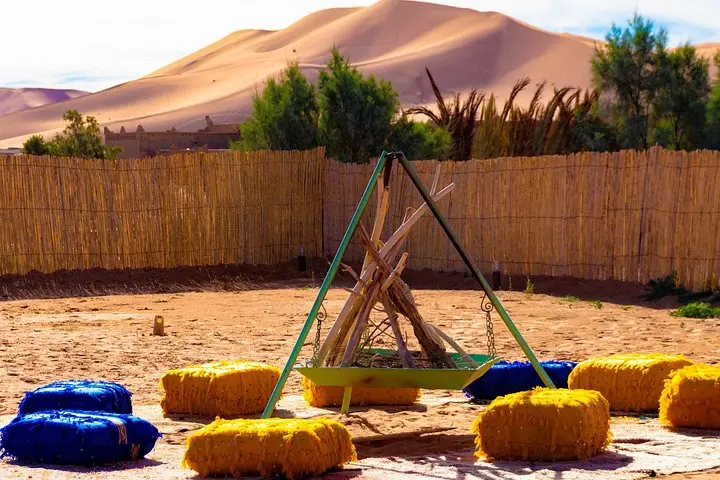
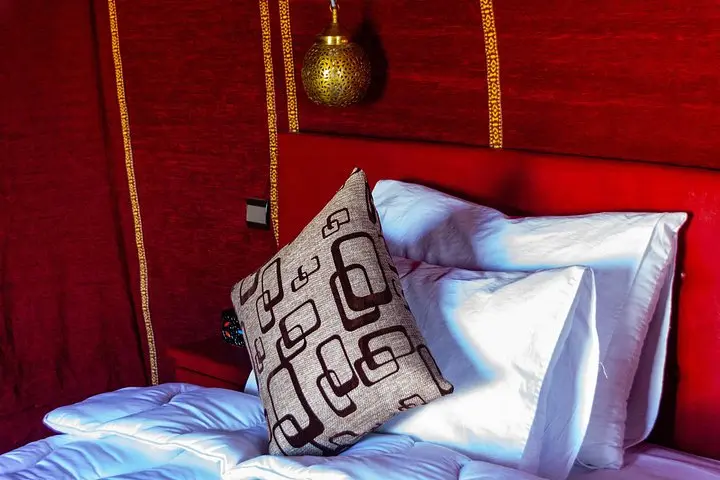
Two nights in hotels and one night in a desert camp are included, with breakfasts and most dinners provided; specifics depend on the operator's standards.
Fes Desert Tours operates guided outdoor trips and adventures with an emphasis on safety, stewardship, and memorable experiences.
The sun lowers behind a wall of sand as camels pick their way up an Erg Chebbi dune, the ridge cutting a crisp silhouette against a bruised sky. On this 4-day loop from Fez, travellers move from cool cedar forests and French-built Ifrane through narrow Todra Gorges to the open, wind-sculpted desert, trading pine scent for dry heat and a silence that almost speaks.
The sun lowers behind a wall of sand as camels pick their way up an Erg Chebbi dune, the ridge cutting a crisp silhouette against a bruised sky. On this 4-day loop from Fez, travellers move from cool cedar forests and French-built Ifrane through narrow Todra Gorges to the open, wind-sculpted desert, trading pine scent for dry heat and a silence that almost speaks.
Historically the route threads old caravan roads and kasbahs: Rissani was an early capital of the Alaouite dynasty and the road of a thousand kasbahs reminds visitors of Persianate fortress architecture adapted to oasis life. Geologically the Middle Atlas folds into deep limestone gorges while the southeastern plains give way to Miocene sand seas that still shift with seasonal winds. Culturally the journey touches Berber villages, local markets in Rissani, and the Gnawa-influenced music of El Khamlia.
Practical guidance: expect long drives with multiple stops, one night in a desert camp and hotel stays elsewhere. Moderate fitness is required for short treks in Todra and walking on dunes; the camel ride is gentle but uneven. Bring sun protection, layered clothing for cool desert nights, sturdy footwear for mixed terrain, and at least 2–3 liters of water per day. Travel light in the dunes and follow local guides — they know the safest lines across soft sand and the best sunrise vantage points.
Timing matters: sunrise and sunset on the dunes are the highlights; plan camera batteries and warm layers accordingly. Respect fragile desert vegetation and water scarcity—leave no trace and support local guides and family-run kasbahs.