THE ADVENTURE COLLECTIVE® · Independent discovery and booking for outdoor travel

A compact four‑day introduction to Bhutan that pairs Paro’s valley monasteries with Thimphu’s slow city rhythms and high mountain viewpoints. Expect dzongs, a scenic pass over Dochula and accessible hikes with clear cultural context and logistical support.
A compact four‑day introduction to Bhutan that pairs Paro’s valley monasteries with Thimphu’s slow city rhythms and high mountain viewpoints. Expect dzongs, a scenic pass over Dochula and accessible hikes with clear cultural context and logistical support.
A cool Himalayan morning unfolds as the plane drops toward Paro: terraces slip past, the Pa Chu river threads the valley, and snow-bright peaks puncture the sky. On this compact four‑day loop travelers move between Paro and Thimphu, trading lowland rice fields for high mountain passes and centuries‑old dzongs.
Verified experiences and guided adventures in the surrounding area.
Operated by Alpine Club of Himalaya · Paro, Paro District
A cool Himalayan morning unfolds as the plane drops toward Paro: terraces slip past, the Pa Chu river threads the valley, and snow-bright peaks puncture the sky. On this compact four‑day loop travelers move between Paro and Thimphu, trading lowland rice fields for high mountain passes and centuries‑old dzongs.
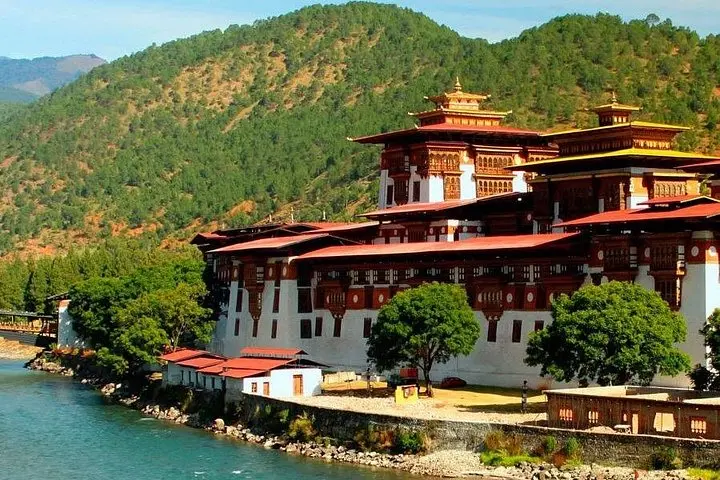
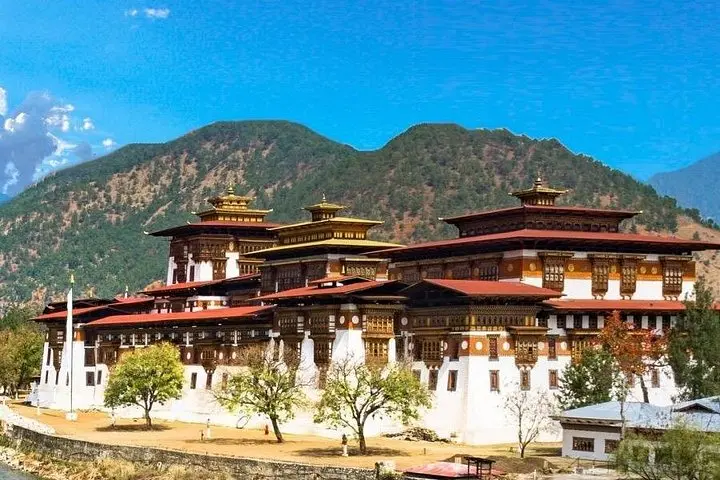
Bhutan’s built landscape is dominated by fortresses—Rinpung and Tashichhoe Dzong among them—constructed in the 17th century under Shabdrung Ngawang Namgyal. Geologically the valleys are young, glacially sculpted troughs framed by uplifted Himalayan summits like Chomolhari; the Dochula Pass (3,080 m) is a reliable vantage for peaks above 7,000 m when weather allows. Cultural life centers on Buddhism: prayer wheels, gompas and painted stupas are part of daily circulation in towns and villages.
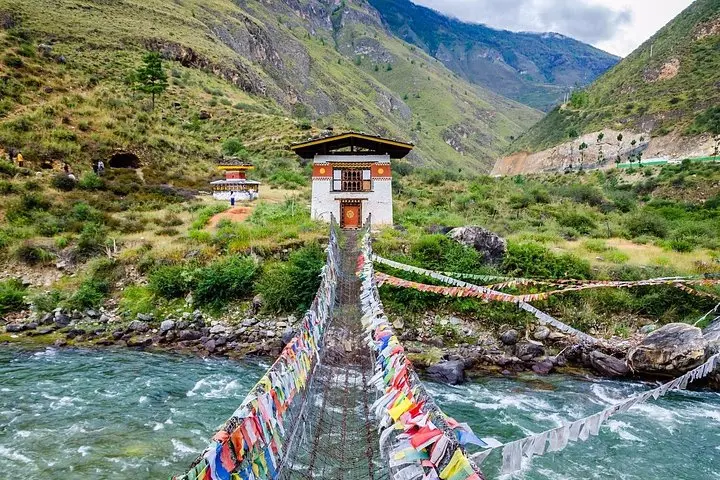
Practical notes: the itinerary includes domestic airfare Paro–Kathmandu round-trip, permits and visa handling, A‑grade hotels, and airport transfers. Expect light sightseeing walks in Thimphu (≈2,300 m), a drive over Dochula, and time to explore Ta Dzong and Rinpung Dzong in Paro. Altitude acclimatization is gradual but real—plan on slower walking, regular hydration and sun protection. Carry original passport pages and passport photos for the mandatory visa; recent entry rules require proof of vaccination or a PCR test within 24 hours as stated by providers.
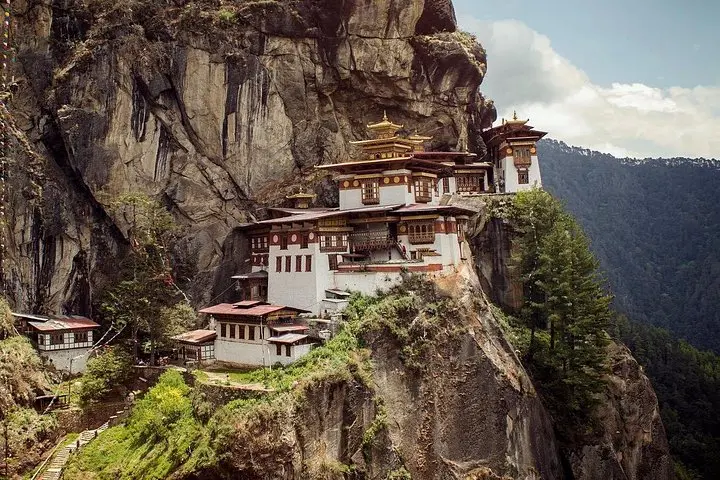
Timing matters: early departures give the best light for Tiger’s Nest views and clearer mountain panoramas. Footwear with traction, layered clothing, and a daypack make moving between monasteries and viewpoints straightforward. The itinerary balances culture, gentle hiking and sweeping Himalayan scenery for an efficient introduction to Bhutan.
Yes—visas are facilitated by the operator but you must provide passport scans and photos; final visa is issued on arrival once fees and paperwork are processed.
No technical high‑altitude trekking is required; the program includes short uphill walks and visits to hilltop monasteries—basic fitness is sufficient.
Yes—the published itinerary includes A‑grade hotels and all meals listed (breakfast, lunch and dinner as noted).
Operators currently require proof of full COVID vaccination or a negative PCR within 24 hours—confirm the latest requirement before travel.
Alpine Club of Himalaya operates guided outdoor trips and adventures with an emphasis on safety, stewardship, and memorable experiences.
A cool Himalayan morning unfolds as the plane drops toward Paro: terraces slip past, the Pa Chu river threads the valley, and snow-bright peaks puncture the sky. On this compact four‑day loop travelers move between Paro and Thimphu, trading lowland rice fields for high mountain passes and centuries‑old dzongs.
A cool Himalayan morning unfolds as the plane drops toward Paro: terraces slip past, the Pa Chu river threads the valley, and snow-bright peaks puncture the sky. On this compact four‑day loop travelers move between Paro and Thimphu, trading lowland rice fields for high mountain passes and centuries‑old dzongs.
Bhutan’s built landscape is dominated by fortresses—Rinpung and Tashichhoe Dzong among them—constructed in the 17th century under Shabdrung Ngawang Namgyal. Geologically the valleys are young, glacially sculpted troughs framed by uplifted Himalayan summits like Chomolhari; the Dochula Pass (3,080 m) is a reliable vantage for peaks above 7,000 m when weather allows. Cultural life centers on Buddhism: prayer wheels, gompas and painted stupas are part of daily circulation in towns and villages.
Practical notes: the itinerary includes domestic airfare Paro–Kathmandu round-trip, permits and visa handling, A‑grade hotels, and airport transfers. Expect light sightseeing walks in Thimphu (≈2,300 m), a drive over Dochula, and time to explore Ta Dzong and Rinpung Dzong in Paro. Altitude acclimatization is gradual but real—plan on slower walking, regular hydration and sun protection. Carry original passport pages and passport photos for the mandatory visa; recent entry rules require proof of vaccination or a PCR test within 24 hours as stated by providers.
Timing matters: early departures give the best light for Tiger’s Nest views and clearer mountain panoramas. Footwear with traction, layered clothing, and a daypack make moving between monasteries and viewpoints straightforward. The itinerary balances culture, gentle hiking and sweeping Himalayan scenery for an efficient introduction to Bhutan.