THE ADVENTURE COLLECTIVE® · Independent discovery and booking for outdoor travel

Four days traveling between Thimphu and Paro combine cultural landmarks, valley views and a classic Himalayan climb to Paro Taktsang (Tiger’s Nest). Expect market visits, dzongs, a cliffside monastery hike and a restorative hot-stone bath or farmstay.
Four days traveling between Thimphu and Paro combine cultural landmarks, valley views and a classic Himalayan climb to Paro Taktsang (Tiger’s Nest). Expect market visits, dzongs, a cliffside monastery hike and a restorative hot-stone bath or farmstay.
Morning light slides down the Paro valley and the cliff-face monastery of Taktsang — the Tiger’s Nest — appears like a human story clinging to stone. Your four-day loop moves between Thimphu’s broad river terraces and Paro’s steep ridgelines: busy markets and dzongs, a giant Buddha statue overlooking a folded valley, then the slow, breath-steadying climb to a cliffside meditation cave.
Verified experiences and guided adventures in the surrounding area.
Operated by Thunphel Bhutan Travel · Paro, Paro District
Morning light slides down the Paro valley and the cliff-face monastery of Taktsang — the Tiger’s Nest — appears like a human story clinging to stone. Your four-day loop moves between Thimphu’s broad river terraces and Paro’s steep ridgelines: busy markets and dzongs, a giant Buddha statue overlooking a folded valley, then the slow, breath-steadying climb to a cliffside meditation cave.
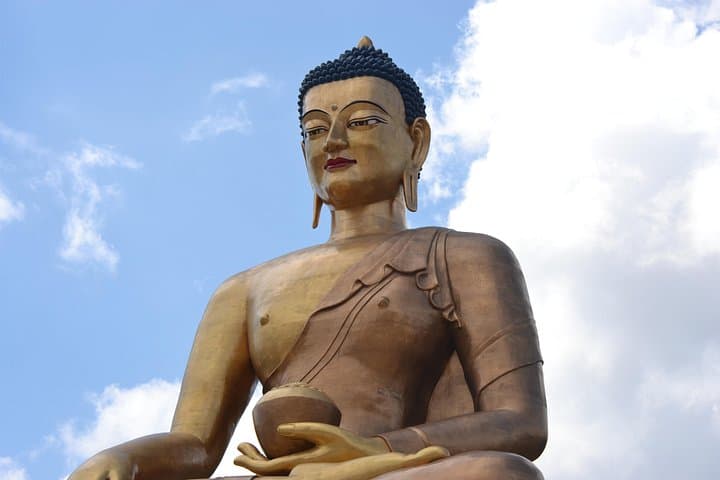
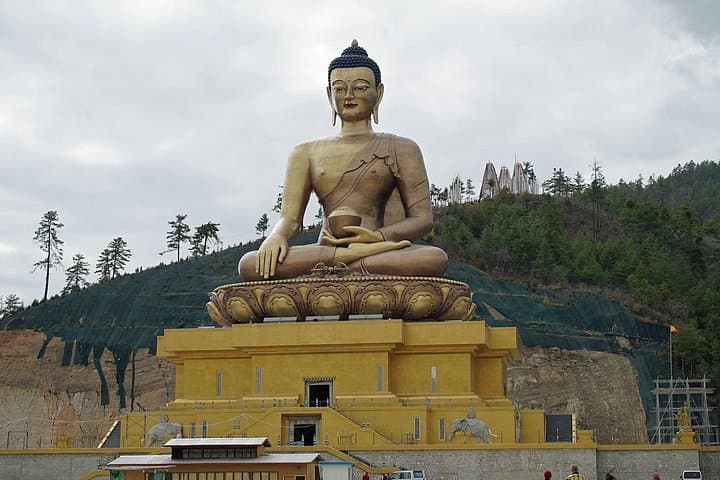
Bhutan sits on the southern flanks of the eastern Himalaya; the rock here is steely schist and granite, carved into narrow valleys and steep ridges that shaped its towns and monasteries. Paro Taktsang, established in the late 17th century and associated with Guru Rinpoche, perches around 3,100 m and embodies Bhutan’s living Buddhist heritage. Thimphu’s modern capital features government dzongs, craft schools, and the Great Buddha Dordenma overlooking the valley.
Expect a mix of easy cultural sightseeing and a single sustained mountain hike: the Tiger’s Nest trail gains roughly 700–900 m over rocky switchbacks and stone steps, taking 3–4 hours round trip for most walkers at altitude. Practicalities: carry your passport (required), dress in layers for sharp temperature swings, and allow a slow pace uphill; the tour often includes a soothing local hot-stone bath and an optional farmstay to sample ancestral hospitality.
Plan for early starts to avoid midday crowds at the monastery, bring sun protection and reusable water, and respect monastery etiquette (quiet, no flash photography inside). The route is straightforward but at elevation — steady aerobic fitness and proper footwear will make the experience memorable rather than merely exhausting.
The trail is steep with many steps and an elevation gain of roughly 700–900 m; many people complete it in 3–4 hours round trip with a steady pace and breaks.
A valid passport is required; most visitors to Bhutan need a visa arranged before arrival through an operator—confirm visa requirements when booking.
Hot-stone baths are commonly offered as an optional local experience in Paro and may be included or available at an extra charge—check your itinerary details.
The cultural sightseeing is accessible, but the Tiger’s Nest hike involves strenuous uphill walking and is not suitable for those with serious mobility limitations; consult the operator for alternatives.
Thunphel Bhutan Travel operates guided outdoor trips and adventures with an emphasis on safety, stewardship, and memorable experiences.
Morning light slides down the Paro valley and the cliff-face monastery of Taktsang — the Tiger’s Nest — appears like a human story clinging to stone. Your four-day loop moves between Thimphu’s broad river terraces and Paro’s steep ridgelines: busy markets and dzongs, a giant Buddha statue overlooking a folded valley, then the slow, breath-steadying climb to a cliffside meditation cave.
Morning light slides down the Paro valley and the cliff-face monastery of Taktsang — the Tiger’s Nest — appears like a human story clinging to stone. Your four-day loop moves between Thimphu’s broad river terraces and Paro’s steep ridgelines: busy markets and dzongs, a giant Buddha statue overlooking a folded valley, then the slow, breath-steadying climb to a cliffside meditation cave.
Bhutan sits on the southern flanks of the eastern Himalaya; the rock here is steely schist and granite, carved into narrow valleys and steep ridges that shaped its towns and monasteries. Paro Taktsang, established in the late 17th century and associated with Guru Rinpoche, perches around 3,100 m and embodies Bhutan’s living Buddhist heritage. Thimphu’s modern capital features government dzongs, craft schools, and the Great Buddha Dordenma overlooking the valley.
Expect a mix of easy cultural sightseeing and a single sustained mountain hike: the Tiger’s Nest trail gains roughly 700–900 m over rocky switchbacks and stone steps, taking 3–4 hours round trip for most walkers at altitude. Practicalities: carry your passport (required), dress in layers for sharp temperature swings, and allow a slow pace uphill; the tour often includes a soothing local hot-stone bath and an optional farmstay to sample ancestral hospitality.
Plan for early starts to avoid midday crowds at the monastery, bring sun protection and reusable water, and respect monastery etiquette (quiet, no flash photography inside). The route is straightforward but at elevation — steady aerobic fitness and proper footwear will make the experience memorable rather than merely exhausting.