THE ADVENTURE COLLECTIVE® · Independent discovery and booking for outdoor travel

A compact, budget-friendly four-day safari from Arusha that covers Tarangire, Ngorongoro Crater and Lake Manyara. Ideal for travelers who want big wildlife sightings and practical logistics without luxury pricing.
A compact, budget-friendly four-day safari from Arusha that covers Tarangire, Ngorongoro Crater and Lake Manyara. Ideal for travelers who want big wildlife sightings and practical logistics without luxury pricing.
You arrive in Arusha at first light, the city a low ridge of red roofs beneath Kilimanjaro’s distant profile. The safari begins on dusty tracks that breathe wildlife — herds of elephants moving like slow weather across Tarangire’s open plains, baobabs throwing long shadows, and the crater rim appearing as a high, green wall on the horizon.
Verified experiences and guided adventures in the surrounding area.
Operated by Long Way Expeditions Ltd · Arusha, Arusha Region
You arrive in Arusha at first light, the city a low ridge of red roofs beneath Kilimanjaro’s distant profile. The safari begins on dusty tracks that breathe wildlife — herds of elephants moving like slow weather across Tarangire’s open plains, baobabs throwing long shadows, and the crater rim appearing as a high, green wall on the horizon.
This compact circuit traces classic northern Tanzania: Tarangire’s river-fed grasslands where large elephant herds and hundreds of bird species gather; Ngorongoro’s volcanic caldera, a collapsed giant that now concentrates predators and prey on a crater floor roughly 260 km2; and Lake Manyara’s forested drive where tree-climbing lions and blue monkeys make the canopy feel alive. Geologically the route follows the East African Rift’s fractures: volcanic highlands give way to caldera basins and alkaline lakes.
Culturally, the highlands around Karatu and the Maasai plains carry pastoral traditions — you’ll pass bomas and see livestock grazing against a backdrop of acacia and coffee farms. Guides on budget safaris focus on long game drives (Tarangire and Ngorongoro days often run 6–7 hours), early starts to catch predators active at dawn, and practical wildlife etiquette.
Practicalities: expect mostly dirt roads and short walking between vehicles and viewpoints; elevations range from Arusha (~1,400 m) to Ngorongoro rim (~2,200–2,400 m). Bring sun protection, layers for cool mornings, and a camera with a good zoom. Lodging is mid-range; park fees and a 4x4 vehicle are standard. For a tight window of four days this itinerary maximizes sightings while keeping logistics simple and approachable for first-time safari travelers.
This itinerary indicates admission included for Tarangire and Ngorongoro days; confirm exact fees and receipts with the operator prior to travel.
The operator notes it’s not recommended for pregnant travelers; suitability for children depends on age and health—check with the provider.
This budget tour uses mid-range lodges (Mvuli Hotel in Arusha and Omega View in Karatu) on a half- or full-board basis as listed in the itinerary.
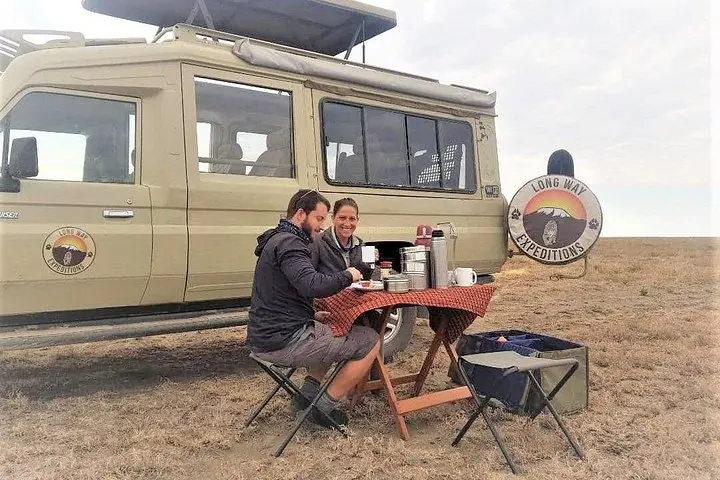
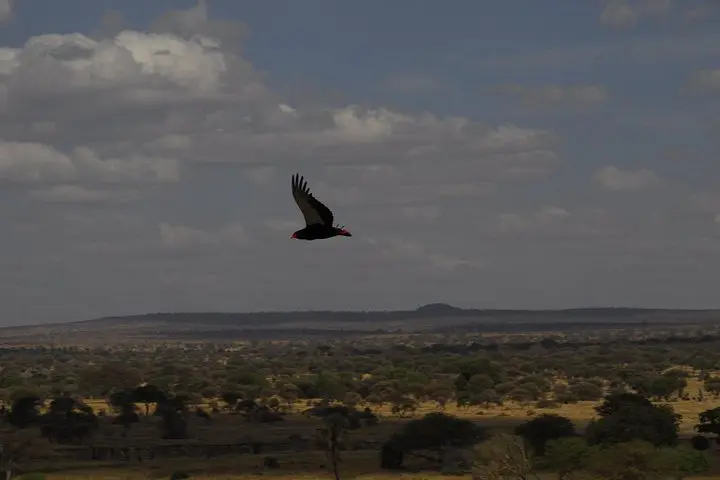
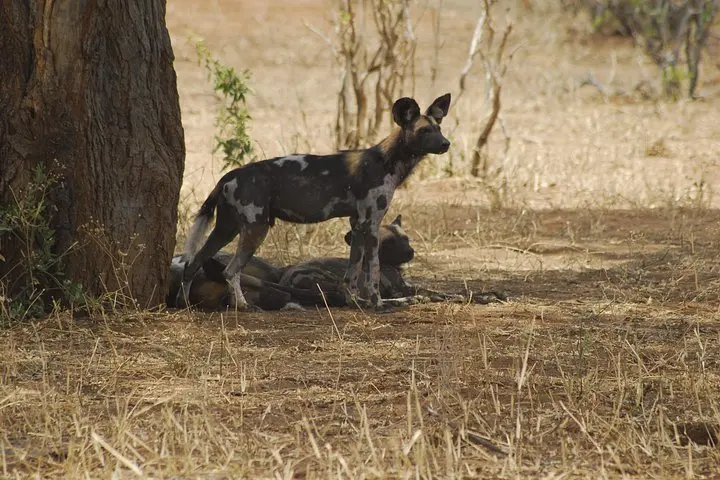
Expect elephants, lions, zebras, wildebeest, and many bird species; Ngorongoro often yields concentrated predator sightings while Tarangire is notable for large elephant herds.
Long Way Expeditions Ltd operates guided outdoor trips and adventures with an emphasis on safety, stewardship, and memorable experiences.
You arrive in Arusha at first light, the city a low ridge of red roofs beneath Kilimanjaro’s distant profile. The safari begins on dusty tracks that breathe wildlife — herds of elephants moving like slow weather across Tarangire’s open plains, baobabs throwing long shadows, and the crater rim appearing as a high, green wall on the horizon.
You arrive in Arusha at first light, the city a low ridge of red roofs beneath Kilimanjaro’s distant profile. The safari begins on dusty tracks that breathe wildlife — herds of elephants moving like slow weather across Tarangire’s open plains, baobabs throwing long shadows, and the crater rim appearing as a high, green wall on the horizon.
This compact circuit traces classic northern Tanzania: Tarangire’s river-fed grasslands where large elephant herds and hundreds of bird species gather; Ngorongoro’s volcanic caldera, a collapsed giant that now concentrates predators and prey on a crater floor roughly 260 km2; and Lake Manyara’s forested drive where tree-climbing lions and blue monkeys make the canopy feel alive. Geologically the route follows the East African Rift’s fractures: volcanic highlands give way to caldera basins and alkaline lakes.
Culturally, the highlands around Karatu and the Maasai plains carry pastoral traditions — you’ll pass bomas and see livestock grazing against a backdrop of acacia and coffee farms. Guides on budget safaris focus on long game drives (Tarangire and Ngorongoro days often run 6–7 hours), early starts to catch predators active at dawn, and practical wildlife etiquette.
Practicalities: expect mostly dirt roads and short walking between vehicles and viewpoints; elevations range from Arusha (~1,400 m) to Ngorongoro rim (~2,200–2,400 m). Bring sun protection, layers for cool mornings, and a camera with a good zoom. Lodging is mid-range; park fees and a 4x4 vehicle are standard. For a tight window of four days this itinerary maximizes sightings while keeping logistics simple and approachable for first-time safari travelers.