THE ADVENTURE COLLECTIVE® · Independent discovery and booking for outdoor travel

Four days of guided history and coastal contrast: airport pickup, pyramid plateau and Saqqara, a day in Alexandria, and Cairo’s Islamic and Coptic quarters with hotel and transfers included. Practical logistics and cultural tips help you move smoothly between eras.
Four days of guided history and coastal contrast: airport pickup, pyramid plateau and Saqqara, a day in Alexandria, and Cairo’s Islamic and Coptic quarters with hotel and transfers included. Practical logistics and cultural tips help you move smoothly between eras.
You arrive as the warm Nile light slants across the runway and Cairo’s edge unfurls: the city hums, minarets punctuate the skyline, and the silhouette of the Giza Plateau waits beyond dusty neighborhoods. A smooth airport transfer carries you toward a hotel that often promises pyramid views—an apt introduction before the stones themselves enter the frame.
Verified experiences and guided adventures in the surrounding area.
Operated by Egypt Best Holidays · Giza, Cairo Governorate
You arrive as the warm Nile light slants across the runway and Cairo’s edge unfurls: the city hums, minarets punctuate the skyline, and the silhouette of the Giza Plateau waits beyond dusty neighborhoods. A smooth airport transfer carries you toward a hotel that often promises pyramid views—an apt introduction before the stones themselves enter the frame.
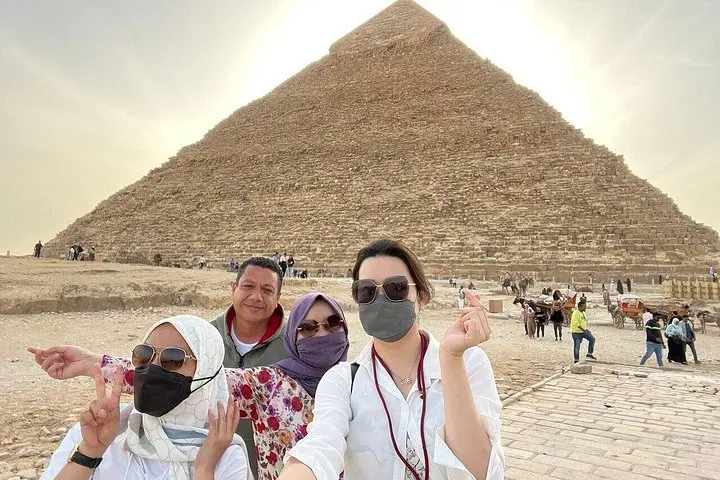
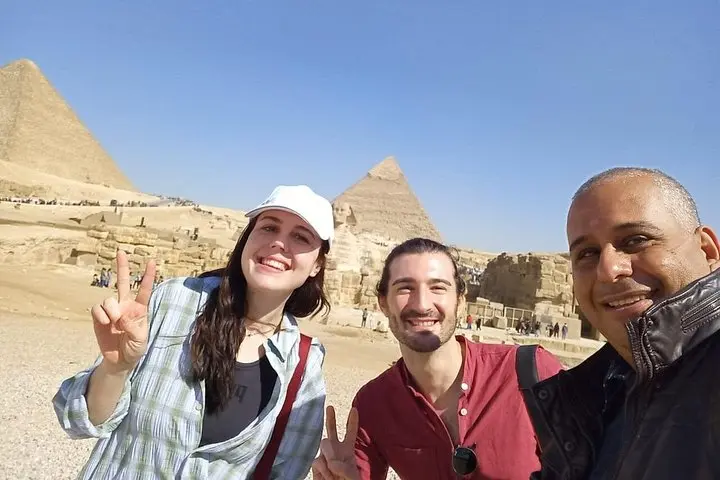
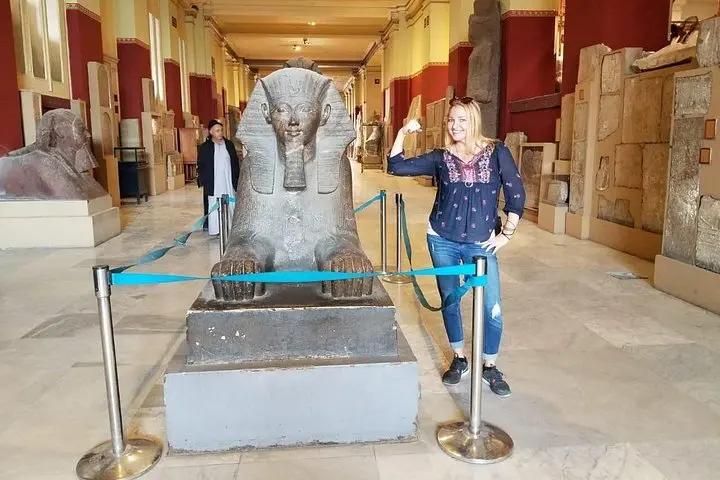
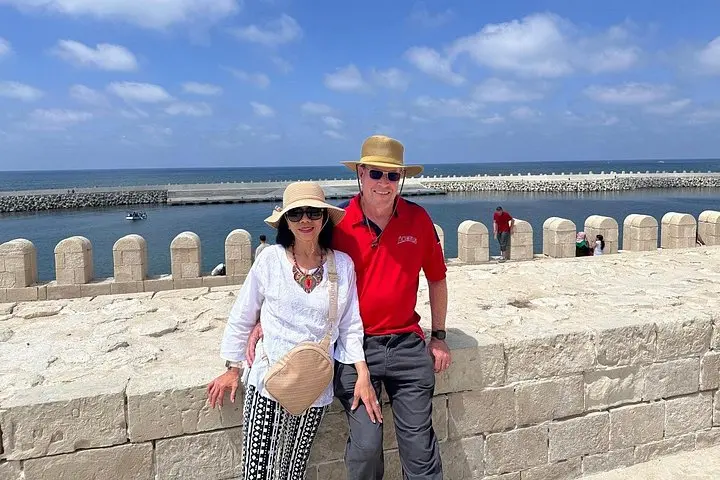
Over four days an Egyptology guide threads together three eras: the Old Kingdom’s monumental certainty at Giza and Saqqara, the classical pulse of Alexandria on the Mediterranean, and medieval Cairo with its Citadel and mosques. The Step Pyramid at Saqqara demonstrates the experiment of stone construction, while Memphis preserves statuary that once defined a civilization. Alexandria’s Catacombs and the Citadel of Qaitbay reveal Roman and medieval coastal layers; the modern Library of Alexandria frames the city’s long relationship with knowledge.
Expect a lot of walking on uneven archaeological stones, short drives between sites in air-conditioned vehicles, and moments of strong sun—especially on the plateau. Cultural notes: modest dress is appropriate for mosques and neighborhoods, and bargaining is customary at markets.
Practical guidance: plan early visits for softer light at Giza, carry at least 2 liters of water per person, use closed-toe shoes for rocky surfaces, and keep ID and photocopies handy for museum entry. Guides simplify logistics—skip-the-line options and transfers reduce stress—so you can focus on the sites and the stories the stones are still telling.
Some site admissions are included by the tour operator but confirm specific tickets (e.g., interior pyramid access) when booking.
Transfers and many museum areas are wheelchair accessible, but some archaeological sites have uneven terrain and limited access.
Expect several short walks at each site—typically 1–3 miles cumulatively per day on uneven surfaces and stairs at select locations.
Yes—airport transfer times are flexible with flight details provided; notify the operator of arrival times when booking.
Egypt Best Holidays operates guided outdoor trips and adventures with an emphasis on safety, stewardship, and memorable experiences.
You arrive as the warm Nile light slants across the runway and Cairo’s edge unfurls: the city hums, minarets punctuate the skyline, and the silhouette of the Giza Plateau waits beyond dusty neighborhoods. A smooth airport transfer carries you toward a hotel that often promises pyramid views—an apt introduction before the stones themselves enter the frame.
You arrive as the warm Nile light slants across the runway and Cairo’s edge unfurls: the city hums, minarets punctuate the skyline, and the silhouette of the Giza Plateau waits beyond dusty neighborhoods. A smooth airport transfer carries you toward a hotel that often promises pyramid views—an apt introduction before the stones themselves enter the frame.
Over four days an Egyptology guide threads together three eras: the Old Kingdom’s monumental certainty at Giza and Saqqara, the classical pulse of Alexandria on the Mediterranean, and medieval Cairo with its Citadel and mosques. The Step Pyramid at Saqqara demonstrates the experiment of stone construction, while Memphis preserves statuary that once defined a civilization. Alexandria’s Catacombs and the Citadel of Qaitbay reveal Roman and medieval coastal layers; the modern Library of Alexandria frames the city’s long relationship with knowledge.
Expect a lot of walking on uneven archaeological stones, short drives between sites in air-conditioned vehicles, and moments of strong sun—especially on the plateau. Cultural notes: modest dress is appropriate for mosques and neighborhoods, and bargaining is customary at markets.
Practical guidance: plan early visits for softer light at Giza, carry at least 2 liters of water per person, use closed-toe shoes for rocky surfaces, and keep ID and photocopies handy for museum entry. Guides simplify logistics—skip-the-line options and transfers reduce stress—so you can focus on the sites and the stories the stones are still telling.