THE ADVENTURE COLLECTIVE® · Independent discovery and booking for outdoor travel

A compact 4-day trek from Kathmandu that pairs short, steep hikes with overnight camping at Australian Camp and a cultural stop in Dhampus. Expect forested switchbacks, village trails, campfires and sunrise views over the Annapurna range.
A compact 4-day trek from Kathmandu that pairs short, steep hikes with overnight camping at Australian Camp and a cultural stop in Dhampus. Expect forested switchbacks, village trails, campfires and sunrise views over the Annapurna range.
You leave Kathmandu before dawn and the road west becomes a ribbon of rice paddies and roadside tea stalls. By the time you reach Phedi, the air is already thinner, and a narrow path climbs into terraced fields and stands of rhododendron. The trail pushes upward—stone steps, packed earth and forested switchbacks—until the ridge opens onto Australian Camp, a grassy shoulder with a sweep of Annapurna and Machhapuchhre (Fishtail) towering to the north.
Verified experiences and guided adventures in the surrounding area.
Operated by Peak to Peak Tours and Treks Pvt Ltd · Pokhara, Gandaki Province
You leave Kathmandu before dawn and the road west becomes a ribbon of rice paddies and roadside tea stalls. By the time you reach Phedi, the air is already thinner, and a narrow path climbs into terraced fields and stands of rhododendron. The trail pushes upward—stone steps, packed earth and forested switchbacks—until the ridge opens onto Australian Camp, a grassy shoulder with a sweep of Annapurna and Machhapuchhre (Fishtail) towering to the north.
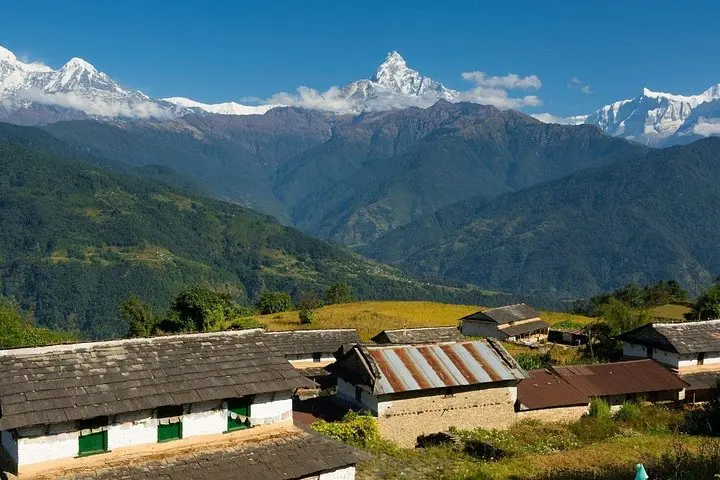
This route threads local history and living culture: Gurung villages dot the hills, their stone houses and terraced farms rooted in centuries of hill agriculture. Geologically, the trail skirts the Lesser Himalaya foothills—folded, eroded slopes that give the mountains their stepped profile and produce the dramatic morning light that makes the ridgeline glow.
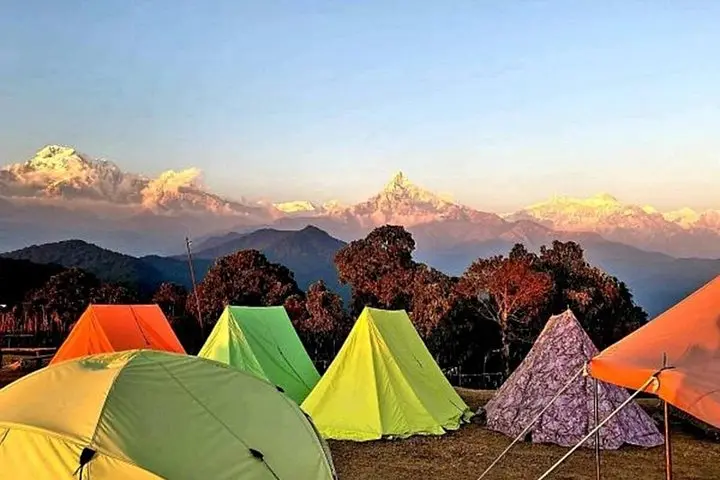
Expect campsite life: a simple tent on a grassy knoll, a communal dinner, a morning that rewards early risers with sunrise over snow fields. The hike itself is short but vertical—plan on 2–3 hours and roughly 4–6 km to Australian Camp with about 500–700 m elevation gain from Phedi; Dhampus sits around 1,750 m and is an easy descent back to road transport.
Practical: start early to avoid midday heat and afternoon cloud build-up in monsoon months, carry water and a warm layer for alpine nights, and use sturdy footwear for uneven stone steps. Respect village customs, pack out waste, and be ready for basic but tidy camping amenities; the payoff is wide mountain views and a close-up of Nepali hill life.
Most days are short but include steep sections and stone steps; expect 2–4 hours of walking on trekking days with moderate elevation gain.
Camping equipment and meals are provided by the operator—participants typically carry a daypack with personal items only.
The trek stays below high-altitude thresholds (around 1,700–1,800 m), so serious altitude sickness is unlikely, but move at a comfortable pace and stay hydrated.
Spring (March–May) and fall (September–November) offer the clearest mountain views; monsoon summer brings green hills but more rain, and winters are colder with crisper visibility.
Peak to Peak Tours and Treks Pvt Ltd operates guided outdoor trips and adventures with an emphasis on safety, stewardship, and memorable experiences.
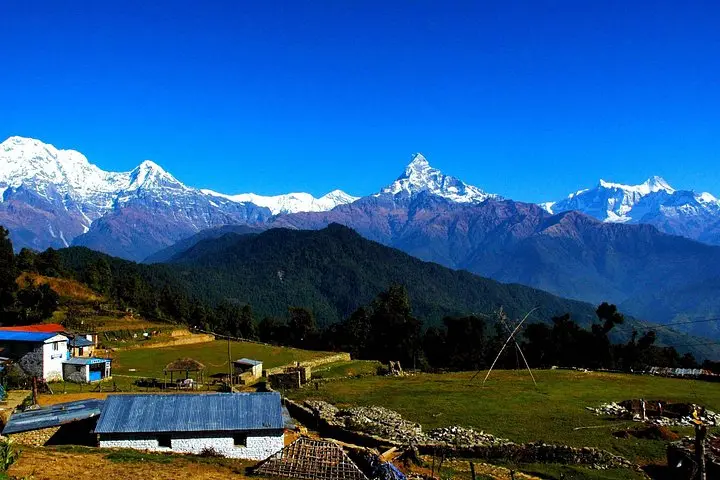
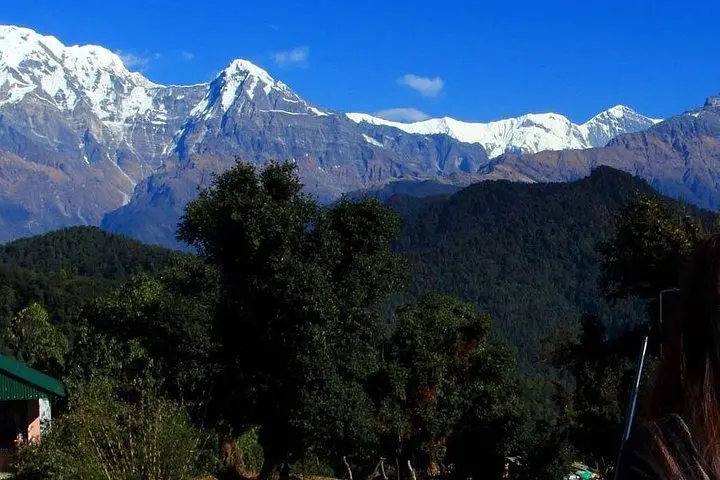
You leave Kathmandu before dawn and the road west becomes a ribbon of rice paddies and roadside tea stalls. By the time you reach Phedi, the air is already thinner, and a narrow path climbs into terraced fields and stands of rhododendron. The trail pushes upward—stone steps, packed earth and forested switchbacks—until the ridge opens onto Australian Camp, a grassy shoulder with a sweep of Annapurna and Machhapuchhre (Fishtail) towering to the north.
You leave Kathmandu before dawn and the road west becomes a ribbon of rice paddies and roadside tea stalls. By the time you reach Phedi, the air is already thinner, and a narrow path climbs into terraced fields and stands of rhododendron. The trail pushes upward—stone steps, packed earth and forested switchbacks—until the ridge opens onto Australian Camp, a grassy shoulder with a sweep of Annapurna and Machhapuchhre (Fishtail) towering to the north.
This route threads local history and living culture: Gurung villages dot the hills, their stone houses and terraced farms rooted in centuries of hill agriculture. Geologically, the trail skirts the Lesser Himalaya foothills—folded, eroded slopes that give the mountains their stepped profile and produce the dramatic morning light that makes the ridgeline glow.
Expect campsite life: a simple tent on a grassy knoll, a communal dinner, a morning that rewards early risers with sunrise over snow fields. The hike itself is short but vertical—plan on 2–3 hours and roughly 4–6 km to Australian Camp with about 500–700 m elevation gain from Phedi; Dhampus sits around 1,750 m and is an easy descent back to road transport.
Practical: start early to avoid midday heat and afternoon cloud build-up in monsoon months, carry water and a warm layer for alpine nights, and use sturdy footwear for uneven stone steps. Respect village customs, pack out waste, and be ready for basic but tidy camping amenities; the payoff is wide mountain views and a close-up of Nepali hill life.