THE ADVENTURE COLLECTIVE® · Independent discovery and booking for outdoor travel

Spend four days tracing Turkey’s deep past from Cappadocia’s carved cave churches and underground cities to Göbekli Tepe’s 12,000-year-old pillars. This private tour blends geology, hands-on culture (pottery, carpets) and the option to rise at dawn under a field of hot-air balloons.
Spend four days tracing Turkey’s deep past from Cappadocia’s carved cave churches and underground cities to Göbekli Tepe’s 12,000-year-old pillars. This private tour blends geology, hands-on culture (pottery, carpets) and the option to rise at dawn under a field of hot-air balloons.
You step off the early domestic flight into a landscape that seems to invent its own weather—pale ridges and honeycombed rock formations under a wide Anatolian sky. The first morning in Cappadocia begins with a low-slung light that catches the fairy chimneys like slow flames. Drivers and guides move with practiced calm; the region’s rhythms run on sunrise and sheltering caves rather than clocks.
Verified experiences and guided adventures in the surrounding area.
Operated by BellaTurca Travel · Göreme, Nevşehir
You step off the early domestic flight into a landscape that seems to invent its own weather—pale ridges and honeycombed rock formations under a wide Anatolian sky. The first morning in Cappadocia begins with a low-slung light that catches the fairy chimneys like slow flames. Drivers and guides move with practiced calm; the region’s rhythms run on sunrise and sheltering caves rather than clocks.
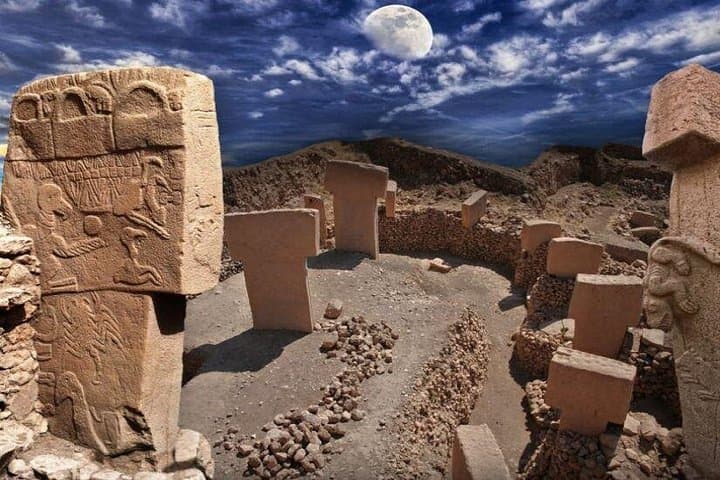
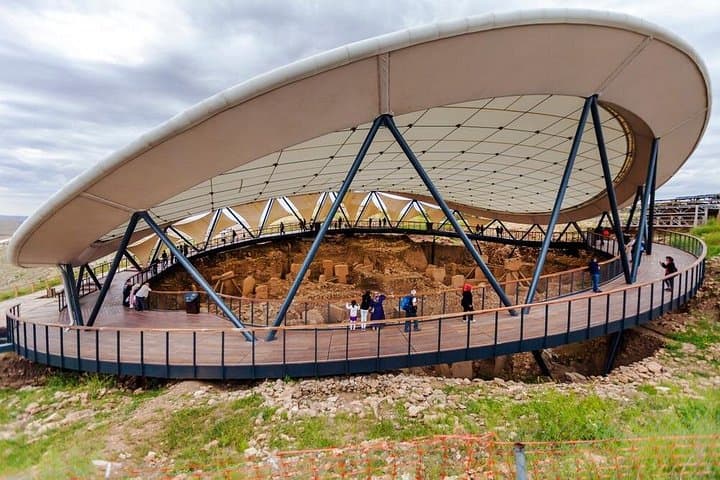
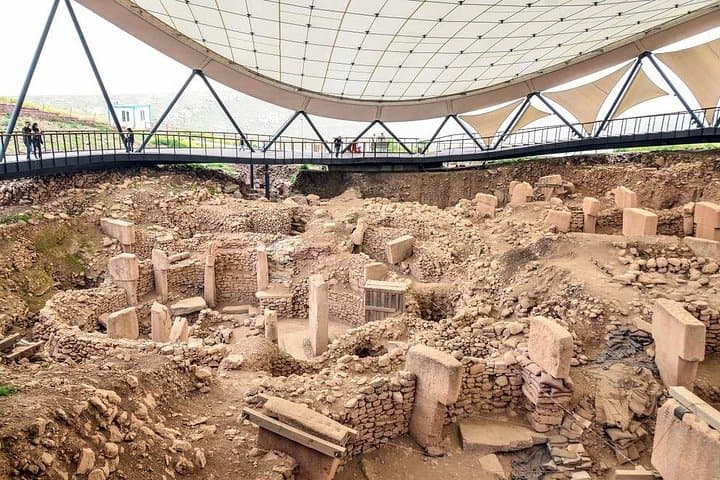
Over four days the itinerary stitches together two very different chapters of Turkey’s past. Cappadocia’s geology is recent in geological terms: volcanic tuff eroded over millennia into towers, cones and crevices. Humans used that soft stone to carve homes, pigeon houses and entire underground refuges—Kaymakli and similar complexes—where early Christians sheltered from invaders. By contrast, Göbekli Tepe near Şanlıurfa predates pottery and writing by thousands of years; its T-shaped pillars and reliefs push human ritual architecture back to c. 10,000 BCE and reframe the Neolithic revolution.
Culture here is direct and local. In Avanos, potters keep a wheel-throwing tradition alive on the banks of the Kızılırmak (Red River). In Harran the beehive houses still shape a skyline that must have looked the same to traders on ancient routes. Food punctuates movement: café-style kebabs and stews, a long lunch in Göreme after a 4 km/one-hour hike through Red/Rose Valley, then a chance to cool down with local ayran.
Practicalities matter. The tour includes private transfers and domestic flights (Istanbul–Kayseri/Nevşehir ~1h15m), three nights’ accommodation and most meals. Hot air ballooning in Cappadocia is optional, weather-dependent and regulated—book through your operator but expect cancellations when winds rise. Expect early departures (hotel pickup windows often between 04:15–06:30) and pack for layered temperature swings: summer heat can be sharp, mornings are crisp, and cave interiors stay cool year-round.
For hikers and history lovers: the Red/Rose Valley hike is roughly 4 km of uneven trails and soft tuff—good trail shoes and 1.5–2 liters of water are wise. Respect fragile surfaces and follow your guide: many frescoed churches are sensitive to touch and humidity. Bring a hat, sunscreen and a small daypack; a camera with a zoom is useful for photographing reliefs and balloon fleets at sunrise.
This private four-day loop—from Istanbul through Cappadocia to Şanlıurfa and Göbekli Tepe—works as an archaeology primer and a landscape trip in one. It’s paced so you see the essentials without feeling rushed, but flexibility—especially for balloon flights and weather—will determine the perfect morning.
No—the balloon flight is optional and priced separately. Tickets vary by season and availability; book in advance but note flights can be canceled for safety reasons with a full refund.
Domestic flights between Istanbul and the Cappadocia region (Kayseri or Nevşehir) are typically about 1 hour 10–20 minutes; your exact itinerary will specify which airport is used.
Yes—this is a private tour. Note any dietary restrictions or mobility needs in advance so the operator can adjust meals, pacing or transfer arrangements.
The base price covers standard double or triple occupancy; single-room supplements are charged separately—confirm at booking if you require a single room.
Entrance tickets to the museums and sites listed in the itinerary are included as stated in the tour inclusions.
If the flight is canceled for safety, the operator will refund the balloon ticket; the rest of the tour proceeds as scheduled where possible.
BellaTurca Travel operates guided outdoor trips and adventures with an emphasis on safety, stewardship, and memorable experiences.
You step off the early domestic flight into a landscape that seems to invent its own weather—pale ridges and honeycombed rock formations under a wide Anatolian sky. The first morning in Cappadocia begins with a low-slung light that catches the fairy chimneys like slow flames. Drivers and guides move with practiced calm; the region’s rhythms run on sunrise and sheltering caves rather than clocks.
You step off the early domestic flight into a landscape that seems to invent its own weather—pale ridges and honeycombed rock formations under a wide Anatolian sky. The first morning in Cappadocia begins with a low-slung light that catches the fairy chimneys like slow flames. Drivers and guides move with practiced calm; the region’s rhythms run on sunrise and sheltering caves rather than clocks.
Over four days the itinerary stitches together two very different chapters of Turkey’s past. Cappadocia’s geology is recent in geological terms: volcanic tuff eroded over millennia into towers, cones and crevices. Humans used that soft stone to carve homes, pigeon houses and entire underground refuges—Kaymakli and similar complexes—where early Christians sheltered from invaders. By contrast, Göbekli Tepe near Şanlıurfa predates pottery and writing by thousands of years; its T-shaped pillars and reliefs push human ritual architecture back to c. 10,000 BCE and reframe the Neolithic revolution.
Culture here is direct and local. In Avanos, potters keep a wheel-throwing tradition alive on the banks of the Kızılırmak (Red River). In Harran the beehive houses still shape a skyline that must have looked the same to traders on ancient routes. Food punctuates movement: café-style kebabs and stews, a long lunch in Göreme after a 4 km/one-hour hike through Red/Rose Valley, then a chance to cool down with local ayran.
Practicalities matter. The tour includes private transfers and domestic flights (Istanbul–Kayseri/Nevşehir ~1h15m), three nights’ accommodation and most meals. Hot air ballooning in Cappadocia is optional, weather-dependent and regulated—book through your operator but expect cancellations when winds rise. Expect early departures (hotel pickup windows often between 04:15–06:30) and pack for layered temperature swings: summer heat can be sharp, mornings are crisp, and cave interiors stay cool year-round.
For hikers and history lovers: the Red/Rose Valley hike is roughly 4 km of uneven trails and soft tuff—good trail shoes and 1.5–2 liters of water are wise. Respect fragile surfaces and follow your guide: many frescoed churches are sensitive to touch and humidity. Bring a hat, sunscreen and a small daypack; a camera with a zoom is useful for photographing reliefs and balloon fleets at sunrise.
This private four-day loop—from Istanbul through Cappadocia to Şanlıurfa and Göbekli Tepe—works as an archaeology primer and a landscape trip in one. It’s paced so you see the essentials without feeling rushed, but flexibility—especially for balloon flights and weather—will determine the perfect morning.