THE ADVENTURE COLLECTIVE® · Independent discovery and booking for outdoor travel

A compact four‑day loop from Bishkek to Issyk‑Kul that combines Silk Road history, canyon hikes and cultural encounters in Karakol and Bokonbaevo. Short hikes, big views, and a traditional eagle‑hunting demo make this an efficient taste of Kyrgyzstan.
A compact four‑day loop from Bishkek to Issyk‑Kul that combines Silk Road history, canyon hikes and cultural encounters in Karakol and Bokonbaevo. Short hikes, big views, and a traditional eagle‑hunting demo make this an efficient taste of Kyrgyzstan.
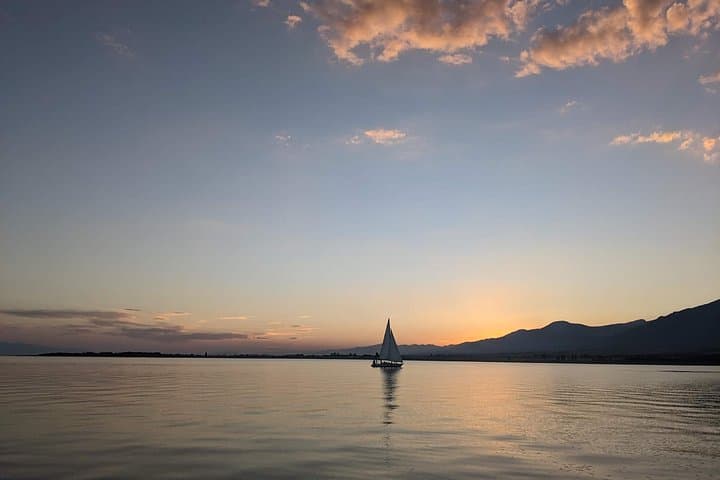
Morning light cuts across the steppe as your minivan peels out of Bishkek and the road leans toward the bright, glassy shoulder of Issyk‑Kul. The tour moves with purpose—short hikes, roadside stories, and overnight stops in Cholpon‑Ata, Karakol and Bokonbaevo—so you feel both the sweep of landscape and the rhythm of local life.
Verified experiences and guided adventures in the surrounding area.
Operated by Baitour · Bishkek, Chuy Region
Morning light cuts across the steppe as your minivan peels out of Bishkek and the road leans toward the bright, glassy shoulder of Issyk‑Kul. The tour moves with purpose—short hikes, roadside stories, and overnight stops in Cholpon‑Ata, Karakol and Bokonbaevo—so you feel both the sweep of landscape and the rhythm of local life.
Burana Tower opens the first day's chapter: an 11th‑century minaret and field of balbals (stone men) that speak to Silk Road caravans and nomadic memorial practices. Geology takes center stage at Skazka and Konorchek Canyons, where wind and river have carved clay and sandstone into fins and hoodoos, their colors shifting from ochre to rust as the sun moves. Karakol shows cultural layering—Dungan mosques, Russian churches, bazaars where flavors and languages meet—and Jeti‑Ögüz invites a short, steep hike to a viewpoint that frames the red cliffs like arranged guardians.
Expect practical access: trails are mostly short and well‑graded but include a longer 1.5 km walk in Konorchek with loose rock. Guides handle logistics and local explanations—bring sun protection and layered clothing for lake winds and valley shade. Hydrate on the move; bottled water is common but refill where possible. Respect petroglyphs and site regulations—these are fragile archaeological surfaces.
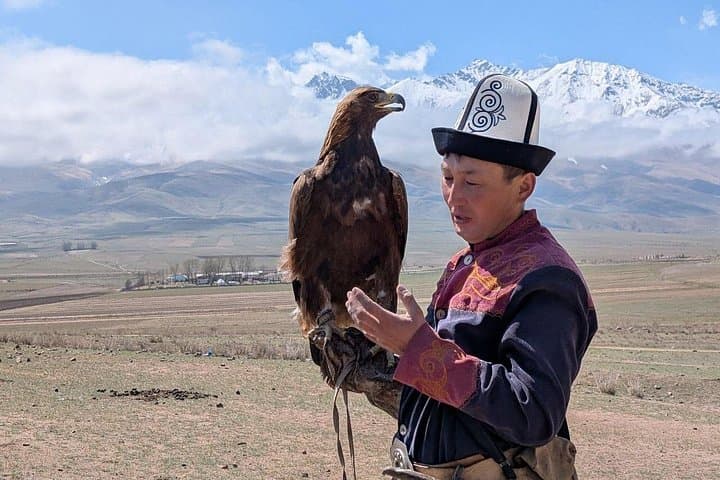
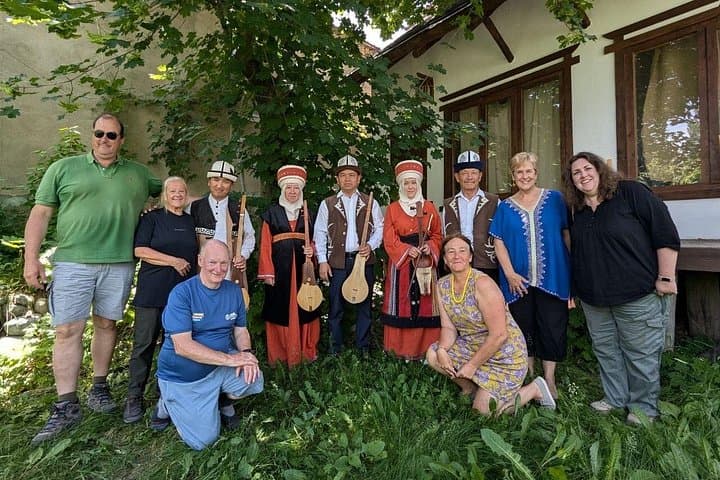
This four‑day loop is best for travelers who want concentrated cultural context alongside accessible outdoor time—moderate walking, rich scenery, and encounters such as an eagle‑hunting demonstration that connect modern life to centuries of high‑steppe tradition.
Moderate—most walking is short; the longest is a 1.5 km canyon walk with some loose rock. Basic mobility and good balance are recommended.
Russian and Kyrgyz are common; English-speaking guides are typical on organized tours. The local currency is the som (KGS); carry cash for small purchases in bazaars.
Some sites and transport are adapted, but many trail sections and canyons have uneven ground—full accessibility is limited despite some accessible transport options.
Entrance fees and listed accommodations are included per the itinerary; confirm specific inclusions with the operator when booking.
Baitour operates guided outdoor trips and adventures with an emphasis on safety, stewardship, and memorable experiences.
Morning light cuts across the steppe as your minivan peels out of Bishkek and the road leans toward the bright, glassy shoulder of Issyk‑Kul. The tour moves with purpose—short hikes, roadside stories, and overnight stops in Cholpon‑Ata, Karakol and Bokonbaevo—so you feel both the sweep of landscape and the rhythm of local life.
Morning light cuts across the steppe as your minivan peels out of Bishkek and the road leans toward the bright, glassy shoulder of Issyk‑Kul. The tour moves with purpose—short hikes, roadside stories, and overnight stops in Cholpon‑Ata, Karakol and Bokonbaevo—so you feel both the sweep of landscape and the rhythm of local life.
Burana Tower opens the first day's chapter: an 11th‑century minaret and field of balbals (stone men) that speak to Silk Road caravans and nomadic memorial practices. Geology takes center stage at Skazka and Konorchek Canyons, where wind and river have carved clay and sandstone into fins and hoodoos, their colors shifting from ochre to rust as the sun moves. Karakol shows cultural layering—Dungan mosques, Russian churches, bazaars where flavors and languages meet—and Jeti‑Ögüz invites a short, steep hike to a viewpoint that frames the red cliffs like arranged guardians.
Expect practical access: trails are mostly short and well‑graded but include a longer 1.5 km walk in Konorchek with loose rock. Guides handle logistics and local explanations—bring sun protection and layered clothing for lake winds and valley shade. Hydrate on the move; bottled water is common but refill where possible. Respect petroglyphs and site regulations—these are fragile archaeological surfaces.
This four‑day loop is best for travelers who want concentrated cultural context alongside accessible outdoor time—moderate walking, rich scenery, and encounters such as an eagle‑hunting demonstration that connect modern life to centuries of high‑steppe tradition.