THE ADVENTURE COLLECTIVE® · Independent discovery and booking for outdoor travel
A compact four-day program that combines guided archaeological tours, cultural performances and beach time on remote Easter Island. Expect short hikes, crater lookouts, moai viewing and an evening Rapa Nui dinner show.
A compact four-day program that combines guided archaeological tours, cultural performances and beach time on remote Easter Island. Expect short hikes, crater lookouts, moai viewing and an evening Rapa Nui dinner show.
You step off the plane into a wind that seems to remember old voyages, and a local team places a fragrant flower lei at your neck — an immediate, quiet welcome. The silhouette of moai crowns nearby ridgelines while the Pacific presses its blue edge against coral sand at Anakena; on Easter Island, the landscape feels both spare and insistently alive.
Verified experiences and guided adventures in the surrounding area.
Operated by Anclatourchile · Hanga Roa, Valparaíso Region
You step off the plane into a wind that seems to remember old voyages, and a local team places a fragrant flower lei at your neck — an immediate, quiet welcome. The silhouette of moai crowns nearby ridgelines while the Pacific presses its blue edge against coral sand at Anakena; on Easter Island, the landscape feels both spare and insistently alive.
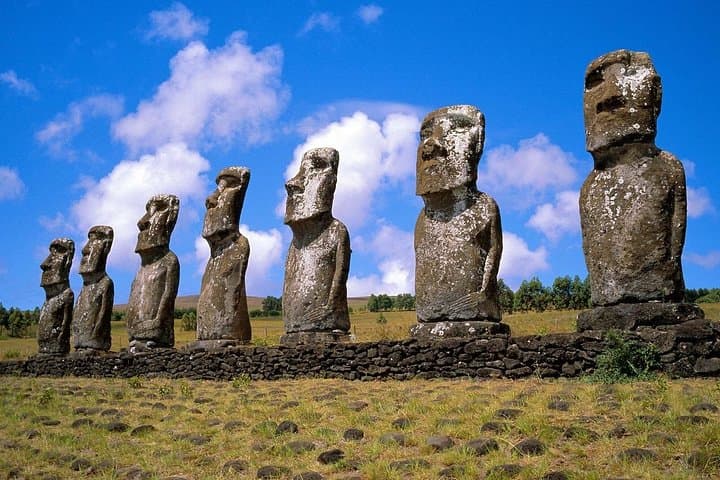
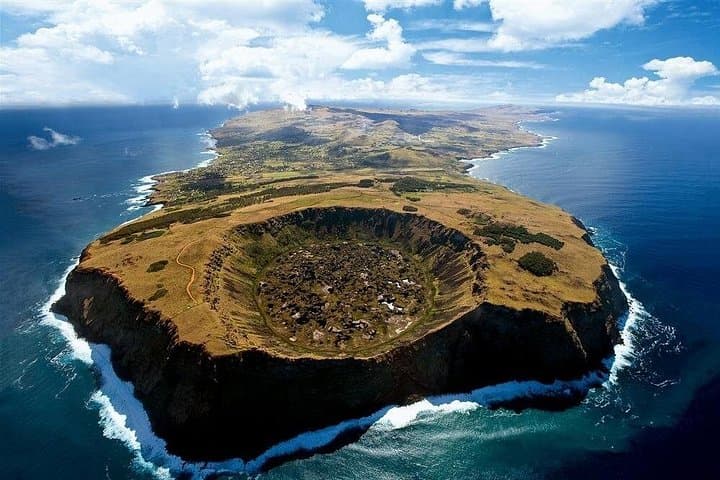
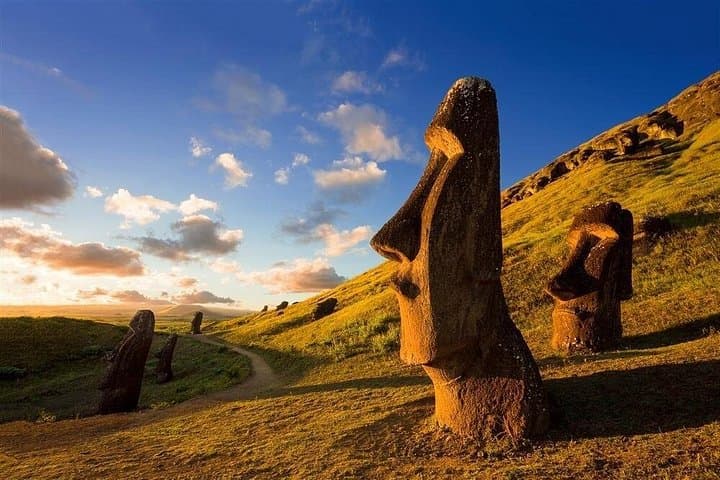
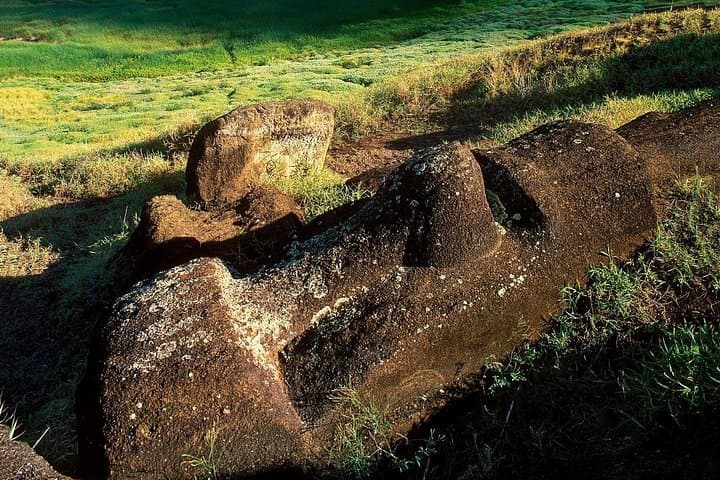
Geologically, the island is a trio of extinct volcanoes — Rano Kau, Rano Raraku and Poike — whose basalt and tuff provided the raw material for the moai carved here between roughly 1100 and 1680 CE. Archaeological sites such as Rano Raraku quarry and Ahu Tongariki reveal both the scale of island craft and the social systems that produced it; Orongo and the Birdman ceremony narrate a later ritual chapter in Rapa Nui history.
This program mixes guided archaeology walks (expect 1–3 km site walks and brief crater rim hikes with up to ~200–300 m of elevation change), cultural demonstrations and downtime at Anakena’s white coral sand. Trails are generally compact but uneven; many platforms require short rocky approaches rather than developed paths.
Practicalities matter on a remote Pacific outpost: tours run as full- and half-day loops (4 days total), hotel pickup is scheduled, and supplies on-island are limited. Bring sun protection, a light rain shell, sturdy walking shoes and cash for crafts. Respect roped areas, follow guide instructions around moai and crater rims, and leave no trace—these measures help preserve Rapa Nui’s fragile archaeology and living traditions.
Easter Island is part of Chile; most visitors require a valid passport and must meet Chilean entry requirements—check visa rules for your nationality before travel.
No—touching or climbing moai and walking on some ahu is prohibited to protect fragile stonework; follow your guide and posted barriers.
Expect short site walks of 1–3 km and some gentle crater rim hikes; full days include vehicle transfers and multiple stops, totaling 6–8 hours of touring on average.
Some sites have accessible viewpoints and short level paths, but many platforms and quarries are uneven; contact the operator in advance to arrange appropriate pickups and accommodation needs.
Anclatourchile operates guided outdoor trips and adventures with an emphasis on safety, stewardship, and memorable experiences.
You step off the plane into a wind that seems to remember old voyages, and a local team places a fragrant flower lei at your neck — an immediate, quiet welcome. The silhouette of moai crowns nearby ridgelines while the Pacific presses its blue edge against coral sand at Anakena; on Easter Island, the landscape feels both spare and insistently alive.
You step off the plane into a wind that seems to remember old voyages, and a local team places a fragrant flower lei at your neck — an immediate, quiet welcome. The silhouette of moai crowns nearby ridgelines while the Pacific presses its blue edge against coral sand at Anakena; on Easter Island, the landscape feels both spare and insistently alive.
Geologically, the island is a trio of extinct volcanoes — Rano Kau, Rano Raraku and Poike — whose basalt and tuff provided the raw material for the moai carved here between roughly 1100 and 1680 CE. Archaeological sites such as Rano Raraku quarry and Ahu Tongariki reveal both the scale of island craft and the social systems that produced it; Orongo and the Birdman ceremony narrate a later ritual chapter in Rapa Nui history.
This program mixes guided archaeology walks (expect 1–3 km site walks and brief crater rim hikes with up to ~200–300 m of elevation change), cultural demonstrations and downtime at Anakena’s white coral sand. Trails are generally compact but uneven; many platforms require short rocky approaches rather than developed paths.
Practicalities matter on a remote Pacific outpost: tours run as full- and half-day loops (4 days total), hotel pickup is scheduled, and supplies on-island are limited. Bring sun protection, a light rain shell, sturdy walking shoes and cash for crafts. Respect roped areas, follow guide instructions around moai and crater rims, and leave no trace—these measures help preserve Rapa Nui’s fragile archaeology and living traditions.
