THE ADVENTURE COLLECTIVE® · Independent discovery and booking for outdoor travel

Cross the Middle Atlas, climb sand dunes at Erg Chebbi, sleep in a Berber camp and finish at Aït Ben Haddou before arriving in Marrakech. This four-day route blends geology, local culture and practical desert travel advice.
Cross the Middle Atlas, climb sand dunes at Erg Chebbi, sleep in a Berber camp and finish at Aït Ben Haddou before arriving in Marrakech. This four-day route blends geology, local culture and practical desert travel advice.
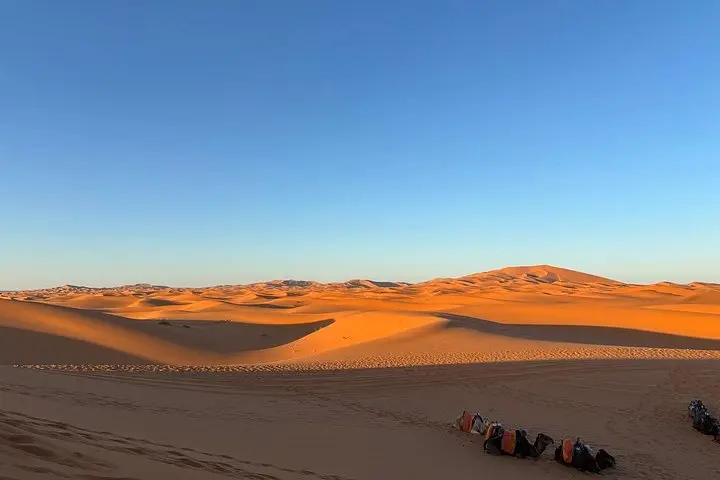
You set off before dawn from Fes, the city receding as the road climbs into the Middle Atlas. Light grazes cedar forests and the driver steers past Ifrane’s alpine squares, while distant ridgelines push the air thinner; by late afternoon the Erg Chebbi dunes assert themselves, a sea of sand that seems to breathe with the wind.
Verified experiences and guided adventures in the surrounding area.
Operated by Morocco Golden Desert Trip · Merzouga, Drâa-Tafilalet
You set off before dawn from Fes, the city receding as the road climbs into the Middle Atlas. Light grazes cedar forests and the driver steers past Ifrane’s alpine squares, while distant ridgelines push the air thinner; by late afternoon the Erg Chebbi dunes assert themselves, a sea of sand that seems to breathe with the wind.
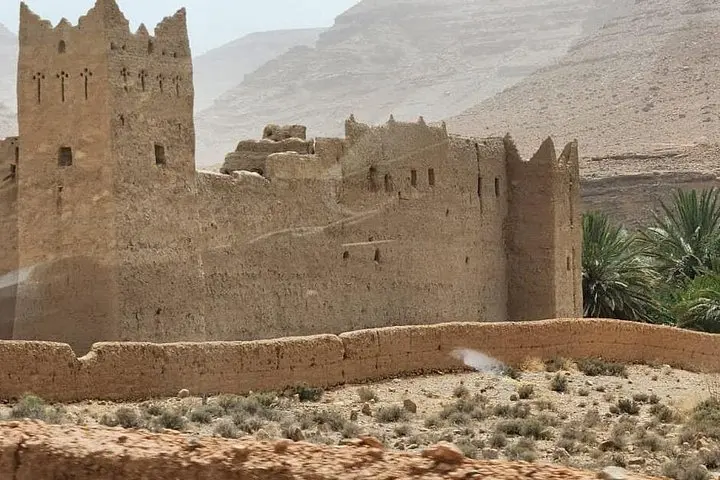
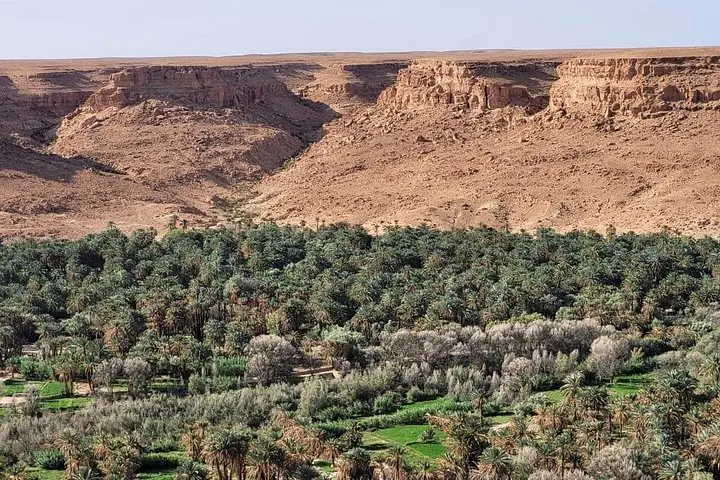
This route traces millennia of movement—Berber caravan tracks that threaded the Atlas and fed ksar settlements like Aït Ben Haddou, now a UNESCO site. Geology shifts quickly: limestone gorges and vertical walls at Todra, the river daring you through narrow canyons, then broad, wind-shaped dunes up to roughly 100–150 meters in Erg Chebbi. Cultural notes are immediate: nomadic tents, communal mint tea, and kasbahs built in rammed-earth techniques that mirror the landscape’s palette.
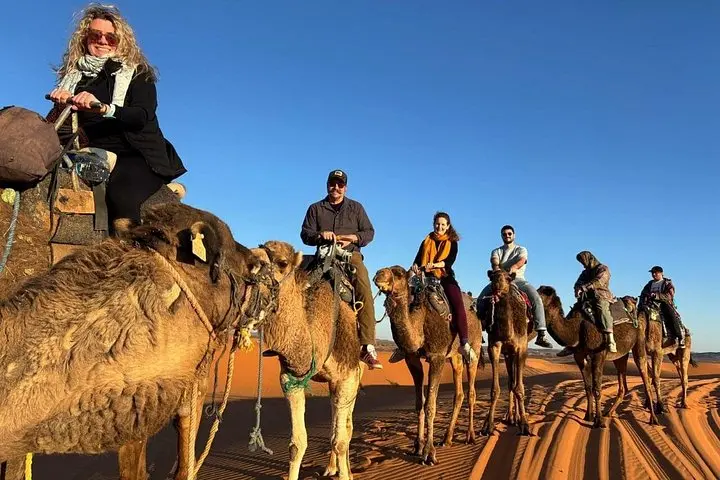
Expect full travel days with manageable activity: short dune climbs at sunrise and sunset, camel transits between camp and settlement, and roadside stops in Zagora, Tinghir and Dades. Practical guidance: time your dune climb for pre-dawn sunrises or late-afternoon light; temperatures swing—hot by day, cold at night—so pack layers and a reliable water supply (3L+ per day in summer). Footwear should handle sand and uneven canyon trails; a headlamp and cash are essential for rural stops.
The trip balances long drives with immersive moments: a night under Berber tents, the sky pushing stars low, and cinematic passes over Tizi n’Tichka as you descend into Marrakech—four days that trade urban rhythm for desert tempo.
Yes—local handlers brief riders and lead the camels; choose a saddle you find comfortable and let staff help mounting and dismounting.
Transportation and some public areas are accessible, but dune and camp areas are not suitable for wheelchair access.
Local guides typically handle dietary requests—notify at booking so hotels and camps can prepare suitable meals.
Bring enough for tips, snacks and small purchases—roughly the equivalent of €50–€100 per person depending on spending habits; ATMs are limited outside major towns.
Morocco Golden Desert Trip operates guided outdoor trips and adventures with an emphasis on safety, stewardship, and memorable experiences.
You set off before dawn from Fes, the city receding as the road climbs into the Middle Atlas. Light grazes cedar forests and the driver steers past Ifrane’s alpine squares, while distant ridgelines push the air thinner; by late afternoon the Erg Chebbi dunes assert themselves, a sea of sand that seems to breathe with the wind.
You set off before dawn from Fes, the city receding as the road climbs into the Middle Atlas. Light grazes cedar forests and the driver steers past Ifrane’s alpine squares, while distant ridgelines push the air thinner; by late afternoon the Erg Chebbi dunes assert themselves, a sea of sand that seems to breathe with the wind.
This route traces millennia of movement—Berber caravan tracks that threaded the Atlas and fed ksar settlements like Aït Ben Haddou, now a UNESCO site. Geology shifts quickly: limestone gorges and vertical walls at Todra, the river daring you through narrow canyons, then broad, wind-shaped dunes up to roughly 100–150 meters in Erg Chebbi. Cultural notes are immediate: nomadic tents, communal mint tea, and kasbahs built in rammed-earth techniques that mirror the landscape’s palette.
Expect full travel days with manageable activity: short dune climbs at sunrise and sunset, camel transits between camp and settlement, and roadside stops in Zagora, Tinghir and Dades. Practical guidance: time your dune climb for pre-dawn sunrises or late-afternoon light; temperatures swing—hot by day, cold at night—so pack layers and a reliable water supply (3L+ per day in summer). Footwear should handle sand and uneven canyon trails; a headlamp and cash are essential for rural stops.
The trip balances long drives with immersive moments: a night under Berber tents, the sky pushing stars low, and cinematic passes over Tizi n’Tichka as you descend into Marrakech—four days that trade urban rhythm for desert tempo.