
4-Day Fes to Marrakech Sahara Tour — Camel Trek, Dunes & Ait Benhaddou
Cross the High Atlas, ride camels across Erg Chebbi and explore UNESCO-listed Ait Benhaddou on a compact four-day loop from Fes to Marrakech. Experience dunes, gorges and kasbahs with guided cultural insight and overnight desert camping.
An Adventure In Fes.
Cross the High Atlas, ride camels across Erg Chebbi and explore UNESCO-listed Ait Benhaddou on a compact four-day loop from Fes to Marrakech. Experience dunes, gorges and kasbahs with guided cultural insight and overnight desert camping.
Read the full experience
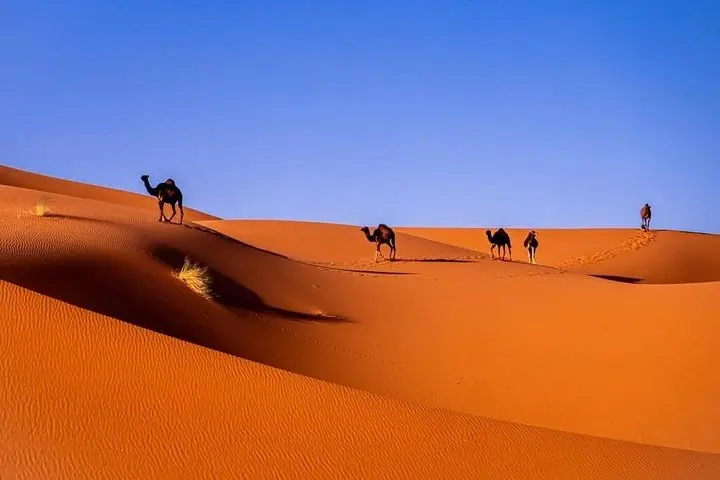
You crest a low pass and the High Atlas folds away: sun-baked kasbahs, palm-lined valleys and a road that narrows to heat-hummed ribbon toward the Sahara. By late afternoon you stand at the lip of Erg Chebbi as dunes push skyward, their ridgelines catching a slow orange burn — a landscape that both absorbs and returns light.
You crest a low pass and the High Atlas folds away: sun-baked kasbahs, palm-lined valleys and a road that narrows to heat-hummed ribbon toward the Sahara. By late afternoon you stand at the lip of Erg Chebbi as dunes push skyward, their ridgelines catching a slow orange burn — a landscape that both absorbs and returns light.
This four-day route threads Morocco’s layers: Fes’s medieval medina and artisan souks, the cedar forests and mild alpine air of the Middle Atlas, the Ziz Valley’s ancient irrigation palms, then the broad, wind-sculpted dunes of Merzouga. Geologically the trip moves from limestone and cedar forests at ~1,200–1,600 m down through alluvial valleys to sandy Erg Chebbi (dunes up to 150 m). Ait Benhaddou and Ouarzazate recall caravan-era trade and the clay-and-sun architecture that sheltered routes across North Africa.
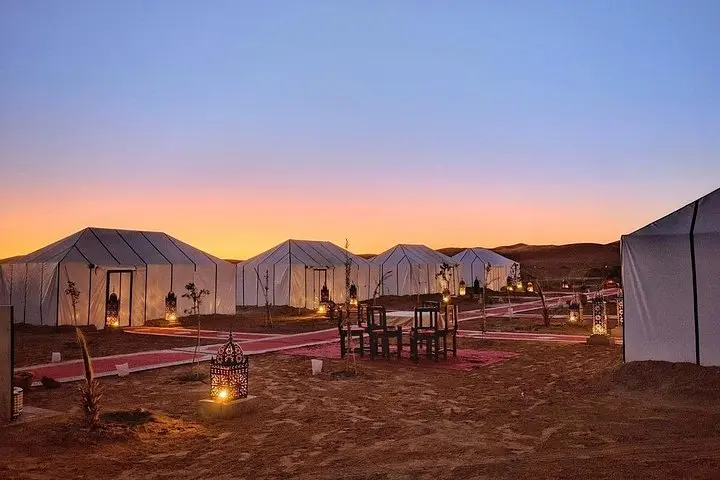
Culturally the itinerary pairs city medina life with Berber hospitality: riads, local cuisine and a night in a desert camp with music around a low fire. Guides will explain kasbah construction, the role of trans-Saharan trade and local crafts such as carpet weaving and fossil carving.
Practical guidance: expect long drives (Fes–Merzouga ~7–9 hours, ~470 km), early starts and short walks through gorges and kasbahs. For desert time plan layers for temperature swings, sun protection and modest clothing for cultural respect. Hydrate regularly and carry a small day pack for camera gear, water and a headlamp—dunes are best at sunrise or sunset when sand and light do the work of memory.
Frequently asked questions
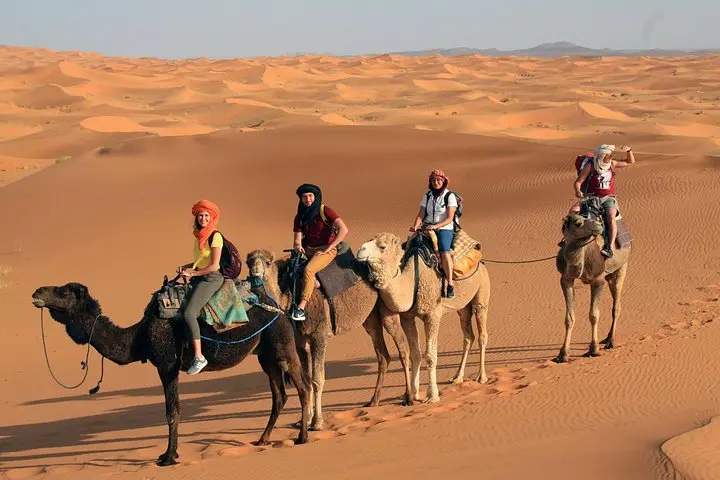
Typical camel treks to the desert camp are 45–90 minutes depending on the camp’s location among the Erg Chebbi dunes.
Most itineraries include three breakfasts and three dinners plus riad/hotel and desert camp accommodation as described in the itinerary.
The tour is rated accessible for most ages for vehicle transfers and walking; camel riding and dune walking require basic mobility—check specific accessibility needs with the operator.
Spring and fall offer the most comfortable temperatures; winters are cool (especially at altitude) and summers can be very hot during midday in the desert.
About This Experience
Morocco Tours Toubkal Trek operates guided outdoor trips and adventures with an emphasis on safety, stewardship, and memorable experiences.
Adventure tips
Recommended gear
- Sun hat and UV sunglasses: Wide-brim protection is crucial for long daytime exposure on the dunes.
- Layered clothing (light fleece + wind shell): Temperatures swing dramatically between day and night in the desert and mountains.
- Sturdy walking shoes: Closed shoes with grip are helpful for rocky gorges and dune edges.
- Headlamp or compact flashlight: Useful in desert camps and for early-morning sunrise walks when camps have no lighting.
Photos of the experience
Related adventures & guides
Read the full experience
You crest a low pass and the High Atlas folds away: sun-baked kasbahs, palm-lined valleys and a road that narrows to heat-hummed ribbon toward the Sahara. By late afternoon you stand at the lip of Erg Chebbi as dunes push skyward, their ridgelines catching a slow orange burn — a landscape that both absorbs and returns light.
You crest a low pass and the High Atlas folds away: sun-baked kasbahs, palm-lined valleys and a road that narrows to heat-hummed ribbon toward the Sahara. By late afternoon you stand at the lip of Erg Chebbi as dunes push skyward, their ridgelines catching a slow orange burn — a landscape that both absorbs and returns light.
This four-day route threads Morocco’s layers: Fes’s medieval medina and artisan souks, the cedar forests and mild alpine air of the Middle Atlas, the Ziz Valley’s ancient irrigation palms, then the broad, wind-sculpted dunes of Merzouga. Geologically the trip moves from limestone and cedar forests at ~1,200–1,600 m down through alluvial valleys to sandy Erg Chebbi (dunes up to 150 m). Ait Benhaddou and Ouarzazate recall caravan-era trade and the clay-and-sun architecture that sheltered routes across North Africa.
Culturally the itinerary pairs city medina life with Berber hospitality: riads, local cuisine and a night in a desert camp with music around a low fire. Guides will explain kasbah construction, the role of trans-Saharan trade and local crafts such as carpet weaving and fossil carving.
Practical guidance: expect long drives (Fes–Merzouga ~7–9 hours, ~470 km), early starts and short walks through gorges and kasbahs. For desert time plan layers for temperature swings, sun protection and modest clothing for cultural respect. Hydrate regularly and carry a small day pack for camera gear, water and a headlamp—dunes are best at sunrise or sunset when sand and light do the work of memory.
Make a day of it nearby.
Verified experiences and guided adventures in the surrounding area.