THE ADVENTURE COLLECTIVE® · Independent discovery and booking for outdoor travel

Take a brisk, four-day cultural loop from Delhi to Agra and Jaipur that pairs a sunrise visit to the Taj Mahal with Mughal forts and royal palaces. This private or small-group tour combines early starts, efficient transfers and guided walks for maximum sightseeing in minimal time.
Take a brisk, four-day cultural loop from Delhi to Agra and Jaipur that pairs a sunrise visit to the Taj Mahal with Mughal forts and royal palaces. This private or small-group tour combines early starts, efficient transfers and guided walks for maximum sightseeing in minimal time.
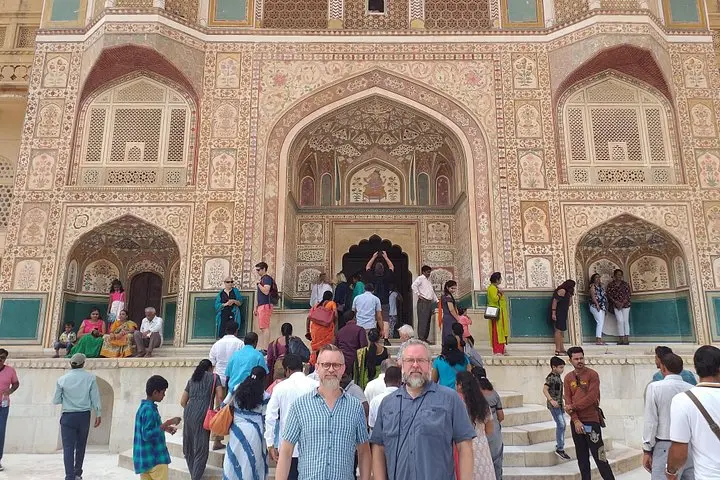
The morning light slides across the Yamuna as you stand at the Taj’s marble platform — cool air pushing through the river plain, the monument daring you to take it in again. Over the next four days the route tightens into a string of monuments, markets and ramparts: Qutub Minar and Humayun’s Tomb in Delhi, the sunrise at the Taj Mahal and Agra Fort, then Jaipur’s Amber Fort, Jal Mahal and the honeycombed facades of Hawa Mahal.
Verified experiences and guided adventures in the surrounding area.
Operated by Tour4Fun · New Delhi, Delhi
The morning light slides across the Yamuna as you stand at the Taj’s marble platform — cool air pushing through the river plain, the monument daring you to take it in again. Over the next four days the route tightens into a string of monuments, markets and ramparts: Qutub Minar and Humayun’s Tomb in Delhi, the sunrise at the Taj Mahal and Agra Fort, then Jaipur’s Amber Fort, Jal Mahal and the honeycombed facades of Hawa Mahal.
This circuit traces Mughal and Rajput power across 17th–18th century north India. The Taj, built by Shah Jahan, sits on alluvial plains of the Yamuna; Amber Fort sits on the Aravalli foothills, offering a rugged geological contrast and long views toward Jaipur. Cities hum with a living heritage — bazaars selling block-printed textiles, stepwells and observatories like Jantar Mantar that remind you of pre-modern astronomy.
Expect a practical rhythm: early starts for sunrise light, drives of roughly 3–5 hours between cities (Delhi–Agra ≈ 210 km, Agra–Jaipur ≈ 240 km), and short guided walks through layered monuments. Transport can be a private air-conditioned vehicle or scheduled train legs depending on your booking.
Travel tips: carry a comfortable daypack, wear closed walking shoes for uneven fort ramps, and time visits to avoid the hottest midday sun. Keep water and modest clothing for mosque visits, and budget extra time for traffic and entry queues. With good planning this compact loop delivers high-impact cultural sights and enough breathing room to absorb them.
Some booking options include 3–5 star hotels or homestays for three nights; confirm at booking and check whether twin/triple rooming is standard.
The operator notes stroller and wheelchair accessibility for some parts; however, many monuments have steps—verify accessibility details for specific sites before booking.
Options include a private air-conditioned vehicle or train journeys depending on the selected itinerary; indicate your preference at booking.
October to March offers milder temperatures and clearer light for photography; summers are hot and can limit midday sightseeing.
Tour4Fun operates guided outdoor trips and adventures with an emphasis on safety, stewardship, and memorable experiences.

The morning light slides across the Yamuna as you stand at the Taj’s marble platform — cool air pushing through the river plain, the monument daring you to take it in again. Over the next four days the route tightens into a string of monuments, markets and ramparts: Qutub Minar and Humayun’s Tomb in Delhi, the sunrise at the Taj Mahal and Agra Fort, then Jaipur’s Amber Fort, Jal Mahal and the honeycombed facades of Hawa Mahal.
The morning light slides across the Yamuna as you stand at the Taj’s marble platform — cool air pushing through the river plain, the monument daring you to take it in again. Over the next four days the route tightens into a string of monuments, markets and ramparts: Qutub Minar and Humayun’s Tomb in Delhi, the sunrise at the Taj Mahal and Agra Fort, then Jaipur’s Amber Fort, Jal Mahal and the honeycombed facades of Hawa Mahal.
This circuit traces Mughal and Rajput power across 17th–18th century north India. The Taj, built by Shah Jahan, sits on alluvial plains of the Yamuna; Amber Fort sits on the Aravalli foothills, offering a rugged geological contrast and long views toward Jaipur. Cities hum with a living heritage — bazaars selling block-printed textiles, stepwells and observatories like Jantar Mantar that remind you of pre-modern astronomy.
Expect a practical rhythm: early starts for sunrise light, drives of roughly 3–5 hours between cities (Delhi–Agra ≈ 210 km, Agra–Jaipur ≈ 240 km), and short guided walks through layered monuments. Transport can be a private air-conditioned vehicle or scheduled train legs depending on your booking.
Travel tips: carry a comfortable daypack, wear closed walking shoes for uneven fort ramps, and time visits to avoid the hottest midday sun. Keep water and modest clothing for mosque visits, and budget extra time for traffic and entry queues. With good planning this compact loop delivers high-impact cultural sights and enough breathing room to absorb them.