THE ADVENTURE COLLECTIVE® · Independent discovery and booking for outdoor travel

A four-day road-and-rail through Nevada neon and Arizona stone: experience Lower Antelope Canyon’s slot walls, the sweeping arc of Horseshoe Bend, Lake Powell access, and Grand Canyon rim viewpoints with guided logistics and optional add-ons.
A four-day road-and-rail through Nevada neon and Arizona stone: experience Lower Antelope Canyon’s slot walls, the sweeping arc of Horseshoe Bend, Lake Powell access, and Grand Canyon rim viewpoints with guided logistics and optional add-ons.
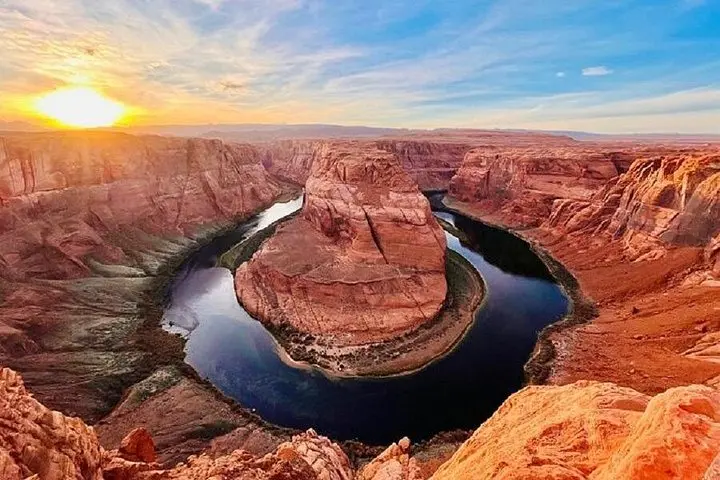
The bus eases out of Los Angeles before dawn, headlights carving a ribbon through the Mojave. By midday the neon of Las Vegas is already a memory; by the second day the sandstone takes over—orange walls folding into deep, ribboned chutes where light becomes the medium. You stand at the lip of Horseshoe Bend and the Colorado River dares you to imagine the scale: 1,000 feet below, water has been cutting and pushing for millions of years.
Verified experiences and guided adventures in the surrounding area.
Operated by Jupiter Legend Corporation · Page, Arizona
The bus eases out of Los Angeles before dawn, headlights carving a ribbon through the Mojave. By midday the neon of Las Vegas is already a memory; by the second day the sandstone takes over—orange walls folding into deep, ribboned chutes where light becomes the medium. You stand at the lip of Horseshoe Bend and the Colorado River dares you to imagine the scale: 1,000 feet below, water has been cutting and pushing for millions of years.
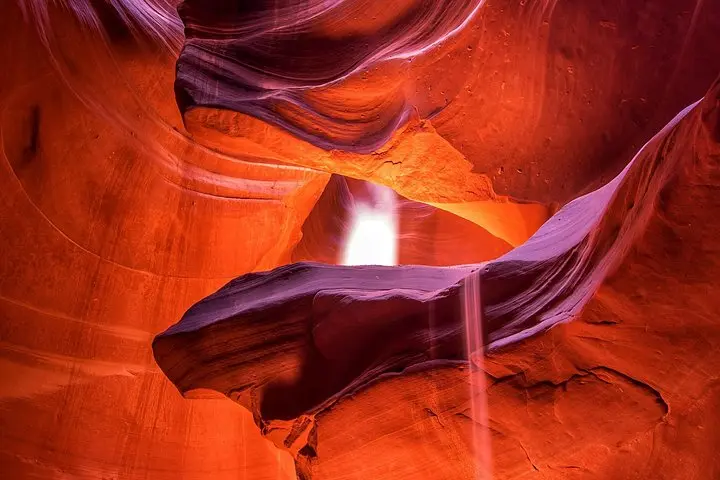
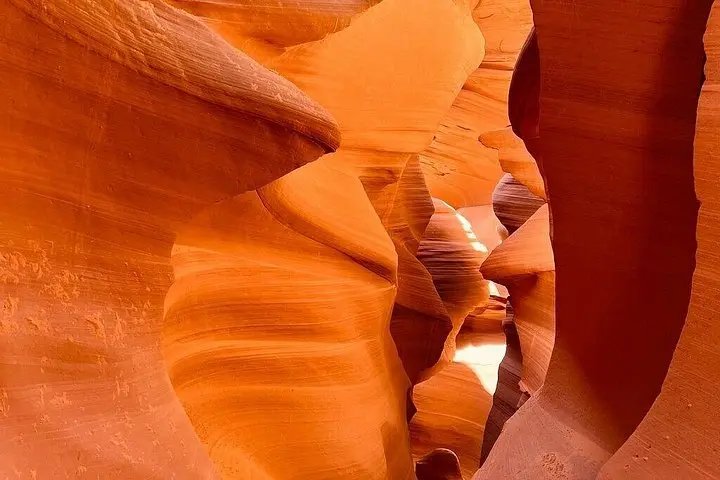
This four-day loop stitches together Nevada spectacle and Arizona geology. The itinerary threads Las Vegas nightlife and roadside art (Seven Magic Mountains) with the intimate, photogenic spaces of Lower Antelope Canyon and the sweep of Grand Canyon’s East and South Rims. Antelope—"water through the rocks"—is the product of flash floods and aeons of wind that carved sinuous corridors into Navajo sandstone. The South Rim sits higher, around 7,000 feet; its broad overlooks are formed by uplift and the relentless downcutting of the Colorado River, a visible timeline of western geology.
Page and the Navajo Nation provide cultural context: many canyon access points sit on Navajo land and are guided by Navajo guides who interpret place names, geological lore, and stewardship practices. Lake Powell, a created reservoir held behind Glen Canyon Dam, shows human influence—stratified cliffs rise from blue water where side canyons hide small beaches and kayak-launch points.
Practical realities matter on a trip that balances long drives with short, intense walks. Expect multiple 4–5 hour driving blocks, late starts and early mornings. Lower Antelope requires stair descents and narrow, sandy footing—bring sturdy shoes and be ready for crowds at peak photo spots. Horseshoe Bend is an exposed 1.5-mile round-trip walk with roughly 200 feet of elevation gain on loose, desert soils; shade is rare. At the South Rim, elevation affects temperature and breathing—pack a light layer for cool mornings.
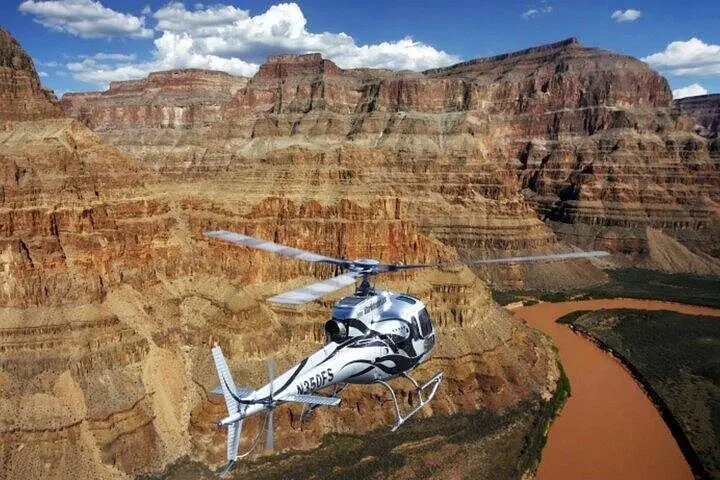
Timing and options make this package flexible: optional helicopter flights over the South Rim, IMAX experiences, and seasonal kayaking on Lake Powell (Mar 20–Oct 23) let you tailor days to appetite and weather. Booking logistics: multiple pick-up points across Southern California and Las Vegas, group sizes up to ~55, and hotel stays in Vegas and Page mean little unpacking but long days.
To get the most: schedule Las Vegas arrivals with buffer for tour start times; hydrate well before canyon walks; carry sunscreen, a brimmed hat, and a compact camera with a polarizer. For photographers, late afternoon slant light makes Antelope glow; for hikers, early starts avoid heat at Horseshoe Bend. This tour is equal parts road trip and concentrated nature—an efficient, visceral way to see some of the Southwest’s most photographed landscapes while touching on the region’s geology and indigenous stewardship.
No—Lower Antelope can close for maintenance or safety; in January 2025 short closures occur and Antelope Canyon X is used as an alternate.
Horseshoe Bend is about 1.5 miles round-trip with ~200 ft elevation gain; Antelope tours last ~90 minutes but include standing, stairs, and narrow walking on sand.
A valid photo ID is required for boarding the bus; passports are only needed for international travelers depending on origin.
Kayaking is optional and at own expense during the May–October window; when kayaking is unavailable, time at Lake Powell is adjusted to ~60–90 minutes.
Typical pricing includes hotel resort fees and some entrance fees; meals are not comprehensively included—pack snacks and plan for restaurant stops.
Yes—notify at booking. Note that ending in Las Vegas may skip Seven Magic Mountains and Tanger Outlets and affects drop-off timing for flights.
Jupiter Legend Corporation operates guided outdoor trips and adventures with an emphasis on safety, stewardship, and memorable experiences.
The bus eases out of Los Angeles before dawn, headlights carving a ribbon through the Mojave. By midday the neon of Las Vegas is already a memory; by the second day the sandstone takes over—orange walls folding into deep, ribboned chutes where light becomes the medium. You stand at the lip of Horseshoe Bend and the Colorado River dares you to imagine the scale: 1,000 feet below, water has been cutting and pushing for millions of years.
The bus eases out of Los Angeles before dawn, headlights carving a ribbon through the Mojave. By midday the neon of Las Vegas is already a memory; by the second day the sandstone takes over—orange walls folding into deep, ribboned chutes where light becomes the medium. You stand at the lip of Horseshoe Bend and the Colorado River dares you to imagine the scale: 1,000 feet below, water has been cutting and pushing for millions of years.
This four-day loop stitches together Nevada spectacle and Arizona geology. The itinerary threads Las Vegas nightlife and roadside art (Seven Magic Mountains) with the intimate, photogenic spaces of Lower Antelope Canyon and the sweep of Grand Canyon’s East and South Rims. Antelope—"water through the rocks"—is the product of flash floods and aeons of wind that carved sinuous corridors into Navajo sandstone. The South Rim sits higher, around 7,000 feet; its broad overlooks are formed by uplift and the relentless downcutting of the Colorado River, a visible timeline of western geology.
Page and the Navajo Nation provide cultural context: many canyon access points sit on Navajo land and are guided by Navajo guides who interpret place names, geological lore, and stewardship practices. Lake Powell, a created reservoir held behind Glen Canyon Dam, shows human influence—stratified cliffs rise from blue water where side canyons hide small beaches and kayak-launch points.
Practical realities matter on a trip that balances long drives with short, intense walks. Expect multiple 4–5 hour driving blocks, late starts and early mornings. Lower Antelope requires stair descents and narrow, sandy footing—bring sturdy shoes and be ready for crowds at peak photo spots. Horseshoe Bend is an exposed 1.5-mile round-trip walk with roughly 200 feet of elevation gain on loose, desert soils; shade is rare. At the South Rim, elevation affects temperature and breathing—pack a light layer for cool mornings.
Timing and options make this package flexible: optional helicopter flights over the South Rim, IMAX experiences, and seasonal kayaking on Lake Powell (Mar 20–Oct 23) let you tailor days to appetite and weather. Booking logistics: multiple pick-up points across Southern California and Las Vegas, group sizes up to ~55, and hotel stays in Vegas and Page mean little unpacking but long days.
To get the most: schedule Las Vegas arrivals with buffer for tour start times; hydrate well before canyon walks; carry sunscreen, a brimmed hat, and a compact camera with a polarizer. For photographers, late afternoon slant light makes Antelope glow; for hikers, early starts avoid heat at Horseshoe Bend. This tour is equal parts road trip and concentrated nature—an efficient, visceral way to see some of the Southwest’s most photographed landscapes while touching on the region’s geology and indigenous stewardship.