THE ADVENTURE COLLECTIVE® · Independent discovery and booking for outdoor travel

Walk the original Inca Trail over four days and three mountain passes, arriving at Machu Picchu through the Sun Gate at first light. This guided trek combines archaeological sites, cloud forest and high Andean vistas—permits required and altitude acclimatization recommended.
Walk the original Inca Trail over four days and three mountain passes, arriving at Machu Picchu through the Sun Gate at first light. This guided trek combines archaeological sites, cloud forest and high Andean vistas—permits required and altitude acclimatization recommended.
Dawn pries open the Andes and the trail hums with the quiet work of porters, cooks and guided parties threading switchbacks toward the Sun Gate. Sweat cools on the breeze as cloud forest gives way to high puna; moments later the first terraces of Machu Picchu appear in the valley below, lit by a pale morning that rewards four days of ascent.
Verified experiences and guided adventures in the surrounding area.
Operated by Bamba Travel · Aguas Calientes (Machu Picchu Pueblo), Cusco
Dawn pries open the Andes and the trail hums with the quiet work of porters, cooks and guided parties threading switchbacks toward the Sun Gate. Sweat cools on the breeze as cloud forest gives way to high puna; moments later the first terraces of Machu Picchu appear in the valley below, lit by a pale morning that rewards four days of ascent.
The original Inca Trail follows stone causeways and staircases built by the empire as a ceremonial and logistical artery. Over 43 kilometers you move through dramatic changes in elevation—three major passes with a high point near 4,400 m—crossing glacially carved valleys, exposed granite outcrops and misty montane forest. Along the way are small Inca ruins and agricultural terraces that speak to pre-Columbian engineering and Quechua traditions still alive in nearby communities.
Culture and geology meet: llamas and alpacas graze between terraces; orchids and bromeliads appear in the cloud zone; the Andes’ folded rocks remind you this is a young, uplifted mountain chain. Practical realities come next: permits are limited and required in advance, February is closed for maintenance, and acclimatization in Cusco or the Sacred Valley before departure is essential.
Expect steady daily mileage (roughly 7–12 km per day depending on itinerary), cold nights at altitude, full-service camping with cooks and porters for shared equipment, and an early-morning arrival at Machu Picchu to avoid crowds. Bring layered clothing, a waterproof shell, sturdy boots and a mindset tuned to altitude and variable weather—the reward is one of the most direct, historical approaches to a world-class archaeological site.
Yes — permits are required, limited daily, and must be booked in advance through authorized operators.
Not strictly required, but previous multi-day hiking and acclimatization substantially improves comfort and safety.
Typical inclusions are permits, guided services, camping equipment, porters for shared gear, meals on trek, and train/bus transfers on the final day.
Huayna Picchu requires a separate timed ticket and limited slots; check availability and reserve in advance if you plan to climb.
Bamba Travel operates guided outdoor trips and adventures with an emphasis on safety, stewardship, and memorable experiences.

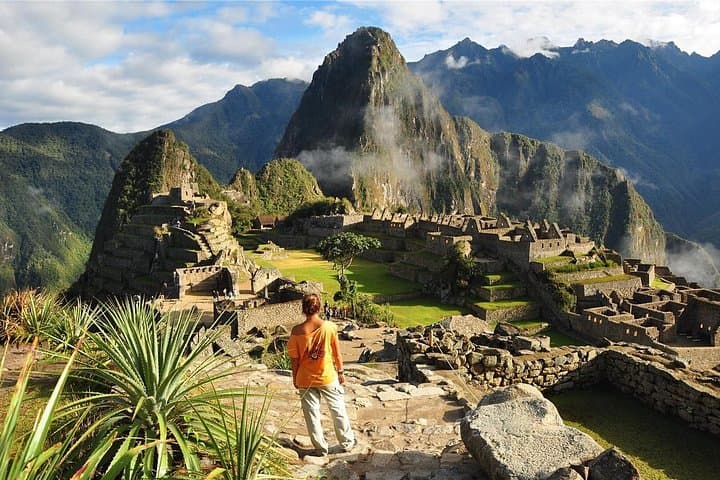


Dawn pries open the Andes and the trail hums with the quiet work of porters, cooks and guided parties threading switchbacks toward the Sun Gate. Sweat cools on the breeze as cloud forest gives way to high puna; moments later the first terraces of Machu Picchu appear in the valley below, lit by a pale morning that rewards four days of ascent.
Dawn pries open the Andes and the trail hums with the quiet work of porters, cooks and guided parties threading switchbacks toward the Sun Gate. Sweat cools on the breeze as cloud forest gives way to high puna; moments later the first terraces of Machu Picchu appear in the valley below, lit by a pale morning that rewards four days of ascent.
The original Inca Trail follows stone causeways and staircases built by the empire as a ceremonial and logistical artery. Over 43 kilometers you move through dramatic changes in elevation—three major passes with a high point near 4,400 m—crossing glacially carved valleys, exposed granite outcrops and misty montane forest. Along the way are small Inca ruins and agricultural terraces that speak to pre-Columbian engineering and Quechua traditions still alive in nearby communities.
Culture and geology meet: llamas and alpacas graze between terraces; orchids and bromeliads appear in the cloud zone; the Andes’ folded rocks remind you this is a young, uplifted mountain chain. Practical realities come next: permits are limited and required in advance, February is closed for maintenance, and acclimatization in Cusco or the Sacred Valley before departure is essential.
Expect steady daily mileage (roughly 7–12 km per day depending on itinerary), cold nights at altitude, full-service camping with cooks and porters for shared equipment, and an early-morning arrival at Machu Picchu to avoid crowds. Bring layered clothing, a waterproof shell, sturdy boots and a mindset tuned to altitude and variable weather—the reward is one of the most direct, historical approaches to a world-class archaeological site.