THE ADVENTURE COLLECTIVE® · Independent discovery and booking for outdoor travel

Ride the Ha Giang Loop in four days: towering passes, a dramatic boat trip on the Nho Que River and homestays with Hmong families. This small-group loop pairs the raw geology of the Dong Van Plateau with practical logistics—daily distances, homestays and local transport.
Ride the Ha Giang Loop in four days: towering passes, a dramatic boat trip on the Nho Que River and homestays with Hmong families. This small-group loop pairs the raw geology of the Dong Van Plateau with practical logistics—daily distances, homestays and local transport.
The day begins with a low engine hum and a horizon of jagged limestone rising like teeth. You leave Ha Giang city before dawn, the road unfolding through hairpin bends, terraced fields and villages where wood smoke marks the cooking hour. By midday the route climbs to Ma Pi Leng—at roughly 1,500 meters the pass dares you to look into the canyon below—then drops toward the emerald thread of the Nho Que River.
Verified experiences and guided adventures in the surrounding area.
Operated by Ha Giang Loop Trip · Ha Giang, Ha Giang Province
The day begins with a low engine hum and a horizon of jagged limestone rising like teeth. You leave Ha Giang city before dawn, the road unfolding through hairpin bends, terraced fields and villages where wood smoke marks the cooking hour. By midday the route climbs to Ma Pi Leng—at roughly 1,500 meters the pass dares you to look into the canyon below—then drops toward the emerald thread of the Nho Que River.
This ride traverses the Dong Van Karst Plateau, a UNESCO Global Geopark shaped by limestone uplift and erosion over millions of years. The area’s culture is equally layered: Hmong brocade workshops in Lung Tam, the century-old Vuong Palace at Sa Phin, and small clan homestays in Du Gia and Dong Van that preserve language, food and music.
Expect a mix of paved national road 4C and narrow mountain tracks, daily distances between 100–150 km, and short local boat trips through Tu San gorge. Accommodations are homestays and simple guesthouses; meals are mostly local rice, greens and mountain proteins. The tour includes pickup from Hanoi or Sapa by sleeper bus, a local guide and motorbike transport—groups are small (2–10) so the pace stays deliberate.
Practical edge: bring layered clothing for 5–15°C swings, waterproofs for sudden rain, and cash for remote purchases. If you’re not comfortable riding, travel as a pillion with an experienced guide. Ride defensively, stop often for photos and acclimate to narrow hairpins—the reward is raw geology, rivers that cut like knives through rock and evenings of Hmong hospitality.
No—this is offered as an 'easy rider' option: guides provide motorbikes and you can ride as a passenger (pillion) with an experienced driver.
The tour includes sleeper-bus transfer from Hanoi or Sapa, local motorbike and guide, meals listed (4 breakfasts, 4 lunches, 3 dinners), homestay accommodation and some local boat trips; check the operator for exact inclusions.
Physical demands are low for passengers; expect long days sitting on a motorcycle and short walks at viewpoints and in villages—basic mobility is sufficient.
Elevations reach about 1,500 m at Ma Pi Leng—most travelers do not need special acclimatization but should monitor for light symptoms like headache and stay hydrated.
Ha Giang Loop Trip operates guided outdoor trips and adventures with an emphasis on safety, stewardship, and memorable experiences.

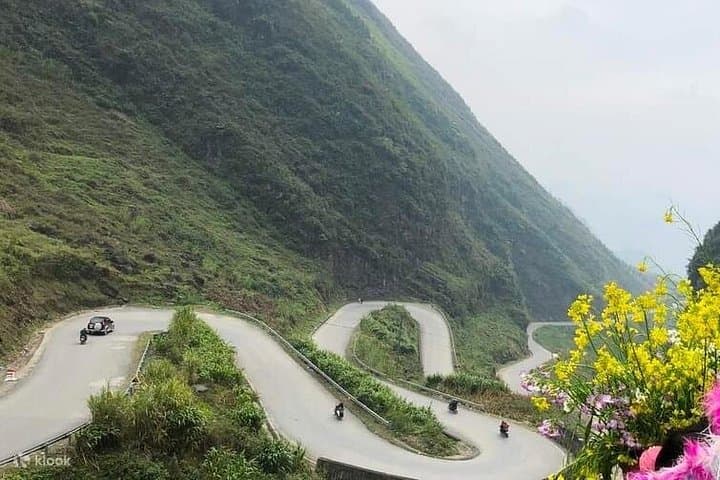

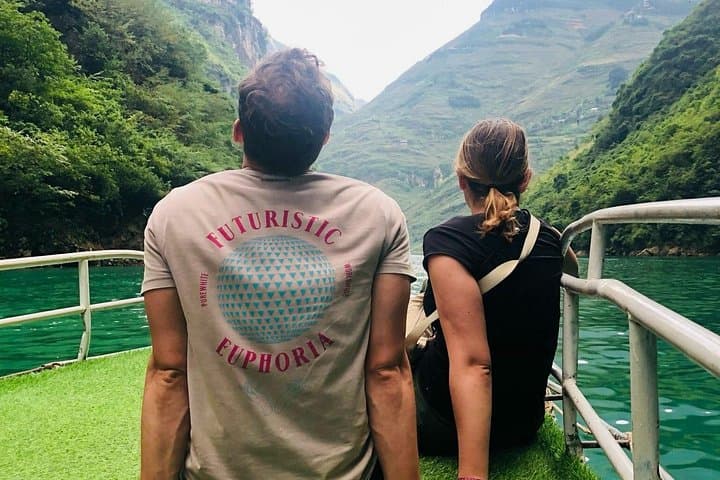
The day begins with a low engine hum and a horizon of jagged limestone rising like teeth. You leave Ha Giang city before dawn, the road unfolding through hairpin bends, terraced fields and villages where wood smoke marks the cooking hour. By midday the route climbs to Ma Pi Leng—at roughly 1,500 meters the pass dares you to look into the canyon below—then drops toward the emerald thread of the Nho Que River.
The day begins with a low engine hum and a horizon of jagged limestone rising like teeth. You leave Ha Giang city before dawn, the road unfolding through hairpin bends, terraced fields and villages where wood smoke marks the cooking hour. By midday the route climbs to Ma Pi Leng—at roughly 1,500 meters the pass dares you to look into the canyon below—then drops toward the emerald thread of the Nho Que River.
This ride traverses the Dong Van Karst Plateau, a UNESCO Global Geopark shaped by limestone uplift and erosion over millions of years. The area’s culture is equally layered: Hmong brocade workshops in Lung Tam, the century-old Vuong Palace at Sa Phin, and small clan homestays in Du Gia and Dong Van that preserve language, food and music.
Expect a mix of paved national road 4C and narrow mountain tracks, daily distances between 100–150 km, and short local boat trips through Tu San gorge. Accommodations are homestays and simple guesthouses; meals are mostly local rice, greens and mountain proteins. The tour includes pickup from Hanoi or Sapa by sleeper bus, a local guide and motorbike transport—groups are small (2–10) so the pace stays deliberate.
Practical edge: bring layered clothing for 5–15°C swings, waterproofs for sudden rain, and cash for remote purchases. If you’re not comfortable riding, travel as a pillion with an experienced guide. Ride defensively, stop often for photos and acclimate to narrow hairpins—the reward is raw geology, rivers that cut like knives through rock and evenings of Hmong hospitality.