THE ADVENTURE COLLECTIVE® · Independent discovery and booking for outdoor travel

An active four-day route from Abra Málaga to Machu Picchu that pairs downhill mountain biking, river rafting, ziplining and guided ruins access. Expect long days, big elevation changes, and a blend of adrenaline and cultural stops.
An active four-day route from Abra Málaga to Machu Picchu that pairs downhill mountain biking, river rafting, ziplining and guided ruins access. Expect long days, big elevation changes, and a blend of adrenaline and cultural stops.
You push off at dawn from Abra Málaga, wind cutting across your face as the Andes loosen their grip and the forest closes in below. The first day is a long descent—mountain biking down switchbacks and gravel tracks that dissolve into jungle roads—then the river appears, daring you into white-water rapids. Over four days the landscape changes as quickly as your heartbeat: high puna at 4,300 m, humid cloud forest, and the warm green valley that feeds the Urubamba.
Verified experiences and guided adventures in the surrounding area.
Operated by Go Xplore Peru · Cusco, Cusco
You push off at dawn from Abra Málaga, wind cutting across your face as the Andes loosen their grip and the forest closes in below. The first day is a long descent—mountain biking down switchbacks and gravel tracks that dissolve into jungle roads—then the river appears, daring you into white-water rapids. Over four days the landscape changes as quickly as your heartbeat: high puna at 4,300 m, humid cloud forest, and the warm green valley that feeds the Urubamba.
The route threads recent history with older routes used by local communities and modern infrastructure: train tracks that once carried goods now guide the final hike into Aguas Calientes toward the citadel of Machu Picchu. Geology is visible in the steep terraces and river-cut canyons; culturally, small coffee farms and hot springs like Cocalmayo offer local flavors and rest.
Practically, expect long activity days—day one’s downhill bike is roughly 45–60 km with ∼2,000–2,500 m of descent—plus hiking on singletrack and along rail lines, a zipline segment, and an optional rafting stretch. Guides provide helmets, bikes, and rafting safety gear; bring sturdy hiking boots, layered clothing for 4,300–2,400 m altitude change, sun protection, and a hydration system. Pace yourself for altitude on arrival in Cusco and prioritize a full night’s rest before departure.
Timing matters: choose dry-season windows for firmer trails and clearer views; arrive in Cusco early to acclimatize. The finale—a guided Machu Picchu tour with optional Huayna Picchu—rewards the effort with one of South America’s most immediate archaeological vistas.
Basic off-road biking skills are recommended; guides provide front-suspension bikes and helmets, but riders should be comfortable braking and cornering on loose surfaces.
Yes—white-water rafting on Day 1 is included with safety gear; rapids are typically Class II–III depending on water levels and operator decisions.
Yes, both hikes are optional but require separate tickets and advance booking due to limited daily permits; confirm availability before your trip.
The itinerary descends from high puna to cloud forest, so intense altitude sickness risk is lowest during activity days, but initial acclimatization in Cusco is strongly advised to reduce symptoms.
Go Xplore Peru operates guided outdoor trips and adventures with an emphasis on safety, stewardship, and memorable experiences.
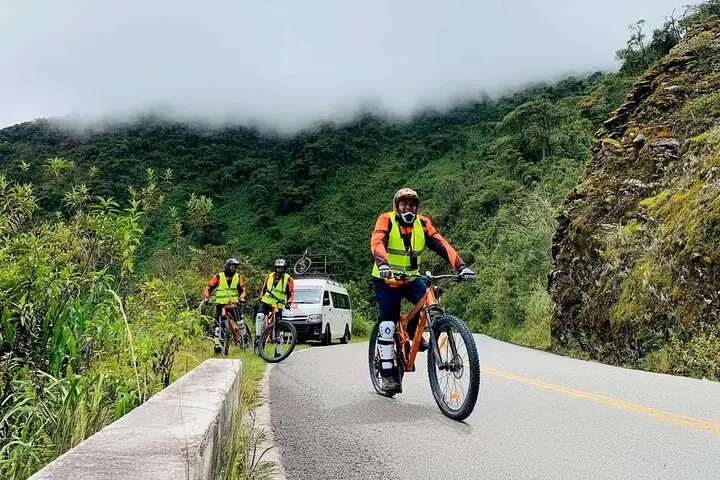
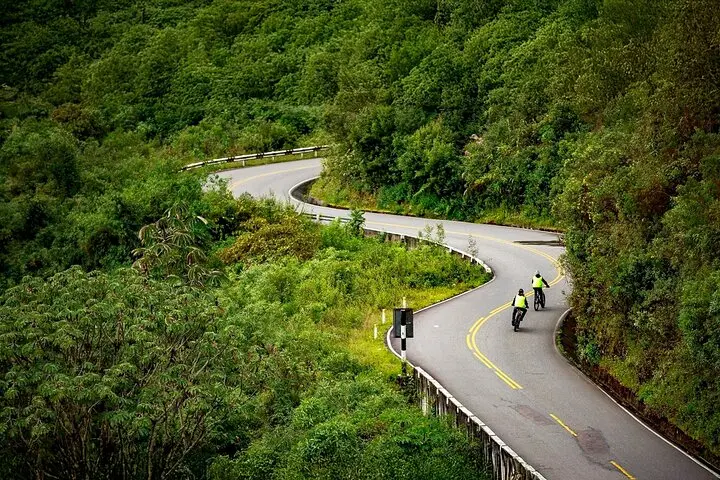
You push off at dawn from Abra Málaga, wind cutting across your face as the Andes loosen their grip and the forest closes in below. The first day is a long descent—mountain biking down switchbacks and gravel tracks that dissolve into jungle roads—then the river appears, daring you into white-water rapids. Over four days the landscape changes as quickly as your heartbeat: high puna at 4,300 m, humid cloud forest, and the warm green valley that feeds the Urubamba.
You push off at dawn from Abra Málaga, wind cutting across your face as the Andes loosen their grip and the forest closes in below. The first day is a long descent—mountain biking down switchbacks and gravel tracks that dissolve into jungle roads—then the river appears, daring you into white-water rapids. Over four days the landscape changes as quickly as your heartbeat: high puna at 4,300 m, humid cloud forest, and the warm green valley that feeds the Urubamba.
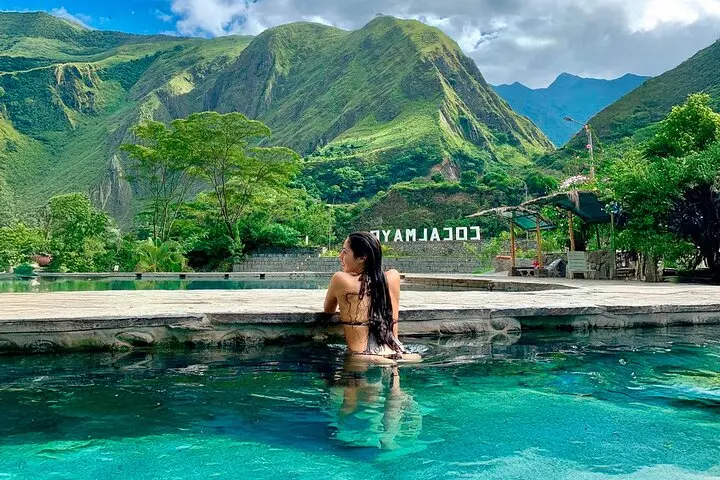
The route threads recent history with older routes used by local communities and modern infrastructure: train tracks that once carried goods now guide the final hike into Aguas Calientes toward the citadel of Machu Picchu. Geology is visible in the steep terraces and river-cut canyons; culturally, small coffee farms and hot springs like Cocalmayo offer local flavors and rest.
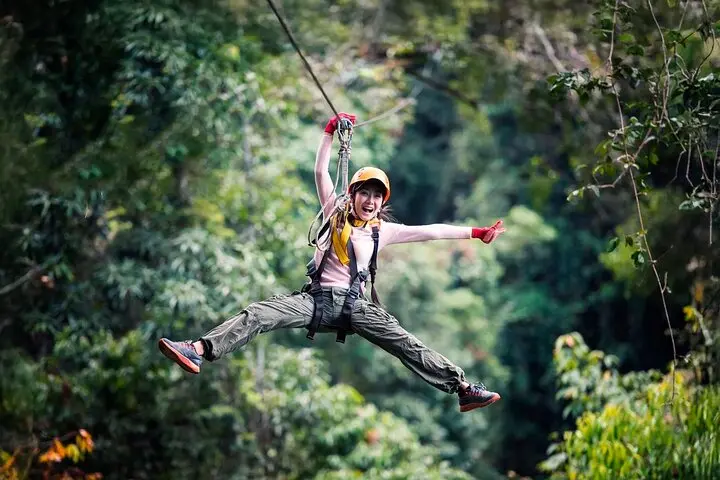
Practically, expect long activity days—day one’s downhill bike is roughly 45–60 km with ∼2,000–2,500 m of descent—plus hiking on singletrack and along rail lines, a zipline segment, and an optional rafting stretch. Guides provide helmets, bikes, and rafting safety gear; bring sturdy hiking boots, layered clothing for 4,300–2,400 m altitude change, sun protection, and a hydration system. Pace yourself for altitude on arrival in Cusco and prioritize a full night’s rest before departure.
Timing matters: choose dry-season windows for firmer trails and clearer views; arrive in Cusco early to acclimatize. The finale—a guided Machu Picchu tour with optional Huayna Picchu—rewards the effort with one of South America’s most immediate archaeological vistas.