THE ADVENTURE COLLECTIVE® · Independent discovery and booking for outdoor travel

A compact 4-day loop through Jordan that pairs world-class archaeology with lunar deserts and the buoyant Dead Sea. Private transport and flexible overnight options let you swap pace for immersion—see Jerash, float the Dead Sea, explore Petra, and drive a 4x4 across Wadi Rum.
A compact 4-day loop through Jordan that pairs world-class archaeology with lunar deserts and the buoyant Dead Sea. Private transport and flexible overnight options let you swap pace for immersion—see Jerash, float the Dead Sea, explore Petra, and drive a 4x4 across Wadi Rum.
You step off the plane into Amman’s warm air and a driver is already waiting with your name on a sign — the kind of small, clean welcome that makes long travel feel purposeful. By the time the city’s modern skyline gives way to olive-splattered hills, the road has already set the tone: history here is not a museum but an active landscape. Your first stop, Jerash, opens like a stage set — colonnaded streets and a perfectly circular forum that still holds the echo of Roman boots.
Verified experiences and guided adventures in the surrounding area.
Operated by VIP Jordan Limo · Wadi Musa, Ma'an Governorate
You step off the plane into Amman’s warm air and a driver is already waiting with your name on a sign — the kind of small, clean welcome that makes long travel feel purposeful. By the time the city’s modern skyline gives way to olive-splattered hills, the road has already set the tone: history here is not a museum but an active landscape. Your first stop, Jerash, opens like a stage set — colonnaded streets and a perfectly circular forum that still holds the echo of Roman boots.
The route from Jerash to the Dead Sea compresses time and altitude: within a couple hours you’re at the planet’s lowest point, water so dense it refuses to take you under. Float, rub on the mineral-rich mud, then watch the salt crystals glitter like small white islands along the shoreline.
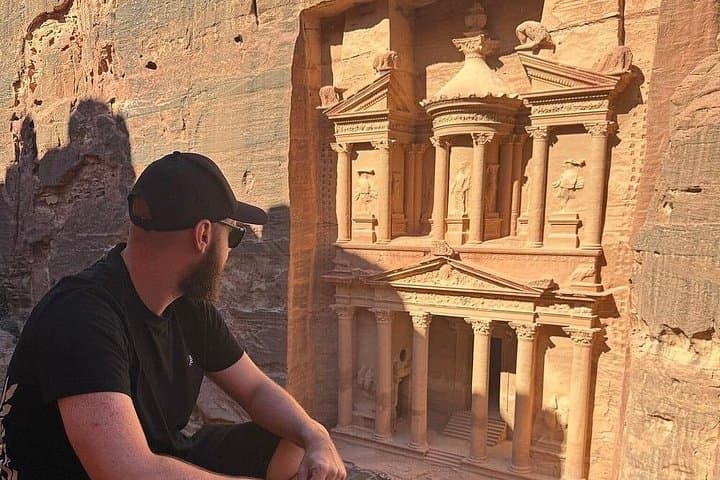
Day two arrives with one clear objective: Petra. The Siq’s narrow walls stretch for roughly 1.2 km, guiding you toward the rose-hued reveal of Al-Khazneh. Petra sits at about 1,000 m elevation and is best understood as a city carved in motion — facades, tombs and water channels that show how the Nabateans shaped both rock and trade across centuries. If you have the energy, the Monastery requires a climb of roughly 800 stone steps and a patient 45–60 minute ascent; the reward is a vast, quiet amphitheater carved from the sandstone.
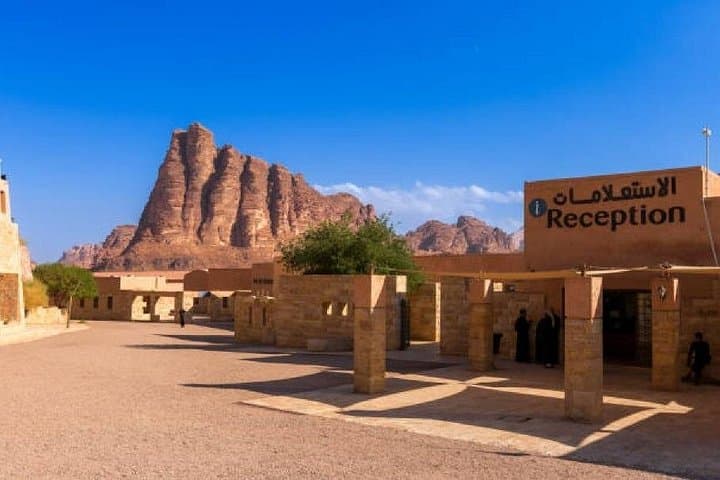
Wadi Rum’s desert finishes the loop. The red sands and sculpted sandstone buttresses feel like a different planet: 4x4 jeeps read the dunes like a language, and Bedouin hosts pass down tea and stories that ground the spectacle in a human frame. Overnight camps range from basic to comfortable “glamping” options under an unfiltered Milky Way.
Practical details: expect daily drives between 45 minutes and 4 hours — Amman Airport to Jerash (~50 km, ~45–60 min), Dead Sea to Petra (~230 km, ~3.5–4 hrs), Petra to Wadi Rum (~65–80 km, ~1–1.5 hrs). Purchase a Jordan Pass before arrival to cover Petra entry and save time. Wear sturdy walking shoes for uneven rock and steps, carry at least 2–3 liters of water per day, and schedule Petra early or late to avoid mid-day crowds and heat. The tour provides private transport, English-speaking drivers, onboard Wi‑Fi and bottled water, and can be customized for overnight stays in Dead Sea resorts or Wadi Rum camps.
Culturally, this route threads Roman, Nabatean and Bedouin histories; geologically it maps the junction of limestone plateaus and sandstone canyons, where wind and water still shape surfaces every year. Respect local guides, follow trail markers, and leave no trace in fragile desert and archaeological zones — Jordan’s tourism economy depends on keeping these places intact for the next visitor.
Yes — the Jordan Pass covers Petra admission and can save both money and time; obtain it online before arrival.
Some areas, like the main approach to the Treasury, have flatter surfaces, but Petra’s Siq and many interior routes include steps and rough terrain; wheelchair access is limited and may require assistance.
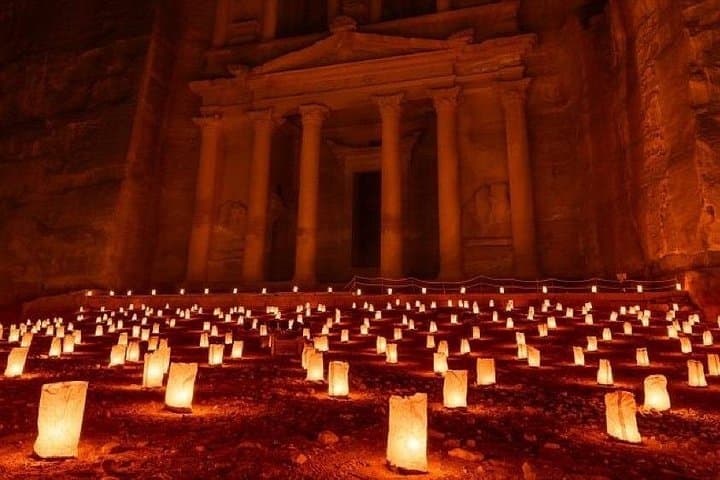
Yes — the itinerary offers the optional Petra by Night experience on day two; it’s a candle-lit walk to the Treasury and requires a separate ticket.
The climb is steady but manageable for most fit travelers; allow 45–60 minutes up and a similar time down, and bring water and sun protection.
Options range from simple Bedouin tents to insulated ‘glamping’ domes with beds and private facilities; confirm your chosen standard when booking.
Jordanian dinar is standard; small tips (drivers, guides, camp staff) are customary — carry some cash for local purchases and gratuities.
VIP Jordan Limo operates guided outdoor trips and adventures with an emphasis on safety, stewardship, and memorable experiences.
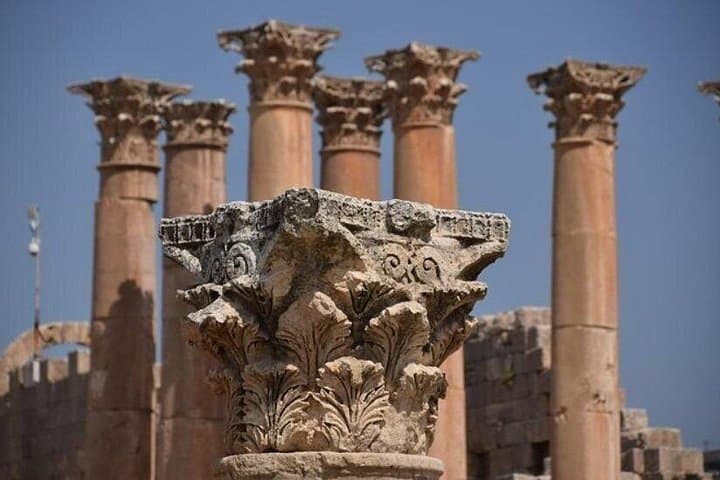
You step off the plane into Amman’s warm air and a driver is already waiting with your name on a sign — the kind of small, clean welcome that makes long travel feel purposeful. By the time the city’s modern skyline gives way to olive-splattered hills, the road has already set the tone: history here is not a museum but an active landscape. Your first stop, Jerash, opens like a stage set — colonnaded streets and a perfectly circular forum that still holds the echo of Roman boots.
You step off the plane into Amman’s warm air and a driver is already waiting with your name on a sign — the kind of small, clean welcome that makes long travel feel purposeful. By the time the city’s modern skyline gives way to olive-splattered hills, the road has already set the tone: history here is not a museum but an active landscape. Your first stop, Jerash, opens like a stage set — colonnaded streets and a perfectly circular forum that still holds the echo of Roman boots.
The route from Jerash to the Dead Sea compresses time and altitude: within a couple hours you’re at the planet’s lowest point, water so dense it refuses to take you under. Float, rub on the mineral-rich mud, then watch the salt crystals glitter like small white islands along the shoreline.
Day two arrives with one clear objective: Petra. The Siq’s narrow walls stretch for roughly 1.2 km, guiding you toward the rose-hued reveal of Al-Khazneh. Petra sits at about 1,000 m elevation and is best understood as a city carved in motion — facades, tombs and water channels that show how the Nabateans shaped both rock and trade across centuries. If you have the energy, the Monastery requires a climb of roughly 800 stone steps and a patient 45–60 minute ascent; the reward is a vast, quiet amphitheater carved from the sandstone.
Wadi Rum’s desert finishes the loop. The red sands and sculpted sandstone buttresses feel like a different planet: 4x4 jeeps read the dunes like a language, and Bedouin hosts pass down tea and stories that ground the spectacle in a human frame. Overnight camps range from basic to comfortable “glamping” options under an unfiltered Milky Way.
Practical details: expect daily drives between 45 minutes and 4 hours — Amman Airport to Jerash (~50 km, ~45–60 min), Dead Sea to Petra (~230 km, ~3.5–4 hrs), Petra to Wadi Rum (~65–80 km, ~1–1.5 hrs). Purchase a Jordan Pass before arrival to cover Petra entry and save time. Wear sturdy walking shoes for uneven rock and steps, carry at least 2–3 liters of water per day, and schedule Petra early or late to avoid mid-day crowds and heat. The tour provides private transport, English-speaking drivers, onboard Wi‑Fi and bottled water, and can be customized for overnight stays in Dead Sea resorts or Wadi Rum camps.
Culturally, this route threads Roman, Nabatean and Bedouin histories; geologically it maps the junction of limestone plateaus and sandstone canyons, where wind and water still shape surfaces every year. Respect local guides, follow trail markers, and leave no trace in fragile desert and archaeological zones — Jordan’s tourism economy depends on keeping these places intact for the next visitor.