THE ADVENTURE COLLECTIVE® · Independent discovery and booking for outdoor travel

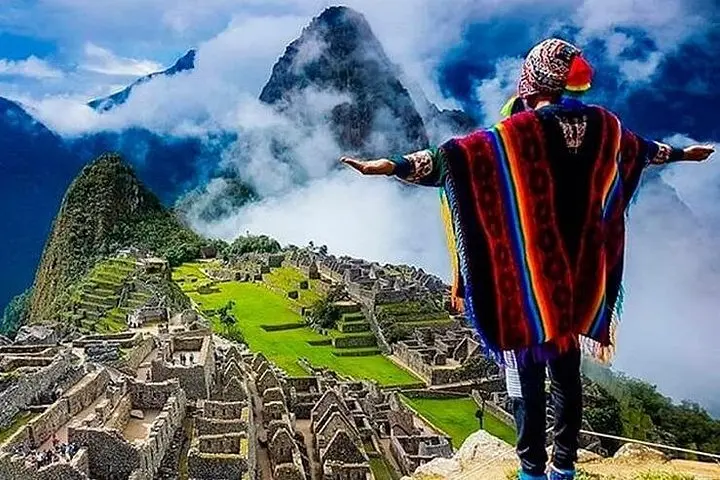
A compact high‑altitude trek from Lares valley up to the Sacsallaully pass, finishing at Machu Picchu. Expect thermal baths, Queuña groves, high mountain lakes and a sunrise entry to the Inca citadel.
A compact high‑altitude trek from Lares valley up to the Sacsallaully pass, finishing at Machu Picchu. Expect thermal baths, Queuña groves, high mountain lakes and a sunrise entry to the Inca citadel.
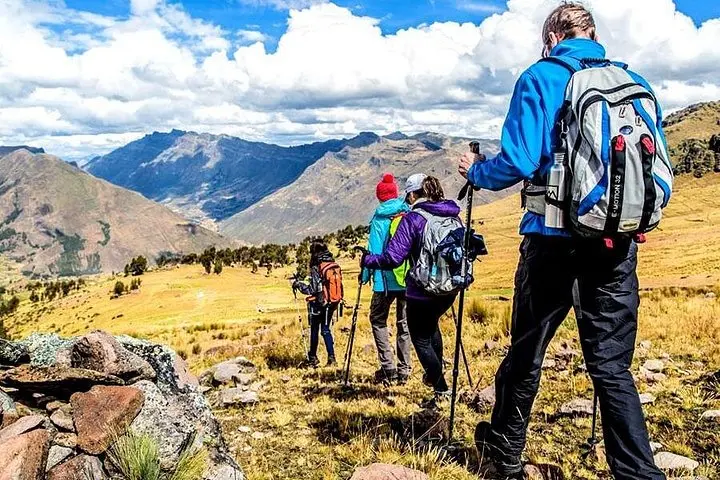
Morning light strips across the Lares valley as you step from the bus and inhale the thin, cold air—condensed breath and wool against your palms. The trail climbs through a patchwork of agricultural terraces, threads past steaming thermal pools and pushes up to the Sacsallaully pass (4,646 m), where the wind seems to test your resolve before opening a view of snow-capped peaks and mirror lakes.
Verified experiences and guided adventures in the surrounding area.
Operated by Vamos Machu Picchu · Machu Picchu, Cusco
Morning light strips across the Lares valley as you step from the bus and inhale the thin, cold air—condensed breath and wool against your palms. The trail climbs through a patchwork of agricultural terraces, threads past steaming thermal pools and pushes up to the Sacsallaully pass (4,646 m), where the wind seems to test your resolve before opening a view of snow-capped peaks and mirror lakes.
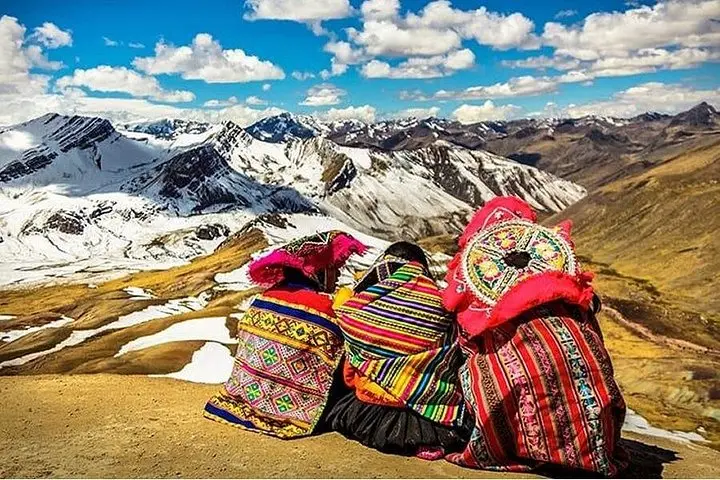
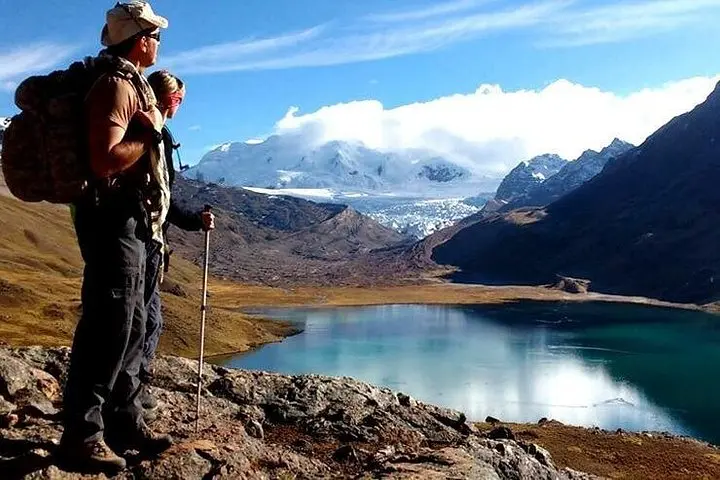
This route traces Andean highland life as much as it crosses geography: Incas engineered nearby terraces and paths, Queuña forests mark glacial refugia, and local communities still weave, herd alpacas and maintain ancestral festivals. Geologically the landscape is young, uplifted Andean crust carved by glaciers into sharp ridges and cirques; small lakes like Aruraycocha sit in moraine basins below the pass.
Expect four days of steady, high-altitude trekking—day one’s 11 km warm-up to a 3,750 m camp, day two’s 15 km, big-gain pass and 4,646 m highlight, then a descent through Yanahuara toward Ollantaytambo and a final early march to Machu Picchu. Nights are cold; daytime sun can be intense. Trails alternate grassy puna, rocky switchbacks and shaded Queuña stands, and mules carry much of the kit while cooks prepare hot, hearty meals.
Practical: acclimatize in Cusco for 48–72 hours if possible, carry layers, sun protection and water treatment, and budget time for the Ollantaytambo–Aguas Calientes train and Machu Picchu entry windows. If you want the extra summit of Huayna Picchu, reserve in advance—spaces are limited.
Yes—entrance to Machu Picchu is included in the tour; if you plan to climb Huayna Picchu or Machu Picchu Mountain, book that extra permit in advance as slots are limited.
The pass reaches 4,646 m with several hours of uphill walking; it’s steep and exposed in places, so good fitness and proper acclimatization are essential.
Yes—many itineraries include a visit to the Lares thermal baths early in the trek day for a relaxing soak before camp.
No—the final access to Machu Picchu is by the established entrance from Aguas Calientes; the tour uses the train between Aguas Calientes and Ollantaytambo for return transport.
Vamos Machu Picchu operates guided outdoor trips and adventures with an emphasis on safety, stewardship, and memorable experiences.
Morning light strips across the Lares valley as you step from the bus and inhale the thin, cold air—condensed breath and wool against your palms. The trail climbs through a patchwork of agricultural terraces, threads past steaming thermal pools and pushes up to the Sacsallaully pass (4,646 m), where the wind seems to test your resolve before opening a view of snow-capped peaks and mirror lakes.
Morning light strips across the Lares valley as you step from the bus and inhale the thin, cold air—condensed breath and wool against your palms. The trail climbs through a patchwork of agricultural terraces, threads past steaming thermal pools and pushes up to the Sacsallaully pass (4,646 m), where the wind seems to test your resolve before opening a view of snow-capped peaks and mirror lakes.
This route traces Andean highland life as much as it crosses geography: Incas engineered nearby terraces and paths, Queuña forests mark glacial refugia, and local communities still weave, herd alpacas and maintain ancestral festivals. Geologically the landscape is young, uplifted Andean crust carved by glaciers into sharp ridges and cirques; small lakes like Aruraycocha sit in moraine basins below the pass.
Expect four days of steady, high-altitude trekking—day one’s 11 km warm-up to a 3,750 m camp, day two’s 15 km, big-gain pass and 4,646 m highlight, then a descent through Yanahuara toward Ollantaytambo and a final early march to Machu Picchu. Nights are cold; daytime sun can be intense. Trails alternate grassy puna, rocky switchbacks and shaded Queuña stands, and mules carry much of the kit while cooks prepare hot, hearty meals.
Practical: acclimatize in Cusco for 48–72 hours if possible, carry layers, sun protection and water treatment, and budget time for the Ollantaytambo–Aguas Calientes train and Machu Picchu entry windows. If you want the extra summit of Huayna Picchu, reserve in advance—spaces are limited.