THE ADVENTURE COLLECTIVE® · Independent discovery and booking for outdoor travel

Traverse the High Atlas, wander through cinematic kasbahs and ride camels into Erg Chebbi on this four-day luxury desert tour from Marrakech. Expect dramatic passes, canyon walls, and nights under a carpet of stars.
Traverse the High Atlas, wander through cinematic kasbahs and ride camels into Erg Chebbi on this four-day luxury desert tour from Marrakech. Expect dramatic passes, canyon walls, and nights under a carpet of stars.
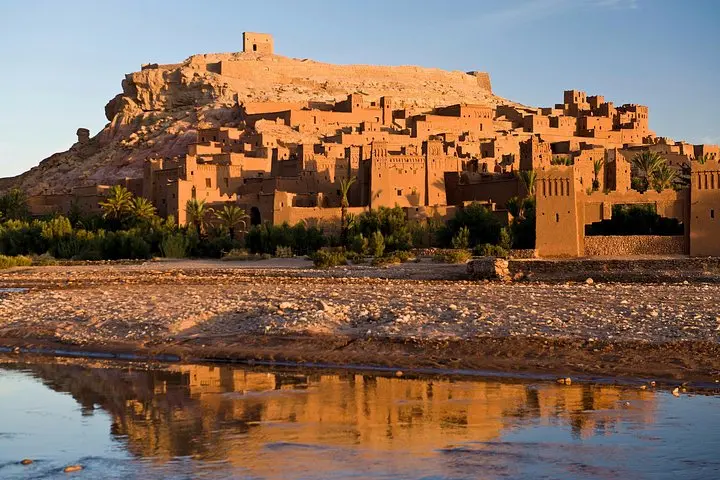
A wind-carved ridge separates the asfalt from the sand as the convoy climbs Tizi n’Tichka; the High Atlas pulls into sharp relief and the air thins around 2,260 meters. On day one, travelers descend into ochre valleys, passing Ait Ben Haddou’s compact kasbahs—mudbrick silhouettes that once stood in for ancient cities on film sets—before sleeping beneath red cliffs in the Dades Valley.
Verified experiences and guided adventures in the surrounding area.
Operated by Try Morocco Tours · Merzouga, Drâa-Tafilalet
A wind-carved ridge separates the asfalt from the sand as the convoy climbs Tizi n’Tichka; the High Atlas pulls into sharp relief and the air thins around 2,260 meters. On day one, travelers descend into ochre valleys, passing Ait Ben Haddou’s compact kasbahs—mudbrick silhouettes that once stood in for ancient cities on film sets—before sleeping beneath red cliffs in the Dades Valley.
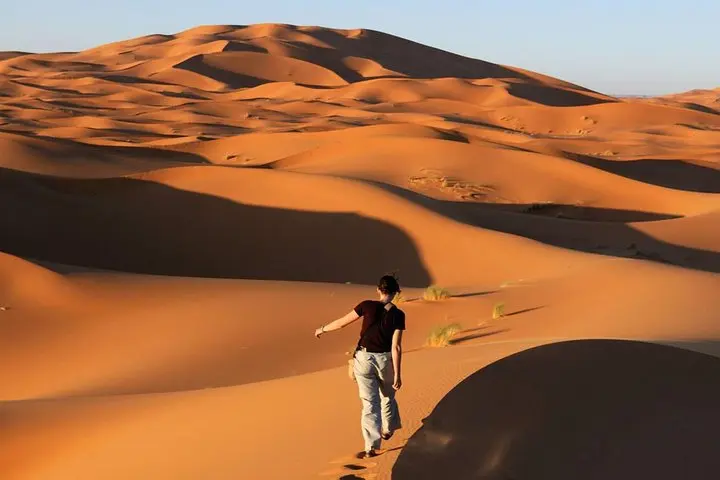
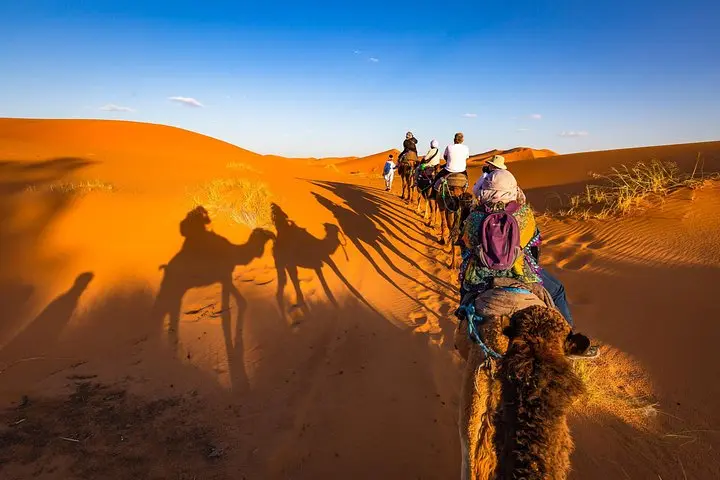
The following morning pushes east through the canyon throat of Todra Gorge, where vertical walls rise roughly 300 meters and sunlight strips the rock into bands. By afternoon the landscape loosens into fossil-laced plains near Erfoud, then the dunes of Erg Chebbi grow taller and softer—some summits reach about 100–150 meters—inviting a slow camel ride at sunset and a night in a luxury desert camp under a sky that seems to push stars toward you.
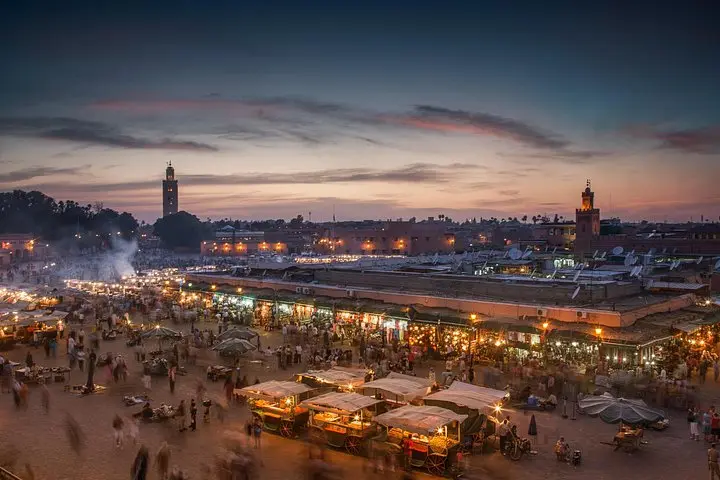
Day three mixes culture and quiet: visits with nomadic families, a kohl mine, Gnawa performances in Khamlia, and palm groves threaded with irrigation channels. The return follows the Draa Valley’s date palms and the Tizi n’Tichka pass back to Marrakech, totaling long driving days—expect several 4–8 hour legs and roughly 560 km between Marrakech and Merzouga one-way.
Practical notes: layer for sharp diurnal swings, carry 2–3 liters of water per day during active periods, and bring sun protection for open desert sections. Footwear should handle sand and short rocky walks; cash is useful for souks and tips. Pace travel for early mornings and late afternoons to catch the best light and cooler temperatures.
Expect several long driving legs across the High Atlas and plains; Marrakech to Merzouga is roughly 560 km one-way with drives typically 4–8 hours between stops.
Camel rides are low-impact but require basic balance and the ability to mount/dismount; guides manage pace and rest stops.
The itinerary includes nights in guesthouses or hotels in valleys and a luxury desert camp in Merzouga with traditional meals and camp facilities.
The tour suits a wide range of ages but is not recommended for those with serious spinal or cardiovascular issues due to long drives and camel mounting; check medical suitability beforehand.
Try Morocco Tours operates guided outdoor trips and adventures with an emphasis on safety, stewardship, and memorable experiences.
A wind-carved ridge separates the asfalt from the sand as the convoy climbs Tizi n’Tichka; the High Atlas pulls into sharp relief and the air thins around 2,260 meters. On day one, travelers descend into ochre valleys, passing Ait Ben Haddou’s compact kasbahs—mudbrick silhouettes that once stood in for ancient cities on film sets—before sleeping beneath red cliffs in the Dades Valley.
A wind-carved ridge separates the asfalt from the sand as the convoy climbs Tizi n’Tichka; the High Atlas pulls into sharp relief and the air thins around 2,260 meters. On day one, travelers descend into ochre valleys, passing Ait Ben Haddou’s compact kasbahs—mudbrick silhouettes that once stood in for ancient cities on film sets—before sleeping beneath red cliffs in the Dades Valley.
The following morning pushes east through the canyon throat of Todra Gorge, where vertical walls rise roughly 300 meters and sunlight strips the rock into bands. By afternoon the landscape loosens into fossil-laced plains near Erfoud, then the dunes of Erg Chebbi grow taller and softer—some summits reach about 100–150 meters—inviting a slow camel ride at sunset and a night in a luxury desert camp under a sky that seems to push stars toward you.
Day three mixes culture and quiet: visits with nomadic families, a kohl mine, Gnawa performances in Khamlia, and palm groves threaded with irrigation channels. The return follows the Draa Valley’s date palms and the Tizi n’Tichka pass back to Marrakech, totaling long driving days—expect several 4–8 hour legs and roughly 560 km between Marrakech and Merzouga one-way.
Practical notes: layer for sharp diurnal swings, carry 2–3 liters of water per day during active periods, and bring sun protection for open desert sections. Footwear should handle sand and short rocky walks; cash is useful for souks and tips. Pace travel for early mornings and late afternoons to catch the best light and cooler temperatures.