THE ADVENTURE COLLECTIVE® · Independent discovery and booking for outdoor travel

A compact four-day route through Cusco, the Sacred Valley, and Machu Picchu that blends Inca archaeology, Andean landscapes, and practical logistics—train travel, guided tours, and overnight stays included. Ideal for travelers who want a focused, accessible introduction to the heart of the Inca world.
A compact four-day route through Cusco, the Sacred Valley, and Machu Picchu that blends Inca archaeology, Andean landscapes, and practical logistics—train travel, guided tours, and overnight stays included. Ideal for travelers who want a focused, accessible introduction to the heart of the Inca world.
You step out into a thin, Andes morning in Cusco—stone streets cooling under your boots, church bells folding into the air that tastes faintly of eucalyptus. The city sits at roughly 3,400 m (11,150 ft), and the first day’s city tour threads you through Qoricancha’s polished Inca masonry and up to Sacsayhuamán’s giant ramparts where the wind seems to test your lungs.
Verified experiences and guided adventures in the surrounding area.
Operated by Machupicchu Peru Journeys · Cusco, Cusco
You step out into a thin, Andes morning in Cusco—stone streets cooling under your boots, church bells folding into the air that tastes faintly of eucalyptus. The city sits at roughly 3,400 m (11,150 ft), and the first day’s city tour threads you through Qoricancha’s polished Inca masonry and up to Sacsayhuamán’s giant ramparts where the wind seems to test your lungs.
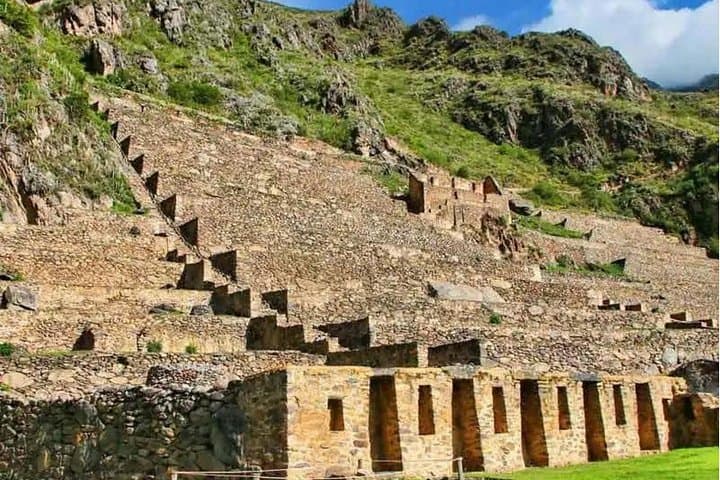
Over the next days the landscape changes like a page turn: the Sacred Valley drops to river carved terraces and salt pans, and the train follows the Urubamba River through a canyon that pushes toward the cloud forest. Expect terraces and switchbacks at Ollantaytambo, high-altitude agricultural experiments at Moray, and the geometric pools of Maras where local families still harvest salt by hand.
Machu Picchu (≈2,430 m / 7,970 ft) reveals itself after a short, steep bus climb—stone plazas, the Intihuatana, and stairways that force a measured pace. Geology here is volcanic and metamorphic rock hewn into fit-together blocks; the Incas worked with gravity and microclimates as much as with stone.
Practical guidance: allow 24–48 hours in Cusco to help acclimatize, bring layered clothing for 10–20°C swings between valley and high points, and wear sturdy shoes—the site involves uneven stone stairs and 2–4 km of walking during a standard 3-hour tour. Hydrate, go early to avoid crowds, and keep a small daypack with rain protection—cloud forest weather can change fast. The included train, bus transfers, and local guides make logistics straightforward, leaving you to focus on the views and the history carved into the mountains.
Yes—the tour includes the Machu Picchu entrance ticket and a guided site tour of approximately three hours.
The trip is moderate: daily walking on cobblestones and stairs, short bus and train rides, and some elevation change; no technical climbing required.
Round-trip Expedition train tickets are included; you can request Vistadome or Observatory class for enhanced windows and comfort, subject to availability and possible supplement.
Yes—talk to your operator about modifying return logistics; train and hotel changes may incur fees and depend on availability.
Machupicchu Peru Journeys operates guided outdoor trips and adventures with an emphasis on safety, stewardship, and memorable experiences.


You step out into a thin, Andes morning in Cusco—stone streets cooling under your boots, church bells folding into the air that tastes faintly of eucalyptus. The city sits at roughly 3,400 m (11,150 ft), and the first day’s city tour threads you through Qoricancha’s polished Inca masonry and up to Sacsayhuamán’s giant ramparts where the wind seems to test your lungs.
You step out into a thin, Andes morning in Cusco—stone streets cooling under your boots, church bells folding into the air that tastes faintly of eucalyptus. The city sits at roughly 3,400 m (11,150 ft), and the first day’s city tour threads you through Qoricancha’s polished Inca masonry and up to Sacsayhuamán’s giant ramparts where the wind seems to test your lungs.
Over the next days the landscape changes like a page turn: the Sacred Valley drops to river carved terraces and salt pans, and the train follows the Urubamba River through a canyon that pushes toward the cloud forest. Expect terraces and switchbacks at Ollantaytambo, high-altitude agricultural experiments at Moray, and the geometric pools of Maras where local families still harvest salt by hand.
Machu Picchu (≈2,430 m / 7,970 ft) reveals itself after a short, steep bus climb—stone plazas, the Intihuatana, and stairways that force a measured pace. Geology here is volcanic and metamorphic rock hewn into fit-together blocks; the Incas worked with gravity and microclimates as much as with stone.
Practical guidance: allow 24–48 hours in Cusco to help acclimatize, bring layered clothing for 10–20°C swings between valley and high points, and wear sturdy shoes—the site involves uneven stone stairs and 2–4 km of walking during a standard 3-hour tour. Hydrate, go early to avoid crowds, and keep a small daypack with rain protection—cloud forest weather can change fast. The included train, bus transfers, and local guides make logistics straightforward, leaving you to focus on the views and the history carved into the mountains.