THE ADVENTURE COLLECTIVE® · Independent discovery and booking for outdoor travel

Traverse the High Atlas, visit UNESCO-listed Ait Benhaddou, and spend a night in the Erg Chebbi dunes on this four-day overland journey from Marrakech to Fes. Expect long scenic drives, short canyon hikes, a camel trek, and cultural stops in Berber villages.
Traverse the High Atlas, visit UNESCO-listed Ait Benhaddou, and spend a night in the Erg Chebbi dunes on this four-day overland journey from Marrakech to Fes. Expect long scenic drives, short canyon hikes, a camel trek, and cultural stops in Berber villages.
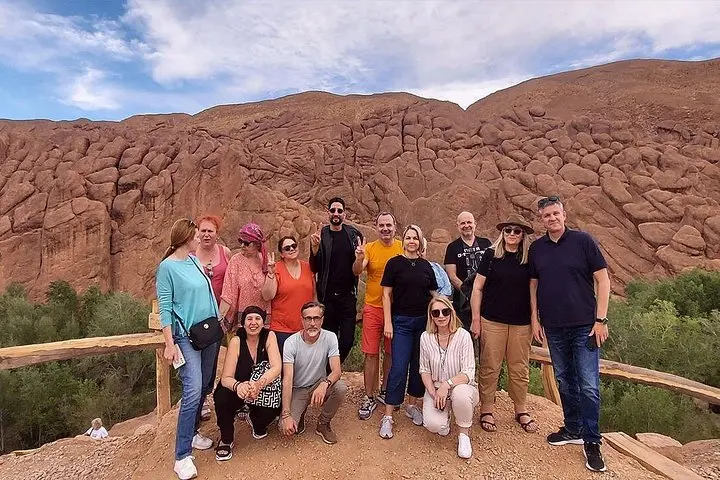
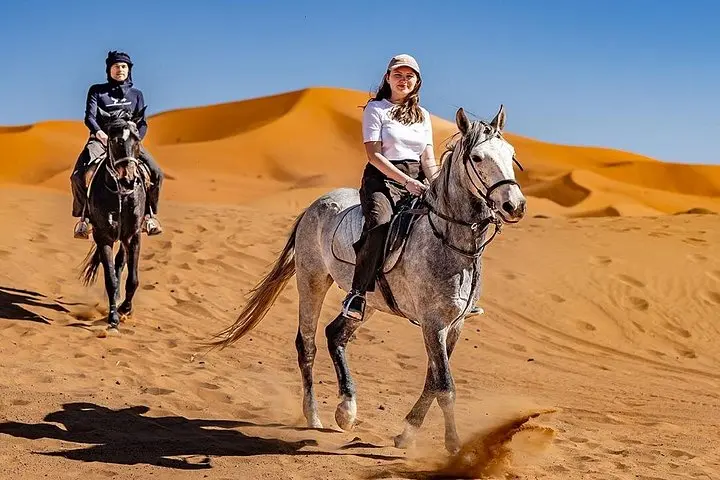
You step out of Marrakech before dawn and the road pulls you upward, the Tizi n'Tichka pass opening a cool gap in the High Atlas—snow on the higher ridges in winter, stony slopes in summer. Over the next four days the landscape keeps changing: redrock gorges, kasbah towns, and then the wide breathing space of Erg Chebbi, where dunes rise like slow-moving waves.
Verified experiences and guided adventures in the surrounding area.
Operated by Moorish Trips · Merzouga, Drâa-Tafilalet
You step out of Marrakech before dawn and the road pulls you upward, the Tizi n'Tichka pass opening a cool gap in the High Atlas—snow on the higher ridges in winter, stony slopes in summer. Over the next four days the landscape keeps changing: redrock gorges, kasbah towns, and then the wide breathing space of Erg Chebbi, where dunes rise like slow-moving waves.
This route follows centuries of trade and migration. Ait Benhaddou, a UNESCO site, stands as an example of southern Moroccan earthen architecture and once sheltered caravans crossing to the Sahara. Geologically the region is shaped by uplifted Atlas ranges giving way to alluvial plains and the wind-worked sand of the eastern Sahara; Todra and Dades gorges expose vertical limestone walls carved by seasonal rivers.
Culture here is Berber and Saharan: villages favor communal life, local guides keep oral histories, and Khamlia preserves Gnaoua music traditions that fill the night around desert camps. Expect hospitality—tea rituals, tagine dinners, and simple, family-run accommodations.
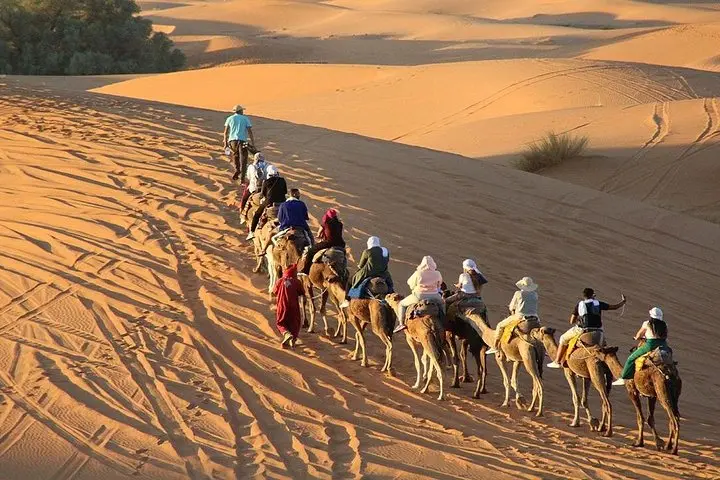
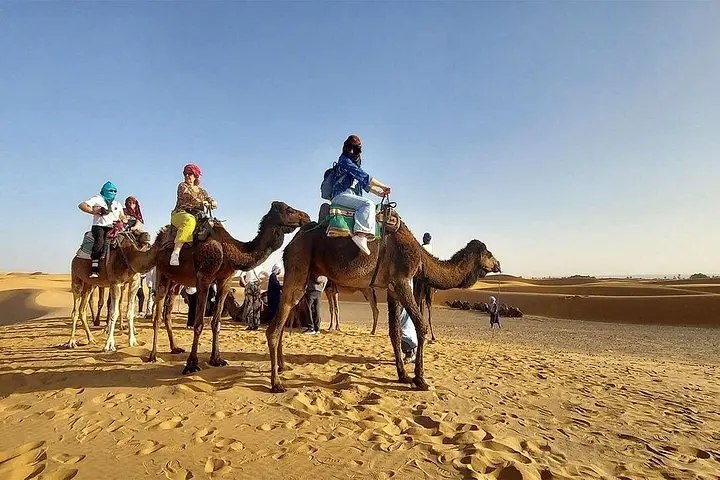
Practical guidance: plan for long drives (daily windows often 8–10 hours door-to-door), one overnight in a desert camp with a camel transfer, and short hikes in gorges. Bring layered clothing for hot days and cool nights, sun protection, refillable water, and comfortable walking shoes. If you want photos, the best light is dawn in the dunes or late afternoon in the gorges. Respect local customs, minimize plastic use, and give guides time for local visits—this route rewards patience with memorable landscapes and quiet desert nights.
Typical camel transfers to the desert camp are 30–60 minutes each way; the provider arranges a single sunset or sunrise ride with longer optional rides on request.
Accommodations vary from simple desert camps with shared facilities to mid-range riads and hotels in towns; the trip includes at least one night in a desert camp and hotel stays elsewhere.
Yes—routes are rated physically easy; however long vehicle days may be tiring, and camel rides are bumpy; check with the operator about mobility needs.
Spring and autumn offer the most comfortable temperatures; winter provides cooler daytime air and possible snowy Atlas passes, while summer can be very hot in the desert.
Moorish Trips operates guided outdoor trips and adventures with an emphasis on safety, stewardship, and memorable experiences.
You step out of Marrakech before dawn and the road pulls you upward, the Tizi n'Tichka pass opening a cool gap in the High Atlas—snow on the higher ridges in winter, stony slopes in summer. Over the next four days the landscape keeps changing: redrock gorges, kasbah towns, and then the wide breathing space of Erg Chebbi, where dunes rise like slow-moving waves.
You step out of Marrakech before dawn and the road pulls you upward, the Tizi n'Tichka pass opening a cool gap in the High Atlas—snow on the higher ridges in winter, stony slopes in summer. Over the next four days the landscape keeps changing: redrock gorges, kasbah towns, and then the wide breathing space of Erg Chebbi, where dunes rise like slow-moving waves.
This route follows centuries of trade and migration. Ait Benhaddou, a UNESCO site, stands as an example of southern Moroccan earthen architecture and once sheltered caravans crossing to the Sahara. Geologically the region is shaped by uplifted Atlas ranges giving way to alluvial plains and the wind-worked sand of the eastern Sahara; Todra and Dades gorges expose vertical limestone walls carved by seasonal rivers.
Culture here is Berber and Saharan: villages favor communal life, local guides keep oral histories, and Khamlia preserves Gnaoua music traditions that fill the night around desert camps. Expect hospitality—tea rituals, tagine dinners, and simple, family-run accommodations.
Practical guidance: plan for long drives (daily windows often 8–10 hours door-to-door), one overnight in a desert camp with a camel transfer, and short hikes in gorges. Bring layered clothing for hot days and cool nights, sun protection, refillable water, and comfortable walking shoes. If you want photos, the best light is dawn in the dunes or late afternoon in the gorges. Respect local customs, minimize plastic use, and give guides time for local visits—this route rewards patience with memorable landscapes and quiet desert nights.