THE ADVENTURE COLLECTIVE® · Independent discovery and booking for outdoor travel

A four-day circuit from Marrakech over the High Atlas to Erg Chebbi, combining UNESCO-listed kasbahs, river valleys and a sunset camel trek with an overnight Berber camp under the stars.
A four-day circuit from Marrakech over the High Atlas to Erg Chebbi, combining UNESCO-listed kasbahs, river valleys and a sunset camel trek with an overnight Berber camp under the stars.
Sunlight slants across red clay roofs as your minivan peels away from Marrakech, the High Atlas climbing ahead like a wall you can measure with your breath. The road over Tizi n’Tichka gains altitude quickly (the pass tops out near 2,260 m), then releases you into ochre valleys, kasbahs, and the long, braided Draa River corridor as the country opens toward the Sahara.
Verified experiences and guided adventures in the surrounding area.
Operated by Desert Stars tours · Merzouga, Drâa-Tafilalet
Sunlight slants across red clay roofs as your minivan peels away from Marrakech, the High Atlas climbing ahead like a wall you can measure with your breath. The road over Tizi n’Tichka gains altitude quickly (the pass tops out near 2,260 m), then releases you into ochre valleys, kasbahs, and the long, braided Draa River corridor as the country opens toward the Sahara.
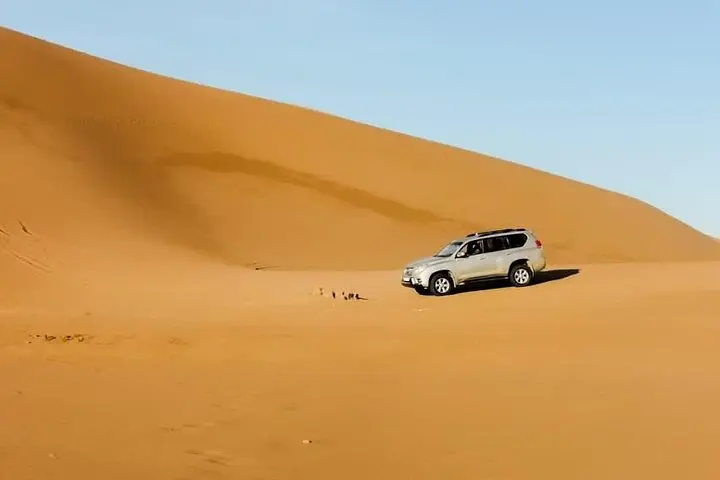
This four-day route tracks Morocco’s geological and cultural seams: folded volcanic ridges of the Atlas, ancient earthen kasbahs such as Ait Ben Haddou (a recorded 11th-century fortress and UNESCO site), and finally the Erg Chebbi sand sea around Merzouga where dunes rise to roughly 150 meters. Along the way you’ll cross the Draa and Dades valleys, drive past date palms and rose farms near El Kelaa des M’Gouna, and walk narrow lanes where Amazigh (Berber) culture remains visible in mudbrick architecture and market rhythms.
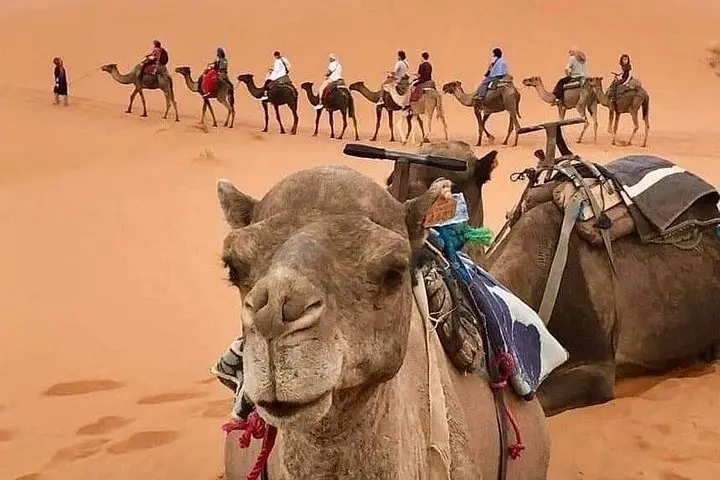
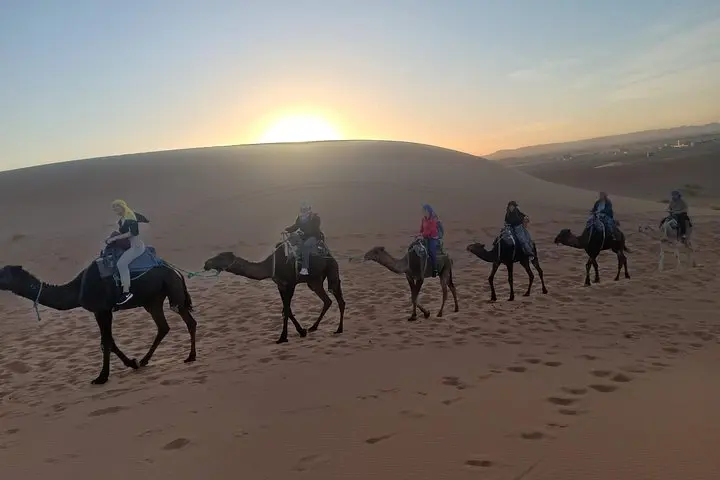
Expect long driving stretches—Marrakech to Merzouga is roughly 550–600 km by road broken into daily legs—with shorter hikes, a sunset camel ride into Erg Chebbi, and an overnight in a traditional desert camp under clear-starred skies. Practicalities: bring layered clothing for big diurnal swings, sun protection, and a small daypack for water and a camera. The itinerary balances scenic stops and cultural visits with time to move slowly in the dunes—an accessible adventure that rewards patience and basic preparation.
No—camel rides on this tour are short and guided; handlers help mount and dismount, and rides are paced for comfort.
Expect several hours of driving each day; the long legs are broken with photo stops and short walks so the trip balances transit and sightseeing.
Basic hot breakfasts and dinners are typically included, and nights alternate between hotels/riads and a desert camp as described in the itinerary.
Children usually can join, but camel riding and rougher transfers may be uncomfortable for those with spinal or severe mobility issues—check with the operator before booking.
Desert Stars tours operates guided outdoor trips and adventures with an emphasis on safety, stewardship, and memorable experiences.
Sunlight slants across red clay roofs as your minivan peels away from Marrakech, the High Atlas climbing ahead like a wall you can measure with your breath. The road over Tizi n’Tichka gains altitude quickly (the pass tops out near 2,260 m), then releases you into ochre valleys, kasbahs, and the long, braided Draa River corridor as the country opens toward the Sahara.
Sunlight slants across red clay roofs as your minivan peels away from Marrakech, the High Atlas climbing ahead like a wall you can measure with your breath. The road over Tizi n’Tichka gains altitude quickly (the pass tops out near 2,260 m), then releases you into ochre valleys, kasbahs, and the long, braided Draa River corridor as the country opens toward the Sahara.
This four-day route tracks Morocco’s geological and cultural seams: folded volcanic ridges of the Atlas, ancient earthen kasbahs such as Ait Ben Haddou (a recorded 11th-century fortress and UNESCO site), and finally the Erg Chebbi sand sea around Merzouga where dunes rise to roughly 150 meters. Along the way you’ll cross the Draa and Dades valleys, drive past date palms and rose farms near El Kelaa des M’Gouna, and walk narrow lanes where Amazigh (Berber) culture remains visible in mudbrick architecture and market rhythms.
Expect long driving stretches—Marrakech to Merzouga is roughly 550–600 km by road broken into daily legs—with shorter hikes, a sunset camel ride into Erg Chebbi, and an overnight in a traditional desert camp under clear-starred skies. Practicalities: bring layered clothing for big diurnal swings, sun protection, and a small daypack for water and a camera. The itinerary balances scenic stops and cultural visits with time to move slowly in the dunes—an accessible adventure that rewards patience and basic preparation.