THE ADVENTURE COLLECTIVE® · Independent discovery and booking for outdoor travel

Cross the High Atlas, walk through Dades and Todra gorges, and sleep on the dunes of Erg Chebbi. This four-day loop from Marrakech pairs short hikes and a camel trek with cultural stops at Ouarzazate and Ait Benhaddou.
Cross the High Atlas, walk through Dades and Todra gorges, and sleep on the dunes of Erg Chebbi. This four-day loop from Marrakech pairs short hikes and a camel trek with cultural stops at Ouarzazate and Ait Benhaddou.
You leave Marrakech before dawn and the city’s ochre walls shrink as the road climbs the High Atlas. The pass at Tizi n’Tichka (2,260 m) gives the first clear view of the rain-shadow that creates the southern deserts; by midafternoon you’re threading a river-carved corridor between towering rock walls in Dades and Todra.
Verified experiences and guided adventures in the surrounding area.
Operated by EASYGO TOURS · Marrakech, Marrakech-Safi
You leave Marrakech before dawn and the city’s ochre walls shrink as the road climbs the High Atlas. The pass at Tizi n’Tichka (2,260 m) gives the first clear view of the rain-shadow that creates the southern deserts; by midafternoon you’re threading a river-carved corridor between towering rock walls in Dades and Todra.
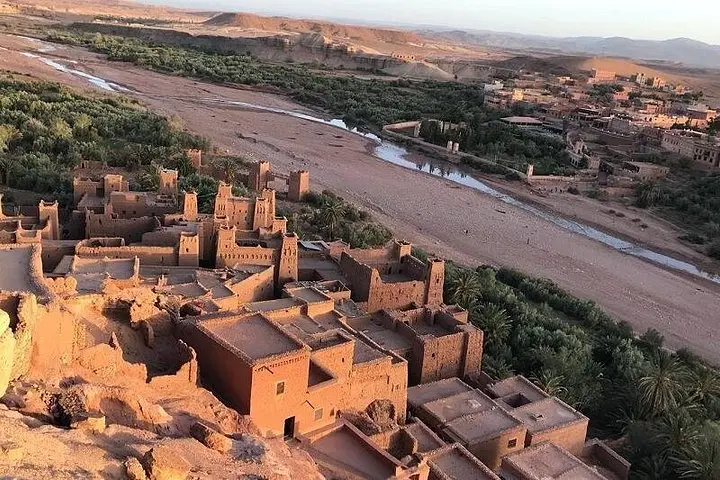
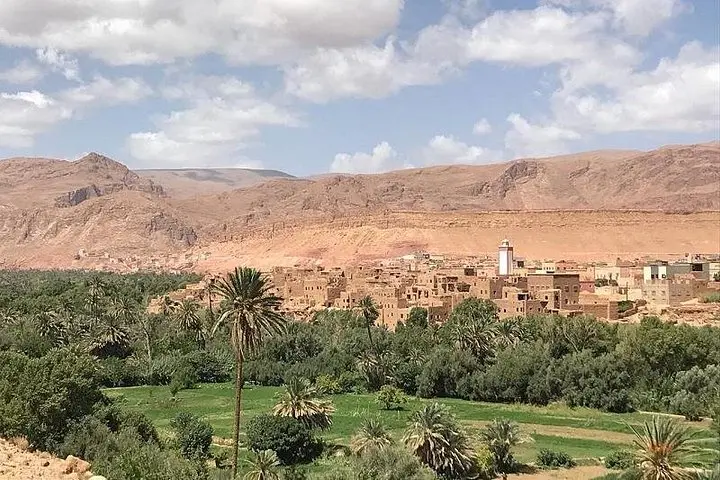
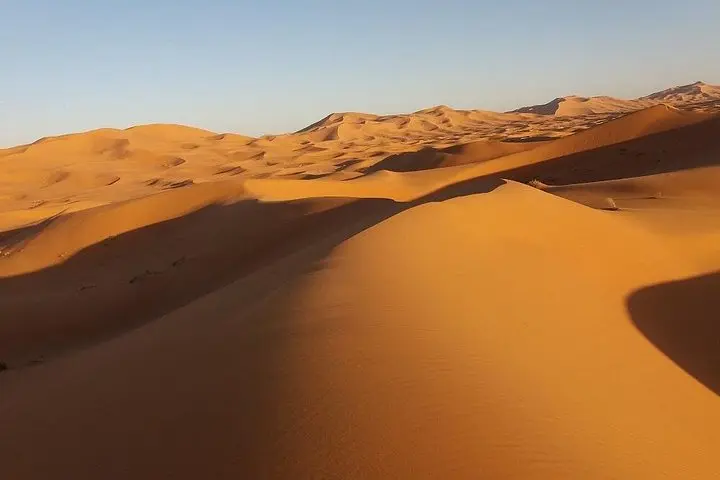
This compact four-day route stitches together clearly different geologies and cultures: the folded limestone of the gorges, the alluvial soils of the Draa Valley lined with date palms, and the wind-sculpted sand of Erg Chebbi where dunes can rise to about 150 m. Ouarzazate’s kasbahs and the UNESCO ksar of Ait Benhaddou recall caravan routes and a film industry that makes use of the region’s stark light.
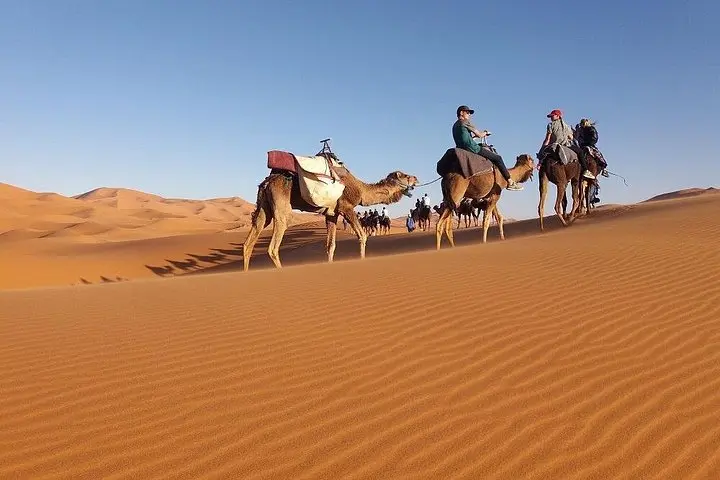
Expect a mix of vehicle transfers (several hours each day), short guided walks through palm groves and the narrow Todra canyon, and a late-afternoon camel trek onto the dunes to reach a Berber-style camp for a night under open sky. Terrain varies from paved mountain roads to gravel tracks and soft sand; average daytime temperatures swing with season and elevation.
Practical pointers: bring layered clothing for cold desert nights, sun protection, and sturdy shoes for rocky sections. Hydrate on driving days and allow extra time for photo stops. If you’re curious about local life, ask about date cultivation in the Draa and the kasbah architecture techniques—both reveal how communities adapted to scarce water. The trip balances easy walking with long drives; it’s ideal for travelers who want a concentrated, accessible introduction to Morocco’s southern landscapes.
The tour starts and ends in Marrakech with hotel pickup and drop-off; exact meeting details are provided at booking.
Typical camel treks to the desert camp last about 1–2 hours, timed for late afternoon sunset travel.
Camps are Berber-style with shared facilities; expect mattress bedding and communal dining by campfire—comfort varies by operator.
The tour involves vehicle transfers and short walks; it’s generally suitable for children but not recommended for travelers with serious mobility or heart/spinal conditions.
EASYGO TOURS operates guided outdoor trips and adventures with an emphasis on safety, stewardship, and memorable experiences.
You leave Marrakech before dawn and the city’s ochre walls shrink as the road climbs the High Atlas. The pass at Tizi n’Tichka (2,260 m) gives the first clear view of the rain-shadow that creates the southern deserts; by midafternoon you’re threading a river-carved corridor between towering rock walls in Dades and Todra.
You leave Marrakech before dawn and the city’s ochre walls shrink as the road climbs the High Atlas. The pass at Tizi n’Tichka (2,260 m) gives the first clear view of the rain-shadow that creates the southern deserts; by midafternoon you’re threading a river-carved corridor between towering rock walls in Dades and Todra.
This compact four-day route stitches together clearly different geologies and cultures: the folded limestone of the gorges, the alluvial soils of the Draa Valley lined with date palms, and the wind-sculpted sand of Erg Chebbi where dunes can rise to about 150 m. Ouarzazate’s kasbahs and the UNESCO ksar of Ait Benhaddou recall caravan routes and a film industry that makes use of the region’s stark light.
Expect a mix of vehicle transfers (several hours each day), short guided walks through palm groves and the narrow Todra canyon, and a late-afternoon camel trek onto the dunes to reach a Berber-style camp for a night under open sky. Terrain varies from paved mountain roads to gravel tracks and soft sand; average daytime temperatures swing with season and elevation.
Practical pointers: bring layered clothing for cold desert nights, sun protection, and sturdy shoes for rocky sections. Hydrate on driving days and allow extra time for photo stops. If you’re curious about local life, ask about date cultivation in the Draa and the kasbah architecture techniques—both reveal how communities adapted to scarce water. The trip balances easy walking with long drives; it’s ideal for travelers who want a concentrated, accessible introduction to Morocco’s southern landscapes.