THE ADVENTURE COLLECTIVE® · Independent discovery and booking for outdoor travel

Cycle four days through the living Mekong Delta—ferry crossings, coconut lanes, floating markets and Khmer villages. Expect flat, scenic riding with early starts, heat management, and daily cultural encounters.
Cycle four days through the living Mekong Delta—ferry crossings, coconut lanes, floating markets and Khmer villages. Expect flat, scenic riding with early starts, heat management, and daily cultural encounters.
The morning air on day one smells of wet earth and coconut husk—your group rolls away from Ho Chi Minh City with the river daring you east, a wide, slow current that pushes the delta’s lifeblood through narrow canals and village lanes.
Verified experiences and guided adventures in the surrounding area.
Operated by Local Tours Around Viet Nam · Can Tho, Mekong Delta
The morning air on day one smells of wet earth and coconut husk—your group rolls away from Ho Chi Minh City with the river daring you east, a wide, slow current that pushes the delta’s lifeblood through narrow canals and village lanes.
Over four days you pedal past dragon fruit beds, under avenues of coconut palms, and beside rice paddies that flex with the seasons. Geologically the Mekong is a young, low-lying alluvial plain; its wealth is sediment carried from far upriver, building islands and shifting channels that shape every ferry crossing and farm track you ride.
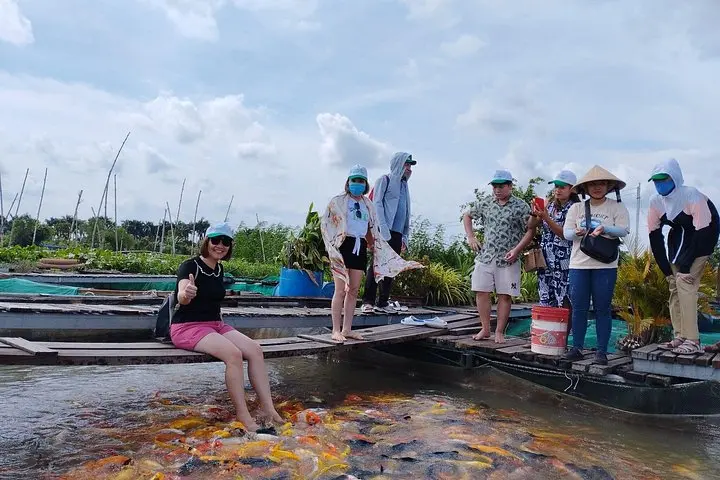
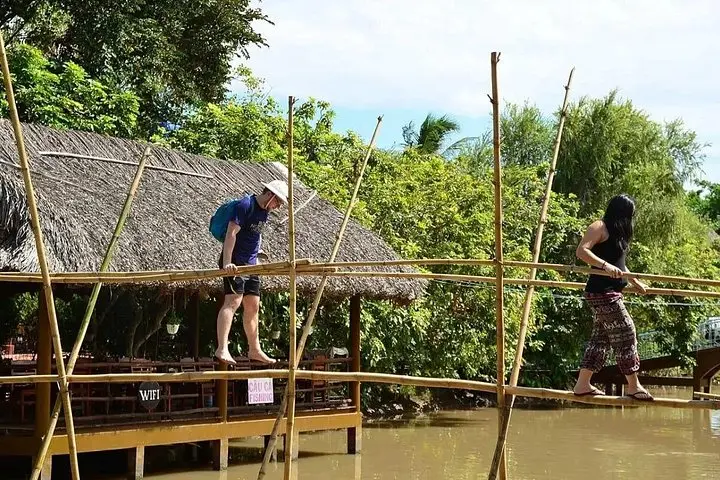
Culturally this is a borderland of influences: Khmer pagodas, Hoa Hao hamlets, and Vietnamese river commerce converge in floating markets and family workshops that still split coconut husks by hand. Local history is visible in stilt houses, irrigation dikes, and the patched boats that ferry everything from sand to live ducks.
Practically, expect flat to gently rolling terrain on paved and compacted village lanes, frequent short ferry hops, and daily distances around 45–60 km. Heat and humidity are constant—start rides at dawn, carry electrolytes, and use sun protection. Bikes are suited for mixed pavement and crushed-shell lanes; bring padded shorts and a reliable helmet. Plan for sudden tropical showers: a lightweight waterproof and quick-dry clothing will keep you moving.
This trip rewards curiosity: slow down at a roadside fruit stand, listen to the river’s daily commerce, and let the delta’s rhythm set your pace. Leave no trace on these fragile banks—trash and oil have outsized effects on the waterways that feed the region.
Yes—most guided Mekong Delta bike tours supply hybrid touring bikes and helmets; confirm sizing and any upgrades before departure.
Daily distances average 45–60 km on mostly flat terrain; endurance for multi-day riding is helpful though pace is steady with regular stops.
The dry season (Dec–Apr) has less rain and lower river levels, while the wet season (May–Nov) delivers daily showers and greener scenery; both have advantages.
Yes—tours accommodate solo riders and small groups; families with older children who can handle long rides will find it a rewarding cultural experience.
Local Tours Around Viet Nam operates guided outdoor trips and adventures with an emphasis on safety, stewardship, and memorable experiences.
The morning air on day one smells of wet earth and coconut husk—your group rolls away from Ho Chi Minh City with the river daring you east, a wide, slow current that pushes the delta’s lifeblood through narrow canals and village lanes.
The morning air on day one smells of wet earth and coconut husk—your group rolls away from Ho Chi Minh City with the river daring you east, a wide, slow current that pushes the delta’s lifeblood through narrow canals and village lanes.
Over four days you pedal past dragon fruit beds, under avenues of coconut palms, and beside rice paddies that flex with the seasons. Geologically the Mekong is a young, low-lying alluvial plain; its wealth is sediment carried from far upriver, building islands and shifting channels that shape every ferry crossing and farm track you ride.
Culturally this is a borderland of influences: Khmer pagodas, Hoa Hao hamlets, and Vietnamese river commerce converge in floating markets and family workshops that still split coconut husks by hand. Local history is visible in stilt houses, irrigation dikes, and the patched boats that ferry everything from sand to live ducks.
Practically, expect flat to gently rolling terrain on paved and compacted village lanes, frequent short ferry hops, and daily distances around 45–60 km. Heat and humidity are constant—start rides at dawn, carry electrolytes, and use sun protection. Bikes are suited for mixed pavement and crushed-shell lanes; bring padded shorts and a reliable helmet. Plan for sudden tropical showers: a lightweight waterproof and quick-dry clothing will keep you moving.
This trip rewards curiosity: slow down at a roadside fruit stand, listen to the river’s daily commerce, and let the delta’s rhythm set your pace. Leave no trace on these fragile banks—trash and oil have outsized effects on the waterways that feed the region.