THE ADVENTURE COLLECTIVE® · Independent discovery and booking for outdoor travel

Drive the Tichka Pass to Ait Ben Haddou, walk the Dades and Todra gorges, ride camels into Erg Chebbi and sleep in a private bivouac on this 4-day desert circuit from Marrakech. A compact route through geology, kasbah culture, and Saharan dunes.
Drive the Tichka Pass to Ait Ben Haddou, walk the Dades and Todra gorges, ride camels into Erg Chebbi and sleep in a private bivouac on this 4-day desert circuit from Marrakech. A compact route through geology, kasbah culture, and Saharan dunes.
The first time you crest the Tizi n’Tichka and the High Atlas drops away, the desert announces itself in long, patient tones: ochre plains, a string of kasbahs, and the distant curve of dunes waiting in Merzouga.
Verified experiences and guided adventures in the surrounding area.
Operated by Samyexcursionsouarzazate · Merzouga, Drâa-Tafilalet
The first time you crest the Tizi n’Tichka and the High Atlas drops away, the desert announces itself in long, patient tones: ochre plains, a string of kasbahs, and the distant curve of dunes waiting in Merzouga.
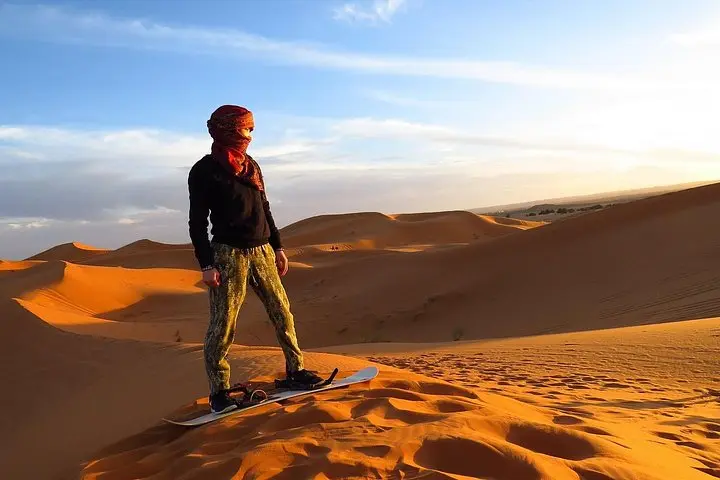
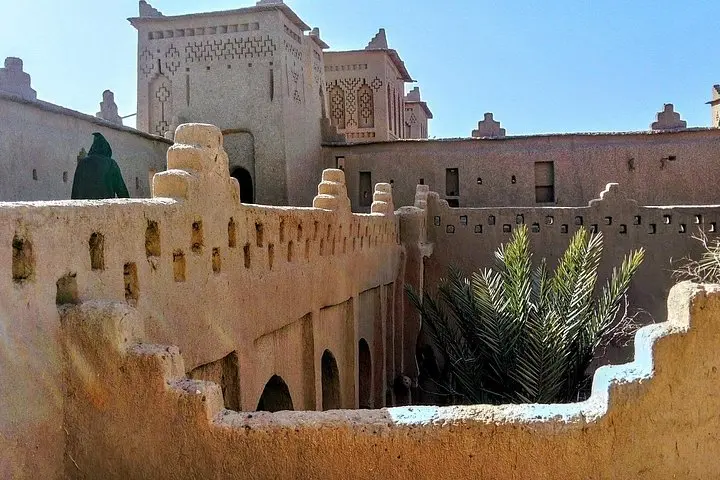
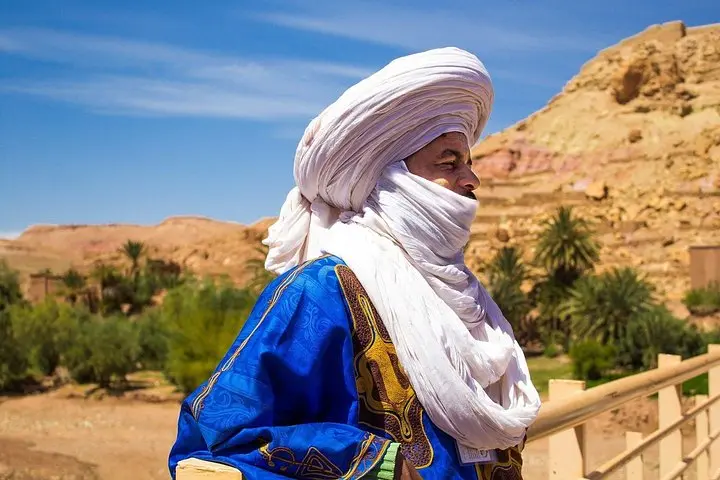
This 4-day circuit moves from Marrakech across the Tichka Pass to Ait Ben Haddou, through the rose-scented Dades Valley, past fossil-rich Erfoud, and into the orange ripples of Erg Chebbi. Geology here reads like a timeline — red sedimentary layers folded by the Atlas uplift, fossilized marine slabs near Erfoud, and wind-carved sand seas shaped by Saharan gusts. Culturally, you’ll encounter Berber kasbah architecture, palm-grove oases along the Draa, and markets in Rissani that recall caravan routes of the past.
Expect a mix of paved highway and dirt track, long vehicle transfers broken by short walks in the Todra and Dades gorges, a sunset camel trek and a private bivouac under open sky. Nights alternate between riad comfort and the elemental hush of the desert; daytime temperatures swing, and wind can whip sand into sharp patterns.
Practical guidance: travel light in a soft bag, layer for morning chills and hot afternoons, and carry at least two liters of water for dune visits. Footwear should be sturdy for canyon walks and loose enough for camel saddles. Plan arrival and departure around daylight to enjoy the pass crossings and evening light. Bring a camera with a polarizer for cratered rock faces and low-angle dune shadows — the landscape rewards early starts and slow stops.
The tour is rated easy: most travel is by air-conditioned vehicle, with short walks in gorges and a moderate camel ride to the bivouac.
Yes — the itinerary notes the option to stay in a hotel in Merzouga instead of the desert tent if you prefer more comfort.
Breakfasts and dinners are included per the itinerary; local mint tea and traditional dinners are common at camps and riads.
Many parts of the tour are wheelchair accessible (transport and some riads), but the camel ride and dune walking are not suited for limited mobility.
Samyexcursionsouarzazate operates guided outdoor trips and adventures with an emphasis on safety, stewardship, and memorable experiences.
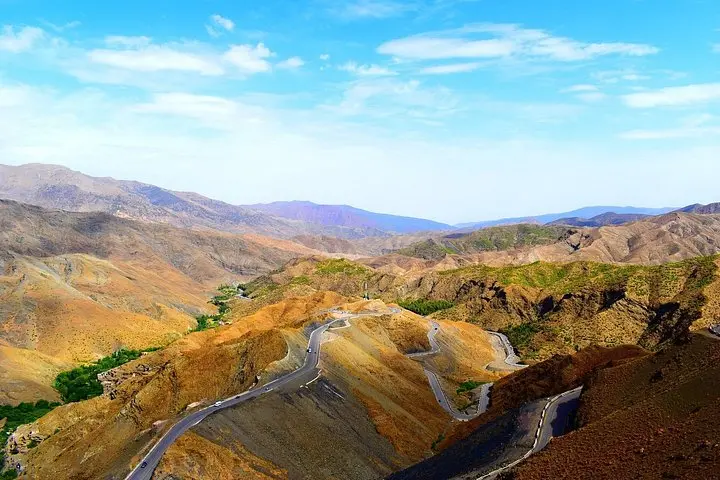
The first time you crest the Tizi n’Tichka and the High Atlas drops away, the desert announces itself in long, patient tones: ochre plains, a string of kasbahs, and the distant curve of dunes waiting in Merzouga.
The first time you crest the Tizi n’Tichka and the High Atlas drops away, the desert announces itself in long, patient tones: ochre plains, a string of kasbahs, and the distant curve of dunes waiting in Merzouga.
This 4-day circuit moves from Marrakech across the Tichka Pass to Ait Ben Haddou, through the rose-scented Dades Valley, past fossil-rich Erfoud, and into the orange ripples of Erg Chebbi. Geology here reads like a timeline — red sedimentary layers folded by the Atlas uplift, fossilized marine slabs near Erfoud, and wind-carved sand seas shaped by Saharan gusts. Culturally, you’ll encounter Berber kasbah architecture, palm-grove oases along the Draa, and markets in Rissani that recall caravan routes of the past.
Expect a mix of paved highway and dirt track, long vehicle transfers broken by short walks in the Todra and Dades gorges, a sunset camel trek and a private bivouac under open sky. Nights alternate between riad comfort and the elemental hush of the desert; daytime temperatures swing, and wind can whip sand into sharp patterns.
Practical guidance: travel light in a soft bag, layer for morning chills and hot afternoons, and carry at least two liters of water for dune visits. Footwear should be sturdy for canyon walks and loose enough for camel saddles. Plan arrival and departure around daylight to enjoy the pass crossings and evening light. Bring a camera with a polarizer for cratered rock faces and low-angle dune shadows — the landscape rewards early starts and slow stops.