THE ADVENTURE COLLECTIVE® · Independent discovery and booking for outdoor travel

Cross the High Atlas, explore Ait Ben Haddou and the Dades and Todra gorges, then ride camels into Erg Chebbi for a night under the stars. This four-day private route blends geology, culture and Saharan spectacle with comfortable camps and riad stays.
Cross the High Atlas, explore Ait Ben Haddou and the Dades and Todra gorges, then ride camels into Erg Chebbi for a night under the stars. This four-day private route blends geology, culture and Saharan spectacle with comfortable camps and riad stays.
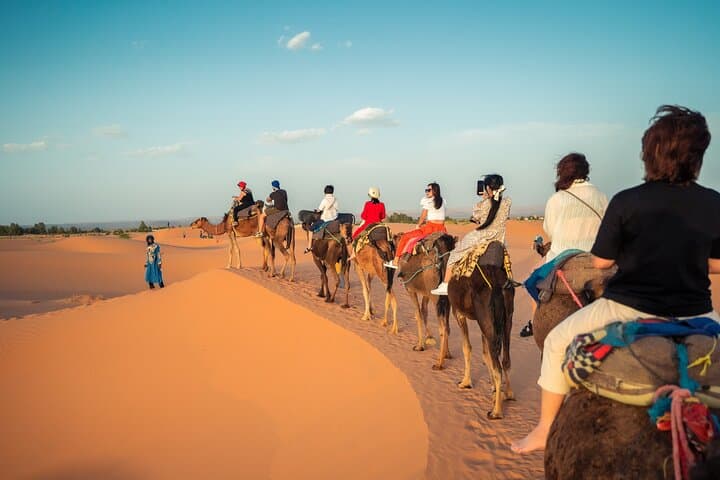
A low sun pours liquid gold across the Erg Chebbi ridgeline as your camel caravan slows to a patient pace—this is the moment the Sahara insists you stop and watch. Over four days you move from Marrakech’s medina noise into a landscape of high mountain passes, fortified kasbahs, tight gorges and finally open sand where the wind sculpts dunes as tall as a 10-story building.
Verified experiences and guided adventures in the surrounding area.
Operated by Morocco Kingdom Travel · Merzouga, Drâa-Tafilalet
A low sun pours liquid gold across the Erg Chebbi ridgeline as your camel caravan slows to a patient pace—this is the moment the Sahara insists you stop and watch. Over four days you move from Marrakech’s medina noise into a landscape of high mountain passes, fortified kasbahs, tight gorges and finally open sand where the wind sculpts dunes as tall as a 10-story building.
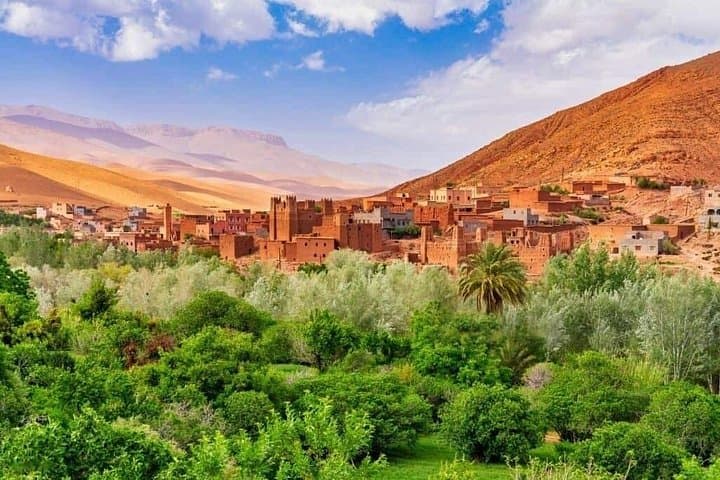
The route follows old caravan corridors. Tizi n'Tichka cuts the High Atlas at roughly 2,260 m, where villages perch on stone terraces. Ait Ben Haddou, a UNESCO ksar, shows centuries of earthen architecture and has been a backdrop for major films. Dades and Todra Gorges reveal the geology of uplifted sedimentary rock—sheer walls that funnel river water and life through narrow canyons. Erg Chebbi’s dunes near Merzouga reach about 120–150 m, made of sand ground from the Sahara’s ancient seas.
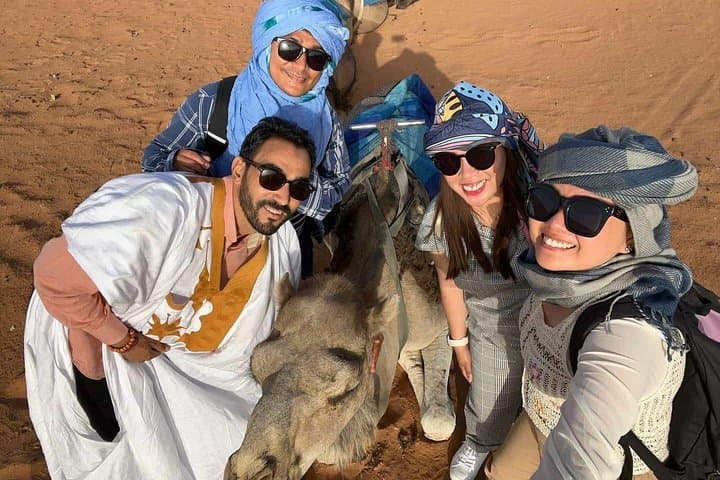
Culture surfaces in small, direct ways: fossil workshops in Erfoud, gnawa music in Khamlia, and Berber-hosted evenings in a luxury desert camp or riad. Expect a camel ride of 1–2 hours at dusk, a night in a Berber tent with drumming under a very dark sky, and optional sandboarding on slope faces.
Practical notes: daily drives include long stretches—plan for multiple 3–6 hour legs—bring layered clothing for hot days and cold nights, sun protection, sturdy shoes for dune climbs, and cash (Moroccan dirham) for small purchases. Sunrise and sunset on the dunes are busiest—arrive early to secure a view and a photo without the crowds.
Camel treks to the camp typically last 1–2 hours at a relaxed pace—enough time to reach a dune crest for sunset.
Luxury camps offer mattress beds, shared or private tent facilities, meals and sometimes showers—expect a mix of traditional style and modern comfort.
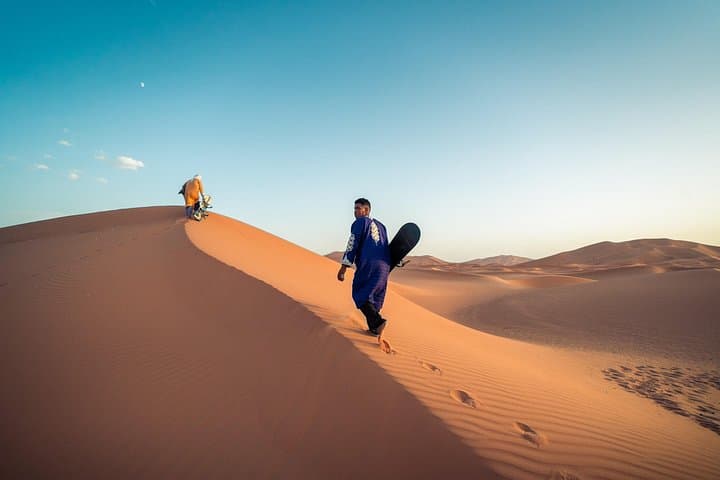
Sandboarding is offered as an optional activity—bring closed-toe shoes and confirm with your operator if you want to try it.
Yes—operators commonly accommodate vegetarian, vegan and gluten-free diets if informed in advance.
Morocco Kingdom Travel operates guided outdoor trips and adventures with an emphasis on safety, stewardship, and memorable experiences.
A low sun pours liquid gold across the Erg Chebbi ridgeline as your camel caravan slows to a patient pace—this is the moment the Sahara insists you stop and watch. Over four days you move from Marrakech’s medina noise into a landscape of high mountain passes, fortified kasbahs, tight gorges and finally open sand where the wind sculpts dunes as tall as a 10-story building.
A low sun pours liquid gold across the Erg Chebbi ridgeline as your camel caravan slows to a patient pace—this is the moment the Sahara insists you stop and watch. Over four days you move from Marrakech’s medina noise into a landscape of high mountain passes, fortified kasbahs, tight gorges and finally open sand where the wind sculpts dunes as tall as a 10-story building.
The route follows old caravan corridors. Tizi n'Tichka cuts the High Atlas at roughly 2,260 m, where villages perch on stone terraces. Ait Ben Haddou, a UNESCO ksar, shows centuries of earthen architecture and has been a backdrop for major films. Dades and Todra Gorges reveal the geology of uplifted sedimentary rock—sheer walls that funnel river water and life through narrow canyons. Erg Chebbi’s dunes near Merzouga reach about 120–150 m, made of sand ground from the Sahara’s ancient seas.
Culture surfaces in small, direct ways: fossil workshops in Erfoud, gnawa music in Khamlia, and Berber-hosted evenings in a luxury desert camp or riad. Expect a camel ride of 1–2 hours at dusk, a night in a Berber tent with drumming under a very dark sky, and optional sandboarding on slope faces.
Practical notes: daily drives include long stretches—plan for multiple 3–6 hour legs—bring layered clothing for hot days and cold nights, sun protection, sturdy shoes for dune climbs, and cash (Moroccan dirham) for small purchases. Sunrise and sunset on the dunes are busiest—arrive early to secure a view and a photo without the crowds.