THE ADVENTURE COLLECTIVE® · Independent discovery and booking for outdoor travel

Cross the Atlas, wander ancient kasbahs and ride camels into the orange sweep of Erg Chebbi. This four-day loop from Marrakech blends cinematic landscapes, Berber culture and a one-night desert camp.
Cross the Atlas, wander ancient kasbahs and ride camels into the orange sweep of Erg Chebbi. This four-day loop from Marrakech blends cinematic landscapes, Berber culture and a one-night desert camp.
The sun is low behind the High Atlas as the minivan peels away from Marrakech, winding up the Tizi 'n Tichka pass. Rock faces warm to ochre, kasbah ruins puncture the skyline and, by late afternoon, the road descends into palm oases and a quieter geography—this is the approach to Erg Chebbi and the dunes of Merzouga.
Verified experiences and guided adventures in the surrounding area.
Operated by Discover Morocco Tours · Merzouga, Drâa-Tafilalet
The sun is low behind the High Atlas as the minivan peels away from Marrakech, winding up the Tizi 'n Tichka pass. Rock faces warm to ochre, kasbah ruins puncture the skyline and, by late afternoon, the road descends into palm oases and a quieter geography—this is the approach to Erg Chebbi and the dunes of Merzouga.
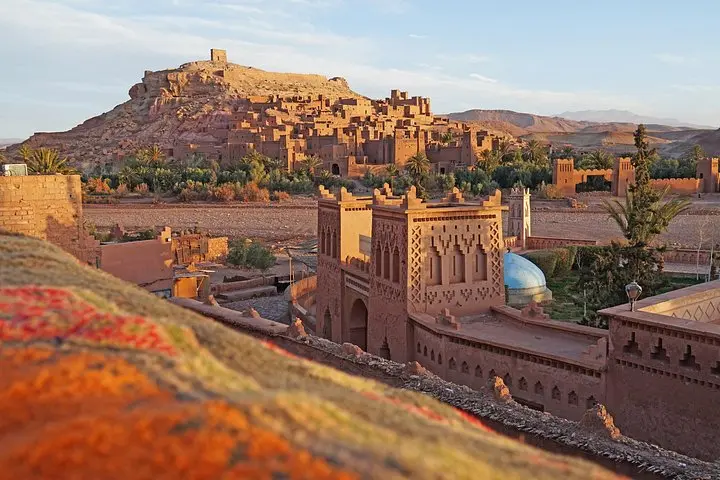
The route traces centuries of trade and film history. Ait Ben Haddou, a UNESCO ksar of mud-brick towers, marks the old caravan corridors and later drew filmmakers; further east the Todgha Gorges cut dramatic limestone walls where a seasonal river still shapes narrow canyons. The dunes themselves are recent windwork atop ancient sands—granular geology that shifts with each sirocco, giving the desert a restless personality.
Culturally, the trip threads Berber villages, communal markets in Rissani, and the almond rhythms of Khemlia’s Gnawa music. Nights move from simple hotels to nomadic-style camps where drums and tea shape the evening.
Practical guidance: expect long drives (several 3–6 hour legs), short hikes up dunes, and two camel transfers; temperatures swing sharply between day and night. Bring layered clothing, sun protection, and a small overnight bag for camp transfers. Hydrate before dune hikes and wear closed shoes for sandboarding runs.
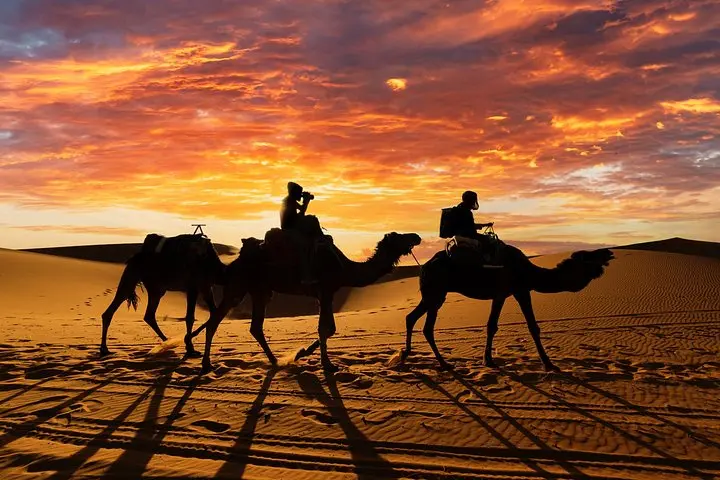
Timing matters—sunrise and sunset are the high points for photography and cooler trekking. Respect private spaces, support local guides and businesses, and leave no trace in fragile dune areas. The trip balances easy logistics with physically light but sensory-rich desert travel.
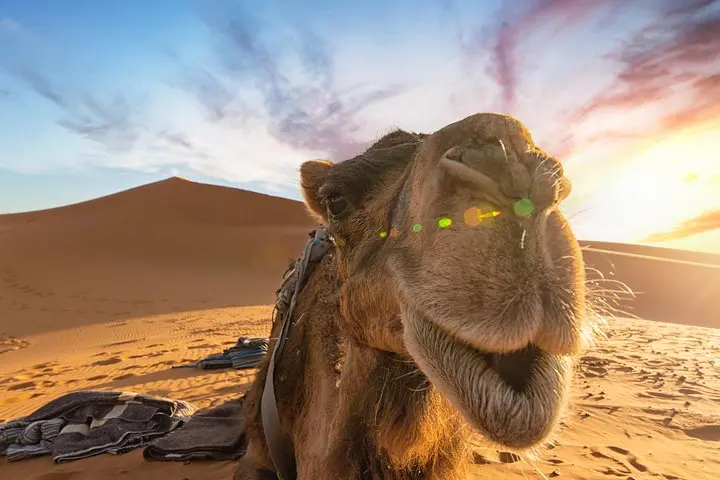
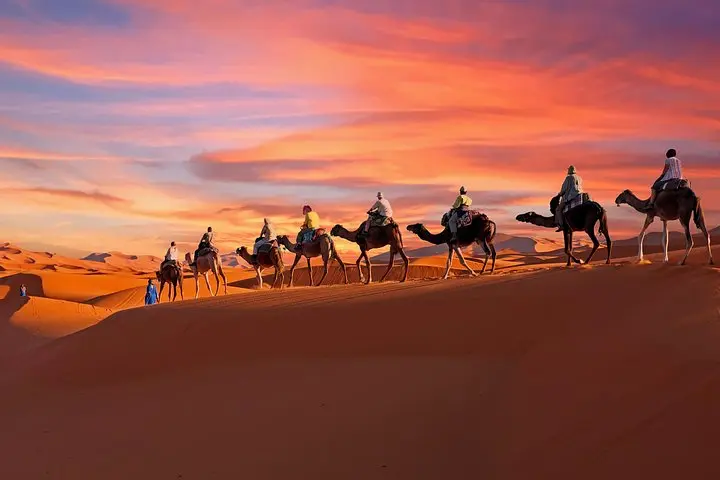
Camel rides are gentle and paced; you’ll dismount to walk up dunes for sunset. Nights at camps are comfortable but expect sleeping on mattresses in tents and brisk temperatures after sunset.
Yes—tours typically provide morning pickup in Marrakech and drive via Tizi 'n Tichka; confirm your exact pickup point when booking.
The itinerary includes breakfasts and dinners across hotels and one desert camp night; check your booking for specific meal counts and any dietary needs.
The operator notes the tour is suitable for most fitness levels but not recommended for those with serious cardiovascular problems; infant seats are sometimes available—confirm in advance.
Discover Morocco Tours operates guided outdoor trips and adventures with an emphasis on safety, stewardship, and memorable experiences.
The sun is low behind the High Atlas as the minivan peels away from Marrakech, winding up the Tizi 'n Tichka pass. Rock faces warm to ochre, kasbah ruins puncture the skyline and, by late afternoon, the road descends into palm oases and a quieter geography—this is the approach to Erg Chebbi and the dunes of Merzouga.
The sun is low behind the High Atlas as the minivan peels away from Marrakech, winding up the Tizi 'n Tichka pass. Rock faces warm to ochre, kasbah ruins puncture the skyline and, by late afternoon, the road descends into palm oases and a quieter geography—this is the approach to Erg Chebbi and the dunes of Merzouga.
The route traces centuries of trade and film history. Ait Ben Haddou, a UNESCO ksar of mud-brick towers, marks the old caravan corridors and later drew filmmakers; further east the Todgha Gorges cut dramatic limestone walls where a seasonal river still shapes narrow canyons. The dunes themselves are recent windwork atop ancient sands—granular geology that shifts with each sirocco, giving the desert a restless personality.
Culturally, the trip threads Berber villages, communal markets in Rissani, and the almond rhythms of Khemlia’s Gnawa music. Nights move from simple hotels to nomadic-style camps where drums and tea shape the evening.
Practical guidance: expect long drives (several 3–6 hour legs), short hikes up dunes, and two camel transfers; temperatures swing sharply between day and night. Bring layered clothing, sun protection, and a small overnight bag for camp transfers. Hydrate before dune hikes and wear closed shoes for sandboarding runs.
Timing matters—sunrise and sunset are the high points for photography and cooler trekking. Respect private spaces, support local guides and businesses, and leave no trace in fragile dune areas. The trip balances easy logistics with physically light but sensory-rich desert travel.