THE ADVENTURE COLLECTIVE® · Independent discovery and booking for outdoor travel

Four days of coastal hiking on the Mornington Peninsula: walk historic Point Nepean forts, clifftop tracks to London Bridge, the Two Bays Track to Cape Schanck, and the high views of Arthurs Seat. Perfect for travelers wanting dramatic coastline and accessible multi-day routes.
Four days of coastal hiking on the Mornington Peninsula: walk historic Point Nepean forts, clifftop tracks to London Bridge, the Two Bays Track to Cape Schanck, and the high views of Arthurs Seat. Perfect for travelers wanting dramatic coastline and accessible multi-day routes.
Dawn breaks over wind-swept cliffs and the ocean answers with a clean, briny voice — that’s the opening scene of a four-day walk around the southern tip of Victoria’s Mornington Peninsula. Small waves scrape the rock shelves below; a shearwater banks on the wind; boots crunch on a path lined with sedge and banksia. Guides move at an easy pace, leaving time to watch furred silhouettes — kangaroos — grazing in the morning light before the track climbs again.
Verified experiences and guided adventures in the surrounding area.
Operated by Mornington Peninsula Treks · Blairgowrie, Victoria
Dawn breaks over wind-swept cliffs and the ocean answers with a clean, briny voice — that’s the opening scene of a four-day walk around the southern tip of Victoria’s Mornington Peninsula. Small waves scrape the rock shelves below; a shearwater banks on the wind; boots crunch on a path lined with sedge and banksia. Guides move at an easy pace, leaving time to watch furred silhouettes — kangaroos — grazing in the morning light before the track climbs again.
The route threads country and coast: a historic first-day circuit of Point Nepean, with its Quarantine Station and gun emplacements that once watched the entrance to Port Phillip; a second-day traverse of clifftops and rock shelves from Dimmicks Beach toward London Bridge; a full-day traverse of the Two Bays Track through grass tree groves and eucalypt forests to Cape Schanck’s basalt cliffs; and a closing day exploring Seawinds, Kings Falls and the expanses above Gunnamatta Beach.
Geology here is direct — the cliffs are basalt and sedimentary beds carved by Bass Strait’s restless energy. The peninsula’s soils feed banksias and tea-tree, and open forest shelters a surprisingly diverse understory. Cultural layers sit beside the landscape: the Bunurong people’s connection to the coast and the colonial history of quarantine and coastal defense create an often-overlooked backdrop to the walks.
Practical details are straightforward. Expect 4 days of walking with daily routes averaging 8–12 km on varied terrain: compacted dirt tracks, rocky shelves at low tide, sandy beach connectors and short steep sections with cumulative elevation gains of roughly 100–300 m per day. Pace is relaxed; the operator positions this for a broad range of fitness levels, but bring ankle-supporting boots for rock shelves and potential wet sand.
Food and lodging are provided each night at the Boathouse Resort in Blairgowrie — a useful base to clean boots and dry layers. Guides carry a group first aid kit and satellite phone; water resupply points are limited on some stretches, so carry at least 1.5–2 L and a lightweight filter if you plan additions.
Timing matters: check tide times before any rock-shelf sections and aim for low tide along the Bass Strait shelves. Spring brings wildflower displays and cooler walking conditions; summer heats quickly and needs sun protection; autumn offers calmer seas and clean light for photography; winter can be windy and wet.
For travelers who want coastal drama without the crowds, these treks deliver a mix of natural spectacle, accessible challenge and local flavor — historic sites one moment, silent bushland the next — all within an hour of Melbourne.
Walks are graded moderate with daily distances of roughly 8–12 km on mixed terrain; guides keep a steady, inclusive pace and there are plenty of rest stops.
Yes — twin-share accommodation at the Boathouse Resort in Blairgowrie is included each night; single supplements may be available on request.
Lunches and most dinners are included; bring snacks and any personal dietary items — guides can accommodate common dietary requirements if notified in advance.
The itinerary is designed for a wide age range, but participants should be comfortable walking several hours on uneven ground; those with mobility limitations should check with the operator first.
Common sightings include kangaroos, echidnas and a variety of coastal birds such as gulls and shearwaters, especially at dawn and dusk.
Pick-up is arranged from Frankston station by default; transfers from Melbourne CBD can be arranged for an additional cost — confirm your pickup point when booking.
Mornington Peninsula Treks operates guided outdoor trips and adventures with an emphasis on safety, stewardship, and memorable experiences.


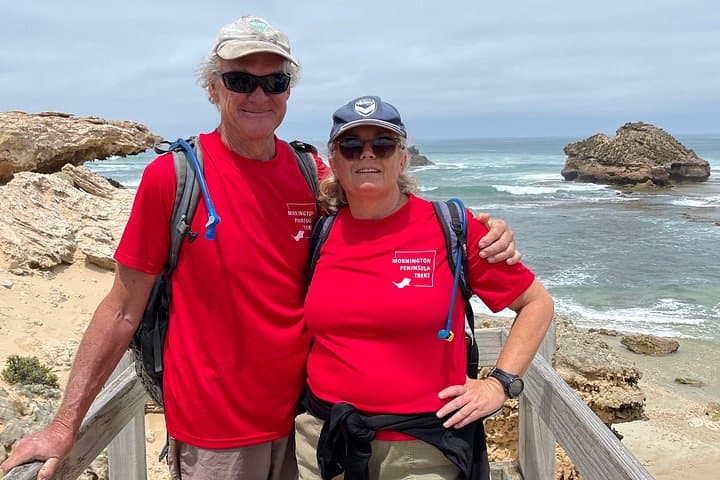
Dawn breaks over wind-swept cliffs and the ocean answers with a clean, briny voice — that’s the opening scene of a four-day walk around the southern tip of Victoria’s Mornington Peninsula. Small waves scrape the rock shelves below; a shearwater banks on the wind; boots crunch on a path lined with sedge and banksia. Guides move at an easy pace, leaving time to watch furred silhouettes — kangaroos — grazing in the morning light before the track climbs again.
Dawn breaks over wind-swept cliffs and the ocean answers with a clean, briny voice — that’s the opening scene of a four-day walk around the southern tip of Victoria’s Mornington Peninsula. Small waves scrape the rock shelves below; a shearwater banks on the wind; boots crunch on a path lined with sedge and banksia. Guides move at an easy pace, leaving time to watch furred silhouettes — kangaroos — grazing in the morning light before the track climbs again.
The route threads country and coast: a historic first-day circuit of Point Nepean, with its Quarantine Station and gun emplacements that once watched the entrance to Port Phillip; a second-day traverse of clifftops and rock shelves from Dimmicks Beach toward London Bridge; a full-day traverse of the Two Bays Track through grass tree groves and eucalypt forests to Cape Schanck’s basalt cliffs; and a closing day exploring Seawinds, Kings Falls and the expanses above Gunnamatta Beach.
Geology here is direct — the cliffs are basalt and sedimentary beds carved by Bass Strait’s restless energy. The peninsula’s soils feed banksias and tea-tree, and open forest shelters a surprisingly diverse understory. Cultural layers sit beside the landscape: the Bunurong people’s connection to the coast and the colonial history of quarantine and coastal defense create an often-overlooked backdrop to the walks.
Practical details are straightforward. Expect 4 days of walking with daily routes averaging 8–12 km on varied terrain: compacted dirt tracks, rocky shelves at low tide, sandy beach connectors and short steep sections with cumulative elevation gains of roughly 100–300 m per day. Pace is relaxed; the operator positions this for a broad range of fitness levels, but bring ankle-supporting boots for rock shelves and potential wet sand.
Food and lodging are provided each night at the Boathouse Resort in Blairgowrie — a useful base to clean boots and dry layers. Guides carry a group first aid kit and satellite phone; water resupply points are limited on some stretches, so carry at least 1.5–2 L and a lightweight filter if you plan additions.
Timing matters: check tide times before any rock-shelf sections and aim for low tide along the Bass Strait shelves. Spring brings wildflower displays and cooler walking conditions; summer heats quickly and needs sun protection; autumn offers calmer seas and clean light for photography; winter can be windy and wet.
For travelers who want coastal drama without the crowds, these treks deliver a mix of natural spectacle, accessible challenge and local flavor — historic sites one moment, silent bushland the next — all within an hour of Melbourne.